

Editorial quick answer
Ground Mount vs Rooftop Solar: When to Pay More
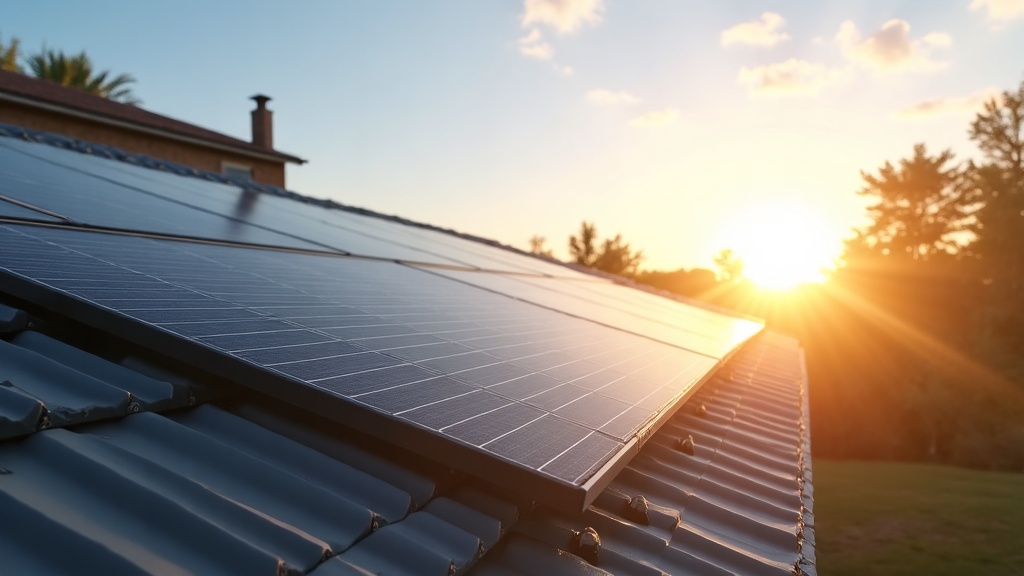
My panels are on my roof. That was the obvious choice for my house — good southern exposure, appropriate pitch, relatively new roof. But during my research phase, I spent time understanding ground...
Who this is for
Homeowners using this topic to compare choices, identify tradeoffs, or prepare better questions.
What this cannot promise
A guaranteed bill reduction, output, runtime, incentive, code approval, interconnection result, or project-specific electrical design.
Assumptions, date, and local checks
Costs and performance depend on location, date, model, configuration, weather, tariffs, utility rules, program funding, installation details, and household loads. Incentive, net-metering, code, battery-sizing, and electrical statements require current jurisdiction and source checks. Confirm project-specific details with the serving utility, program administrator, manufacturer, and a qualified electrician or installer.
How evidence is labeled
Mike context
Limited to his 20 years as an electrician, going solar in 2019, and having no installer ties.
Manufacturer specification
Maker-published data for an identified model or version, not an independent measurement.
Public source
Utility, government, program, code, standards, or other dated public information.
Estimate
Math based on stated inputs and assumptions, not a quote or guarantee.
Editorial analysis
SunBacked’s synthesis of tradeoffs, separated from sourced facts.
My panels are on my roof. That was the obvious choice for my house — good southern exposure, appropriate pitch, relatively new roof. But during my research phase, I spent time understanding ground mount systems because several properties I considered when house-hunting had shading or orientation issues that would have made ground mount the better option. Here’s what I learned, including when the “more expensive” upfront cost of ground mount actually produces a better financial outcome.
The Basic Difference
Rooftop solar: panels mount on racking attached to your roof structure. The roof provides the structure, so you’re not paying for a separate foundation or pole system. Installation is generally faster and cheaper. Standard system for most homes.
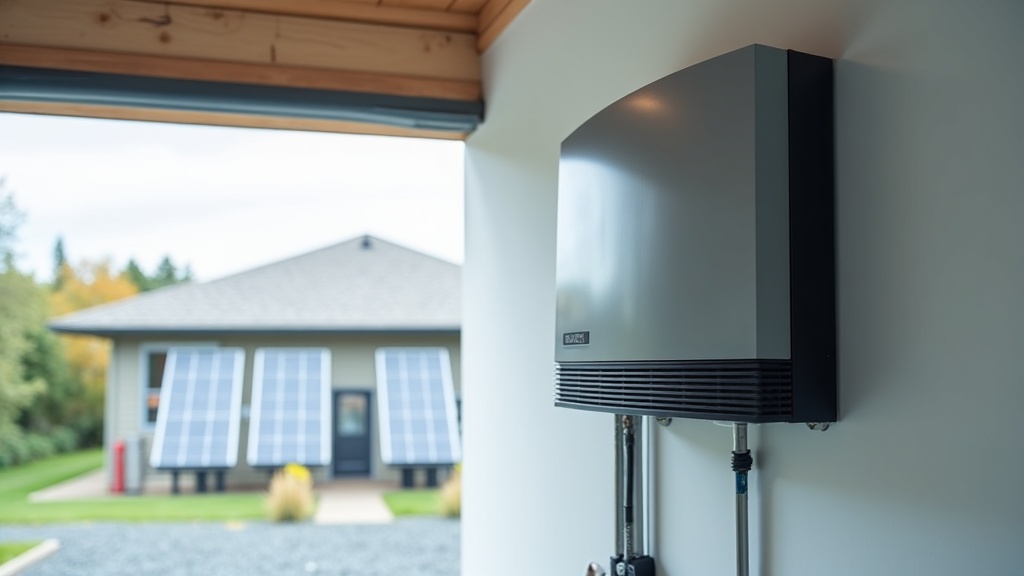
Ground mount solar: panels mount on a racking system driven into the ground (either a standard fixed-tilt frame or a pole mount). Requires more materials and typically more excavation or concrete work. Costs more upfront. But gives you complete control over orientation, tilt angle, and avoidance of shading.
The cost premium for ground mount is typically $0.30-0.50 per watt more than rooftop — so on a 10 kW system, that’s $3,000-5,000 additional. On a system that costs $26,000 rooftop, expect $29,000-31,000 for a comparable ground mount. That’s a meaningful gap. But it’s not the whole story.
When Ground Mount Actually Wins Financially
The economic case for ground mount comes down to three scenarios:
Scenario 1: Suboptimal roof orientation. My south-facing 30-degree pitch is close to ideal for homeowner (optimal tilt is around 35-40 degrees here, but 30 is close enough). But if your main roof faces east-west, or has significant shading from trees or neighboring buildings, a rooftop system loses a lot of production potential. A rooftop east-west system might produce 80-85% of what an optimal south-facing system would. Ground mount, positioned optimally, produces at full potential.
Let’s model this: 10 kW optimal ground mount produces 13,000 kWh/year. 10 kW east-west rooftop produces 10,800 kWh (roughly 83% due to orientation loss). At $0.12/kWh, that’s 2,200 kWh × $0.12 = $264/year less value from the rooftop system. Over 25 years, that’s $6,600 in lost production — more than the ground mount premium. And you’d need a larger rooftop system (say 12 kW) to match the ground mount’s production, which adds more cost anyway.
Scenario 2: Roof needs replacement. My roof was 4 years old when I installed. If I had installed on a 15-year-old roof, I’d have needed to re-roof in 5-8 years — which means removing and reinstalling panels at a cost of roughly $3,500-5,500. A ground mount avoids this entirely. The economics of avoiding a re-roof panel removal and reinstall can match the ground mount premium on its own.
Scenario 3: Significant shading. Trees, chimneys, dormers, neighboring structures. With microinverters (like I have), some shading on one panel doesn’t shut down the whole string — but it still hurts production panel by panel. If 20% of your roof area is consistently shaded, you’re losing 20%+ of your production potential. Ground mount can be positioned to avoid this entirely.
Other Ground Mount Advantages
There are non-financial reasons to prefer ground mount in some cases:
Easier maintenance and cleaning: My rooftop panels are genuinely hard to access. I’ve done exactly one cleaning in 14 months (and honestly question whether it was necessary). A ground mount system is accessible — you can spray it down with a garden hose easily.
Better airflow: Panels run more efficiently at lower temperatures. Ground mount panels, elevated off the ground, have airflow on all sides. Rooftop panels are close to the roof surface, which gets hot. The efficiency gain from cooler operating temperature is modest — typically 1-3% — but it’s real.
Adjustable tilt (on some systems): Some ground mount racking systems allow seasonal tilt adjustment — steeper in winter to capture lower sun angles, flatter in summer. This can boost annual production by 5-8% for homeownerlatitudes. Fixed rooftop systems don’t allow this.
No roof penetrations: My roof has 24 penetrations where mounting hardware goes through the shingles. Each is sealed with flashing and should last for decades, but it’s 24 potential failure points. Ground mount has zero roof penetrations.
Ground Mount Disadvantages You Should Know
I want to be balanced here. Ground mount has real downsides:
Requires suitable land: You need space. A 10 kW ground mount system takes up roughly 600-700 square feet of ground area. That rules out a lot of suburban lots. My own lot wouldn’t accommodate one easily.
Permitting can be more complex: Some municipalities have different (sometimes more restrictive) zoning rules for ground mount structures than for rooftop solar. Check your local zoning before assuming ground mount is an option.
Trench for conduit: Power has to get from the ground mount to your house. That means trenching, which adds labor cost and requires navigating around landscaping, utilities, and other buried infrastructure.
HOAs: Many homeowners associations that restrict ground structures have no issue with rooftop solar (many states actually restrict HOA power to prohibit rooftop solar). A ground mount might be banned where a rooftop system is protected.
How to Think About the Decision
If you have a good south-facing roof with minimal shading and a roof that’s less than 10 years old, rooftop is probably the right call. It’s simpler, cheaper upfront, and perfectly adequate for the standard scenario.
If you have any of these: east-west roof orientation, significant shading, aging roof, or enough property to situate a ground mount optimally — run the production comparison. Get quotes for both. Model the 25-year production numbers at your local electricity rates. (Not sure what system size you need? I worked through my solar panel sizing math before calling any installer.) The right answer often isn’t obvious until you see the long-term numbers.
I have neighbors with heavily treed properties who clearly should have gone ground mount if they were going to go solar at all. Instead, they have rooftop systems producing 70% of potential, with 10-year paybacks that would have been 6-year paybacks with a well-positioned ground mount. The upfront premium would have paid for itself in less than 5 years.
The lesson I keep coming back to (and one that solar salespeople won’t choose a solar configuration based on what’s typical or what’s simpler. Choose it based on what produces the best financial outcome for your specific property and situation.
Sources, uncertainty, safety, and affiliate disclosure
Check named sources for their publication date, geography, exact product, utility, and jurisdiction. Product specifications and programs change. Estimates are not guarantees. Electrical work, service upgrades, storage systems, transfer equipment, interconnection, and code compliance should be reviewed by the serving utility and a qualified electrician or installer as appropriate.
Some links may be affiliate links. SunBacked may earn a commission at no added cost to you; that does not determine editorial conclusions.