

Editorial quick answer
Solar Permitting: It Took Longer Than I Expected
My solar install contract was signed on October 14th. The physical installation — four guys on my roof for two days — was November 7th and 8th. My system was turned on for the first time on December...
Who this is for
Homeowners using this topic to compare choices, identify tradeoffs, or prepare better questions.
What this cannot promise
A guaranteed bill reduction, output, runtime, incentive, code approval, interconnection result, or project-specific electrical design.
Assumptions, date, and local checks
Costs and performance depend on location, date, model, configuration, weather, tariffs, utility rules, program funding, installation details, and household loads. Incentive, net-metering, code, battery-sizing, and electrical statements require current jurisdiction and source checks. Confirm project-specific details with the serving utility, program administrator, manufacturer, and a qualified electrician or installer.
How evidence is labeled
Mike context
Limited to his 20 years as an electrician, going solar in 2019, and having no installer ties.
Manufacturer specification
Maker-published data for an identified model or version, not an independent measurement.
Public source
Utility, government, program, code, standards, or other dated public information.
Estimate
Math based on stated inputs and assumptions, not a quote or guarantee.
Editorial analysis
SunBacked’s synthesis of tradeoffs, separated from sourced facts.
My solar install contract was signed on October 14th. The physical installation — four guys on my roof for two days — was November 7th and 8th. My system was turned on for the first time on December 2nd. That’s 49 days from contract to first kilowatt, and 24 of those days were spent waiting on permits and utility interconnection approval. Nothing else. Just waiting.
Nobody in the solar sales process emphasizes permitting. The installer tells you “it takes a few weeks.” What they don’t always tell you is why, how much you can (and can’t) control, and what can go wrong. Here’s what I learned — it fits a larger pattern I covered in what solar salespeople don’t tell you.
Why Solar Requires Permits
Solar installations require permits for legitimate safety reasons. At minimum, you’re dealing with a high-voltage DC system on your roof connected to a grid-tied AC inverter, which connects to your home’s main electrical panel, which connects to the utility grid. That involves serious electrical work that affects not just your house but potentially the safety of utility workers and your neighbors.
Depending on your jurisdiction, solar typically requires:
- Building permit (for the structural changes to the roof — penetrations and added weight)
- Electrical permit (for the wiring, inverter, and panel connections)
- In some areas, a separate solar-specific permit
- HOA approval (if applicable — not a government permit, but can cause delays)
- Utility interconnection application
Your installer handles all of this as part of the job. What they can’t control is how fast the relevant authorities move.
The Two-Phase Wait
There are two distinct approval phases, and they don’t always happen in a clean sequence:
Phase 1: Municipal permit. Your installer submits permit applications (with engineering drawings, equipment specs, and structural analysis) to your local building department. The building department reviews and approves or requests changes. Timeline varies enormously — in some progressive municipalities with streamlined solar permitting, this takes 1-3 business days. In suburban homeownerin 2024, it took 11 business days for my initial permit approval.
After the physical installation, a municipal inspector has to physically visit and sign off on the work. My inspection was scheduled 5 business days after the install was complete. The inspector was thorough (about 45 minutes) and found one minor labeling issue that required my installer to drive back out and fix it, adding another 2 days before final sign-off.
Phase 2: Utility interconnection. This is separate from the municipal permit and often takes longer. Your installer submits an interconnection application to your utility — in my case AEP homeowner — along with the system specifications. The utility reviews to ensure your system meets their technical requirements and won’t cause grid stability issues. Once approved, a utility technician comes out to install a bi-directional meter and physically connect your system.
AEP homeowner’s interconnection process: 15-21 business days for small residential systems. I was quoted 15 and waited 18. Then the meter installation appointment was 4 more days. You literally cannot legally turn on your system until the utility completes this step — your installer should put a lock-out sticker on your disconnect, and your system sits physically installed but non-operational until interconnection is approved.
What Happens During the Wait
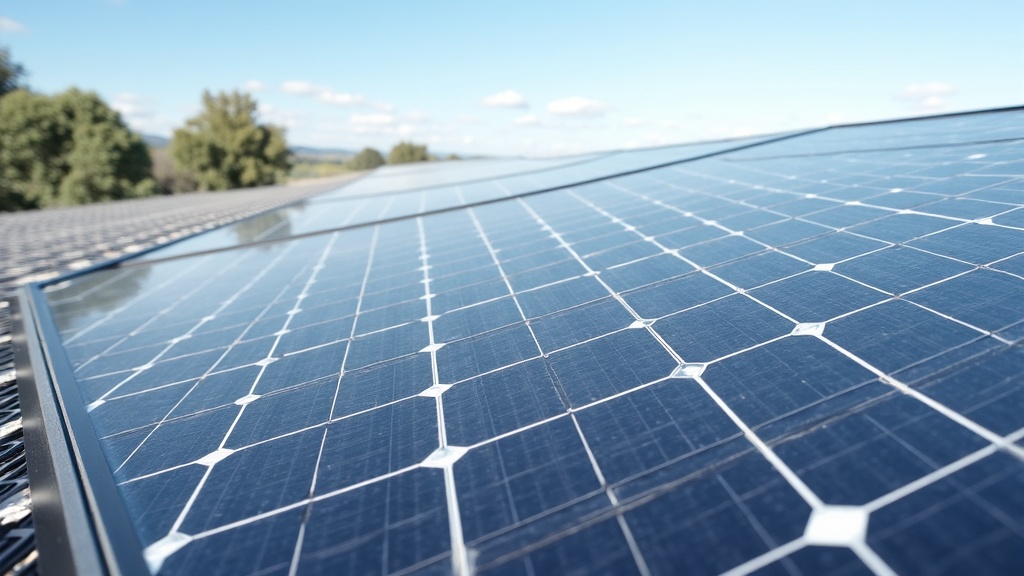
Nothing dramatic. The panels sit on your roof, wired up, not producing power. The inverter sits in your garage or utility room, connected but not activated. You can’t do anything to speed up the process once applications are submitted. You just wait.
I’m an engineer. Waiting for bureaucratic processes is not my natural state. I called AEP once to check status (politely, at day 14), and the rep confirmed they had my application and it was in review. She couldn’t give me a faster timeline. I called my installer twice. They were sympathetic but equally powerless.
This is the most frustrating part of the solar experience for type-A homeowners: you’ve signed the contract, paid a significant amount of money, had strangers on your roof for two days, and now you sit. For weeks.
What Can Speed Things Up
A few things that actually help:
Choose an installer with experience in your municipality. An installer who has done 50 installs in your city knows the permit office, knows what the inspectors look for, and knows how to submit paperwork that gets approved on the first pass. A less experienced installer may submit an incomplete package that requires back-and-forth revisions. Ask your installer specifically how many systems they’ve installed in your city or township and what their average permit timeline is. Reading installer reviews on a platform like EnergySage can surface permit-related complaints before you commit.
Avoid peak seasons. My November install was actually good timing for permitting — building departments are less backlogged in late fall and winter than in spring and summer, when everyone is trying to start renovation projects. Utility interconnection queues may also be shorter. In homeownerspring and summer installs can add weeks to the process.
HOA approvals ahead of time. If you have an HOA, get their approval before you sign the installer contract. HOA review can take weeks and in contentious cases, months. I don’t have an HOA (one of many reasons I’d never buy in one), but I know people who lost months of lead time because they didn’t start the HOA process early enough.
Some utilities have expedited pathways. For small systems (typically under 10 kW), some utilities offer expedited or streamlined interconnection review. AEP homeownerhas a simplified process for systems under 25 kW that’s faster than commercial interconnection. Ask specifically what the process is for your system size.
The Long-Term Irrelevance of the Wait
In the context of a 25-year system lifespan, 49 days from contract to commissioning is genuinely trivial. My system has been running for 14 months now and I’ve long since forgotten the frustration of the wait. I mention it here not to discourage anyone but to set realistic expectations — because if you go into the process expecting 3-4 weeks and it takes 6-7, you’ll feel like something went wrong when actually everything is normal.
The installer’s job is complete when the system is physically installed and passes inspection. The utility’s job is complete when they install the meter and give permission to operate. Both take time, and most of that time is outside your control. Plan your expectations accordingly.
And if you’re like me and want to use the waiting period productively: that’s a great time to set up energy monitoring so you’re ready to track production from day one. A good whole-home energy monitor like the Emporia Vue 3 can be installed on your electrical panel before your solar is even activated, giving you a pre-solar baseline that’s genuinely useful for measuring your system’s impact. I installed mine at week three of waiting. Best thing I did with those 24 days.
Sources, uncertainty, safety, and affiliate disclosure
Check named sources for their publication date, geography, exact product, utility, and jurisdiction. Product specifications and programs change. Estimates are not guarantees. Electrical work, service upgrades, storage systems, transfer equipment, interconnection, and code compliance should be reviewed by the serving utility and a qualified electrician or installer as appropriate.
Some links may be affiliate links. SunBacked may earn a commission at no added cost to you; that does not determine editorial conclusions.