
Editorial quick answer
How long does it take to recharge a portable power station?
I size home battery backup around critical loads first, not marketing promises. If you are asking how long it takes to recharge a portable power station, the honest answer is: usually anywhere from about 2 hours to 12+ hours, depending on battery size and charging input. The marketing version is always the best-case number. The […]
Who this is for
Homeowners using this topic to compare choices, identify tradeoffs, or prepare better questions.
What this cannot promise
A guaranteed bill reduction, output, runtime, incentive, code approval, interconnection result, or project-specific electrical design.
Assumptions, date, and local checks
Costs and performance depend on location, date, model, configuration, weather, tariffs, utility rules, program funding, installation details, and household loads. Incentive, net-metering, code, battery-sizing, and electrical statements require current jurisdiction and source checks. Confirm project-specific details with the serving utility, program administrator, manufacturer, and a qualified electrician or installer.
How evidence is labeled
Mike context
Limited to his 20 years as an electrician, going solar in 2019, and having no installer ties.
Manufacturer specification
Maker-published data for an identified model or version, not an independent measurement.
Public source
Utility, government, program, code, standards, or other dated public information.
Estimate
Math based on stated inputs and assumptions, not a quote or guarantee.
Editorial analysis
SunBacked’s synthesis of tradeoffs, separated from sourced facts.
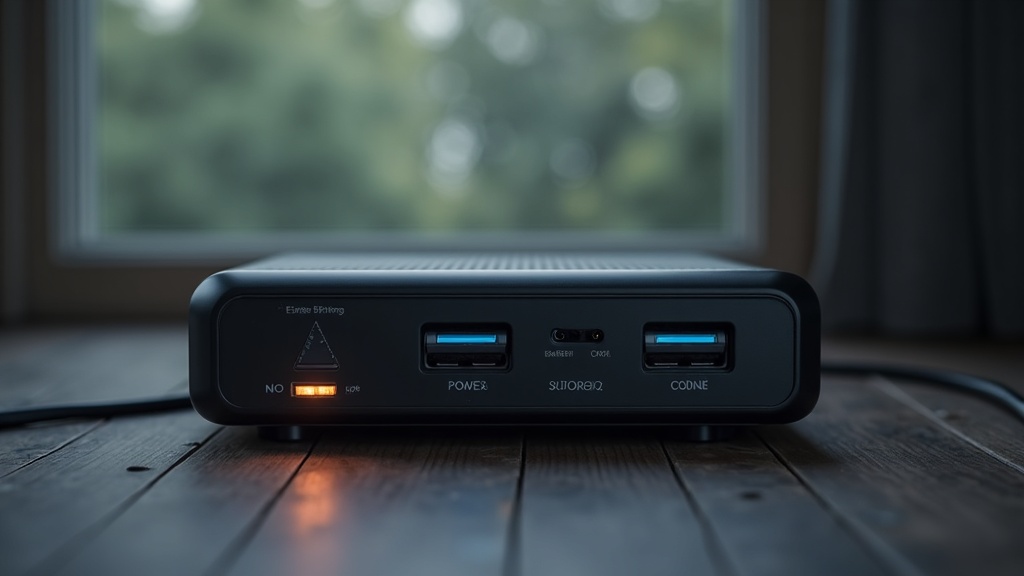
I size home battery backup around critical loads first, not marketing promises. If you are asking how long it takes to recharge a portable power station, the honest answer is: usually anywhere from about 2 hours to 12+ hours, depending on battery size and charging input. The marketing version is always the best-case number. The homeowner version is what happens when you have a half-drained battery, a standard wall outlet, and an outage plan that actually has to work.
I have seen a lot of people buy a power station based on capacity alone, then get frustrated when the unit takes most of the day to refill. That matters a lot more for home backup than it does for camping. If you are counting on the battery to run your fridge, internet, lights, or medical equipment, recharge speed is part of the product, not a minor spec buried on the listing page.
Bottom line up front: small portable power stations can often recharge in 2 to 4 hours, mid-size units usually land around 4 to 8 hours, and larger backup-focused models can take 8 to 12 hours or more unless they support high-speed AC charging.
What Actually Determines Recharge Time
There are really only three numbers that matter here: battery capacity in watt-hours, charger input in watts, and the power source you are using. Bigger battery plus weaker charging input equals longer wait. That is the whole game.
For example, if a unit stores 1,000Wh and accepts roughly 200W of real charging power, you are looking at around 5 hours in ideal conditions and usually a bit longer in real life. Charging slows near the top end, conversion losses are real, and not every “200W” source actually delivers a steady 200W.
- AC wall charging: usually the fastest and most predictable option.
- Car charging: usually much slower and often impractical for larger batteries.
- Solar charging: can be useful, but actual speed depends on panel size, weather, season, angle, and shade.
- High-speed AC charging: the feature that separates a serious home-backup unit from a casual camping battery.
A Quick Way to Estimate Recharge Time
If you want a rough estimate before buying, divide the battery capacity in watt-hours by the charging input in watts, then add some cushion for losses and the slower top-off phase near 100 percent.
In plain English, a 1,024Wh power station charging at 200W will not realistically refill in exactly 5.1 hours. In the real world, you would usually expect something closer to 5.5 to 6.5 hours. A similar-sized unit that accepts 600W AC input is in a completely different class because it can often get back in service in roughly 2 hours.
- Simple estimate: battery capacity (Wh) divided by charge input (W) = base charging time.
- Real-world adjustment: add roughly 10 to 25 percent for charging losses and the slower final stretch.
- What to watch for: some brands advertise the charger size, not the actual sustained input the battery accepts.
Typical Recharge Times by Size
Here is the practical range most homeowners should expect when charging from a normal wall outlet:
| Power Station Size | Typical AC Recharge Time | What That Usually Covers |
|---|---|---|
| 250Wh to 500Wh | 2 to 4 hours | Phones, laptops, lights, routers |
| 500Wh to 1,000Wh | 3 to 6 hours | Internet gear, CPAP, work devices, short fridge support |
| 1,000Wh to 2,000Wh | 5 to 10 hours | Longer fridge runtime, more lights, multiple essentials |
| 2,000Wh+ | 8 to 12+ hours | Larger outage kits, but only if recharge speed is strong enough |
- 250Wh to 500Wh units: around 2 to 4 hours.
- 500Wh to 1,000Wh units: around 3 to 6 hours.
- 1,000Wh to 2,000Wh units: around 5 to 10 hours.
- 2,000Wh+ units: often 8 to 12+ hours unless they have aggressive fast charging.
This is why two products can both be called “portable power stations” and behave like completely different tools. A small battery for phones and laptops is not in the same category as a large unit meant to cover a refrigerator and a few household essentials through an outage.
What This Means for Home Backup
For homeowners, recharge time matters most when the battery is being used as part of an outage strategy instead of a convenience gadget. If the battery runs overnight and needs all day to refill, that may be acceptable for occasional use. It is not acceptable if you need to cycle it repeatedly during storm season or planned shutoffs.
The mistake I see most often is people focusing on runtime and ignoring turnaround time. Runtime tells you how long the battery helps once. Recharge time tells you whether the system is ready to help again tomorrow, or even later the same day.
- A small unit is easier to recharge, but it may only cover lights, phones, and internet gear.
- A large unit gives you more runtime, but only makes sense if the charging speed keeps up with the use case.
- If you want outage resilience, fast AC input is worth paying for.
- If your plan depends on solar recharging alone, assume the real-world result will be slower than the ad copy.
Wall vs. Car vs. Solar Charging
Wall outlet charging is what most people should optimize around. It is stable, simple, and usually the fastest method available without stepping up to specialty inputs.
Car charging is more of a backup method than a primary one. It can work for smaller batteries, but on larger power stations it is slow enough that it often stops being practical.
Solar charging sounds great in theory, and it can absolutely help, but homeowners should be realistic about it. A power station that “recharges in 3 hours from solar” is usually assuming excellent sun, ideal panel sizing, and no shading problems. In mixed weather or with undersized panels, that same recharge can stretch into most of the day.
Specs That Matter More Than the Headline Claim
Recharge time claims are easy to manipulate because brands can choose the best-case charging method, the most flattering test conditions, and a battery percentage range that sounds faster than a true refill from low state of charge.
- AC input wattage: this is the number that most directly controls how fast the unit can recharge from the wall.
- Battery chemistry: LFP units often make more sense for home backup because they are built for more cycles, even if they are a bit heavier.
- Pass-through behavior: some units handle charging and powering loads at the same time better than others.
- Solar input limit: this matters if you are counting on panels for outage recovery, not just occasional topping off.
When a Portable Power Station Makes Sense
A portable power station makes sense when you want quiet, indoor-safe backup for a short list of important loads. That usually means phones, routers, modems, lights, laptops, CPAP machines, and maybe refrigerator coverage for a limited period if the battery and inverter are sized correctly.
It also makes sense for renters, condo owners, and anyone who cannot install a permanent battery system or does not want the complexity of a generator. For that kind of use, portability and simplicity are real advantages.
When It Does Not
A portable power station is not whole-home backup. It is not a realistic solution for central air, electric resistance heat, water heaters, ovens, clothes dryers, or other heavy loads for meaningful lengths of time. Even if the inverter can technically start some of those loads, the battery drain is usually too fast to make it a smart plan.
It is also a weak fit if your entire strategy depends on rapid solar recharging in poor conditions. If your roofline, yard, or weather pattern is inconsistent, you need to be careful about assuming the battery can be topped back up quickly after use.
What I Would Prioritize Before Buying
First, list the devices you actually need during an outage. Not the fantasy list. The real list. For most homes that means refrigeration, communications, a few lights, internet equipment, and any medical devices.
Second, look at AC input wattage just as closely as battery capacity. I would rather see a well-sized battery that recharges quickly than a larger battery that takes forever to become useful again. A slow recharge spec can turn a promising backup product into a frustrating one.
Third, be skeptical of advertised recharge times unless the brand clearly states the charging method and input wattage. “Fast recharge” without context does not mean much.
Bottom Line for Homeowners
If your goal is emergency home backup, I would not shop for the biggest battery first. I would shop for the best balance of usable capacity, inverter output, and recharge speed. For a lot of households, that means a mid-size to large LFP power station with strong AC charging, not the cheapest unit with the biggest-looking capacity number on the page.
If a battery takes too long to recover after use, it stops feeling like backup and starts feeling like a constraint. That is the part many first-time buyers miss.
One thing I tell homeowners early is to compare smart home energy monitors before they buy bigger backup gear than they actually need, because usage visibility often changes the decision faster than marketing claims do.
Recommended Tools and Products
If you want to turn the ideas in this article into something practical, these are the product categories I’d look at first.
- Home Battery Backup Systems — Useful for readers comparing how stored power can support resiliency and load shifting at home.
- Smart Home Energy Monitors — A practical way to track usage patterns and see where intelligent energy management actually helps.
- Portable Power Stations — A more approachable entry point for people learning how battery storage works in everyday backup scenarios.
Sources, uncertainty, safety, and affiliate disclosure
Check named sources for their publication date, geography, exact product, utility, and jurisdiction. Product specifications and programs change. Estimates are not guarantees. Electrical work, service upgrades, storage systems, transfer equipment, interconnection, and code compliance should be reviewed by the serving utility and a qualified electrician or installer as appropriate.
Some links may be affiliate links. SunBacked may earn a commission at no added cost to you; that does not determine editorial conclusions.