
Editorial quick answer
Do solar panels eliminate your electric bill?
I’ve yet to see solar panels magically erase every electric bill for every house, and if an installer tells you that up front, I’d slow the conversation down. In the real world, solar can cut your bill hard, sometimes close to zero in the best setups, but whether it eliminates it depends on your roof, […]
Who this is for
Homeowners using this topic to compare choices, identify tradeoffs, or prepare better questions.
What this cannot promise
A guaranteed bill reduction, output, runtime, incentive, code approval, interconnection result, or project-specific electrical design.
Assumptions, date, and local checks
Costs and performance depend on location, date, model, configuration, weather, tariffs, utility rules, program funding, installation details, and household loads. Incentive, net-metering, code, battery-sizing, and electrical statements require current jurisdiction and source checks. Confirm project-specific details with the serving utility, program administrator, manufacturer, and a qualified electrician or installer.
How evidence is labeled
Mike context
Limited to his 20 years as an electrician, going solar in 2019, and having no installer ties.
Manufacturer specification
Maker-published data for an identified model or version, not an independent measurement.
Public source
Utility, government, program, code, standards, or other dated public information.
Estimate
Math based on stated inputs and assumptions, not a quote or guarantee.
Editorial analysis
SunBacked’s synthesis of tradeoffs, separated from sourced facts.
I’ve yet to see solar panels magically erase every electric bill for every house, and if an installer tells you that up front, I’d slow the conversation down. In the real world, solar can cut your bill hard, sometimes close to zero in the best setups, but whether it eliminates it depends on your roof, your utility rules, your daytime usage, and whether you expect backup power too.
If you are trying to decide whether solar is worth it for your house, look past the sales pitch and focus on your actual bill structure. Your utility may still charge connection fees, time-of-use rates, or minimum monthly charges, so the better question for your budget is not “Will my bill disappear?” but “How low can my bill realistically go, and what do I have to spend to get there?”
The Short Answer
Solar panels do not automatically eliminate your electric bill. They can offset some or most of your energy usage, but many homeowners still pay something each month because utilities often keep fixed charges on the account, and few homes produce exactly what they use in every season and every hour.
What I tell homeowners is simple: solar is best at lowering expensive daytime grid power, not performing billing magic. If you have a good roof, decent utility rates, and a system sized around real usage, you can make a major dent in your bill. If you want the bill to approach zero, that usually takes a well-sized array, favorable net metering or export rules, and sometimes a battery. If you want true independence from the grid, that is a different project with a higher price tag.
What This Means for a Homeowner
For most people, the decision comes down to how your utility credits solar power and how your house uses electricity. I pay attention to those two things before I care about panel brand, inverter brand, or flashy production estimates. A smaller, honest system matched to your real load is usually better than an oversized promise built around best-case math.
| Situation | What usually happens to the bill | My take |
|---|---|---|
| Good roof, high electric rates, solid net metering | Bill can drop very low, sometimes near the base utility charge | This is where solar makes the strongest financial case |
| Good roof, weak export credits, no battery | Bill drops, but not as dramatically unless you self-use power during the day | Still can work, but the savings story is more limited |
| Heavy evening usage, time-of-use rates, battery added | Bill can improve more because stored solar offsets expensive peak hours | Battery may help if rates punish evening consumption |
| Shaded roof, low rates, small annual usage | Bill reduction may be modest compared with system cost | I would be cautious and run the numbers carefully |
- Your bill has two parts: energy you buy and fixed fees you pay just for staying connected.
- Solar production is seasonal, so a summer surplus does not always solve a winter shortfall.
- Exported solar power may be credited at a lower value than the power you buy back later.
- Backup power and bill savings are related, but they are not the same goal and should not be priced the same way.
That is why the phrase “eliminate your electric bill” can be misleading. A homeowner with strong net metering may feel close to that outcome. A homeowner on weak export compensation may still save money, but the bill usually sticks around. If you want to track your load before making a decision, even a basic home energy monitor can help you see when your house actually uses power, which matters more than people think.
When Battery Backup Makes Sense
Battery backup makes sense when your goal is more than just lowering the bill. If you live where outages happen, if you work from home, if you have medical equipment, a well pump, refrigerated medication, or you simply cannot afford long blackouts, a battery can be worth serious consideration. It can also help in areas where utilities pay very little for exported solar but charge a lot during evening peak hours.
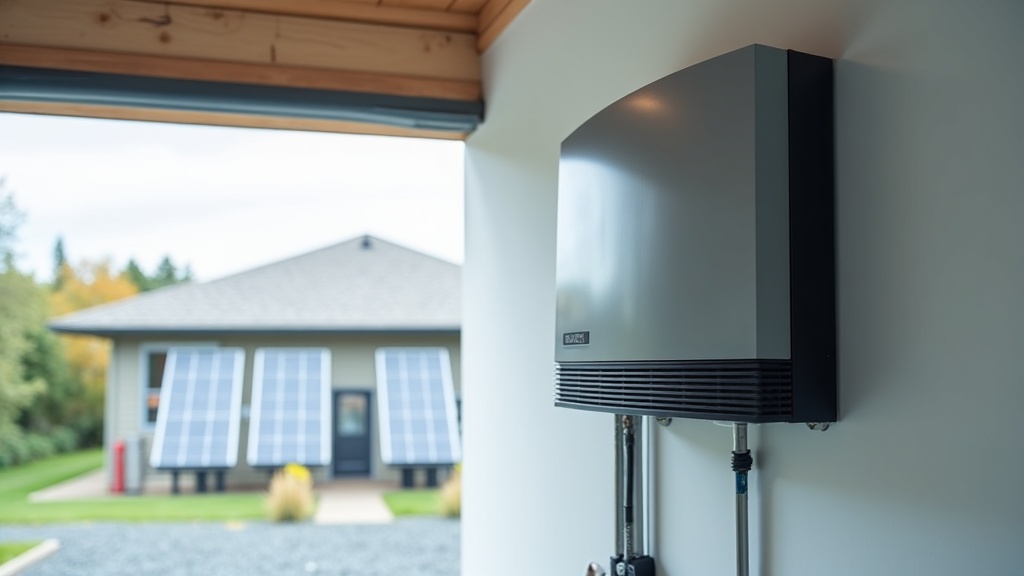
Here is the practical version: a battery lets you keep some of your solar power instead of sending it all away midday. Then you can use that stored energy later when rates are higher or the grid is down. I’ve seen homeowners assume panels alone keep the lights on during an outage, and that is one of the most common misunderstandings in solar. Most grid-tied systems shut down during a blackout unless they are specifically paired with battery or backup-capable equipment. If backup is your priority, I would also budget for the basics that make outages easier to handle, like whole home surge protection options and a few portable power stations for smaller loads.
When It Does Not
Battery backup does not make sense for every homeowner. If your grid is reliable, your utility still gives strong net metering credit, and your main goal is payback, a battery often stretches the budget without improving the financial return enough. Batteries are useful equipment, but they are still expensive equipment.
I would also be careful if someone is trying to sell you battery backup as the automatic answer to a bill problem. If the real issue is poor insulation, old HVAC equipment, electric resistance heat, or a roof that is wrong for solar, the battery is solving the wrong problem. I have no issue telling a homeowner to wait on storage and fix the house first. Money spent reducing waste usually improves every future energy upgrade, including solar.
What I Would Prioritize First
If this were my house and I wanted to know whether solar panels could eliminate my electric bill, I would go in this order.
1. Understand the bill you already have
Pull a full year of utility bills and separate fixed charges from energy charges. If your utility keeps a mandatory monthly service fee, that part may never disappear unless you fully disconnect from the grid, which most homeowners should not do.
2. Reduce waste before sizing solar
If your attic insulation is weak, your ductwork leaks, or your old heat pump is chewing through power, fix that first. A tighter house often lets you buy a smaller solar system. That is one of the least glamorous but most profitable moves available. For homeowners doing some of that diagnostic work themselves, tools like a infrared thermometer or a plug-in energy usage meter can help identify waste before you spend five figures on panels.
3. Match the system to your real goal
If your goal is lower monthly cost, focus on offsetting the highest-value electricity. If your goal is outage resilience, plan the battery and backup loads first. If your goal is both, be honest that the system cost climbs quickly.
4. Check the roof, not just the rate sheet
South, southwest, and west-facing roof areas often work well, but shade, pitch, condition, and available space all matter. I would rather see a homeowner skip solar for now than install on a roof that will need replacement in a few years.
5. Stress-test the proposal
Ask what assumptions are being used for annual production, utility rate inflation, degradation, and export credit. Then ask what the bill would look like in a bad month, not just the best month. Homeowners tend to get shown the glossy case. I care more about the boring months, because that is where disappointment shows up.
If you want a quick yes-or-no framework, here is mine:
- Yes, solar likely makes sense now if you have high electric rates, good roof exposure, and plan to stay in the house long enough to recover the cost.
- Maybe, but only after more homework if your utility credits exports poorly, your usage pattern is heavily nighttime, or your roof has shade or limited space.
- Wait if the roof is near replacement, your house wastes a lot of energy, or the proposal depends on unrealistic promises about wiping out the bill.
Bottom Line for Homeowners
Do solar panels eliminate your electric bill? Sometimes they can get very close, but no, not by default, and not for every house. The honest answer is that solar reduces bills best when the house, roof, utility rules, and homeowner goals all line up. If one of those pieces is off, you may still save money, but expecting a zero bill is where people get burned.
My recommendation is to treat solar as a targeted tool, not a magic trick. If your roof is good, your rates are painful, and you plan to stay put, I would absolutely explore it. If your real priority is backup power, build around that openly and budget for storage instead of assuming panels alone will cover you. If your house is inefficient, fix the waste first and size solar second. That sequence is usually what separates a smart project from an expensive one. After that, compare proposals against your actual yearly usage and make sure every estimate explains what happens to fixed fees, export credits, and nighttime power. That is how you decide whether solar makes sense for your house now, later, or not at all.
Sources, uncertainty, safety, and affiliate disclosure
Check named sources for their publication date, geography, exact product, utility, and jurisdiction. Product specifications and programs change. Estimates are not guarantees. Electrical work, service upgrades, storage systems, transfer equipment, interconnection, and code compliance should be reviewed by the serving utility and a qualified electrician or installer as appropriate.
Some links may be affiliate links. SunBacked may earn a commission at no added cost to you; that does not determine editorial conclusions.