

Editorial quick answer
Generator vs Battery Backup 2026: The Real Trade-off
Generator vs battery backup: Mike compares runtime, cost, noise, and solar integration to help you make the right home energy resilience choice.
Who this is for
Homeowners using this topic to compare choices, identify tradeoffs, or prepare better questions.
What this cannot promise
A guaranteed bill reduction, output, runtime, incentive, code approval, interconnection result, or project-specific electrical design.
Assumptions, date, and local checks
Costs and performance depend on location, date, model, configuration, weather, tariffs, utility rules, program funding, installation details, and household loads. Incentive, net-metering, code, battery-sizing, and electrical statements require current jurisdiction and source checks. Confirm project-specific details with the serving utility, program administrator, manufacturer, and a qualified electrician or installer.
How evidence is labeled
Mike context
Limited to his 20 years as an electrician, going solar in 2019, and having no installer ties.
Manufacturer specification
Maker-published data for an identified model or version, not an independent measurement.
Public source
Utility, government, program, code, standards, or other dated public information.
Estimate
Math based on stated inputs and assumptions, not a quote or guarantee.
Editorial analysis
SunBacked’s synthesis of tradeoffs, separated from sourced facts.
Disclosure: This post contains affiliate links. If you purchase through our links, we may earn a small commission at no extra cost to you.
When the power goes out, you want to know you made the right decision ahead of time — not stand in the dark wondering if you should have bought the other thing. As a home energy independence consultant, I’ve helped hundreds of homeowners work through the whole home generator vs battery backup decision, and the answer is almost never universal. It depends on how long your outages last, what you need to run, and whether you have or plan to get solar.
This guide lays out the honest comparison so you can make the right call for your situation.
If you already know you do not have solar in the picture, my guide to home battery backup without solar breaks down when battery-only backup still makes sense. And if you want the generator side narrowed down faster, start with best whole home generators.
The Core Difference: Fuel Source and Runtime
Everything else in this comparison flows from one fundamental difference:
- Whole home generator: Burns propane or natural gas continuously, producing as much electricity as your home needs for as long as fuel is available (effectively unlimited runtime with a large LP tank or NG connection)
- Battery backup: Stores a fixed amount of energy (kWh), discharged at the rate your home demands. Once depleted, you’re dark unless you recharge from solar, generator, or grid
This single distinction determines which is right for you.
Whole Home Generator: Who It’s For
Strengths
Runtime: A natural gas standby generator (Generac, Kohler, Cummins) connected to your utility gas line runs indefinitely. Even a 500-gallon LP tank at 22kW generator consumption runs 5–7 days continuously. This is the critical advantage in regions with extended outages from hurricanes, ice storms, or wildfire evacuations.
Power output: Whole-home standby generators are typically sized at 20–26kW — enough to run your entire home including HVAC, electric range, EV charger, and all appliances simultaneously. Battery backup systems at $10,000–$15,000 typically provide 10–20kW output with 10–40kWh capacity.
Proven technology: Standby generators have decades of residential deployment history. A properly maintained Generac 22kW unit will run for 2,000+ hours over its lifetime. Reliability in extreme conditions is well-established.
Weaknesses
Fuel cost during operation: A 22kW generator at 50% load consumes approximately 3 gallons of propane per hour. A 5-day outage running 10 hours per day = 150 gallons = $450–$600 in fuel (at $3–4/gallon propane). Natural gas is cheaper but still has operating costs.
Maintenance requirements: Annual service (oil changes, spark plugs, air filters), exercise cycles (the generator runs weekly to maintain readiness), and every-3,000-hour major maintenance. Budget $200–$400/year for maintenance.
Installation complexity: Requires a electrician, possible gas utility work, and in most jurisdictions, a permit. Installed cost: $5,000–$15,000 for the unit + installation, depending on transfer switch type and generator size.
Noise: A running generator produces 65–75 dB — comparable to a lawnmower. Neighbors will know when your generator is running.
Emissions: Natural gas/propane combustion produces CO2, NOx, and trace pollutants. Not compatible with all-electric, solar-forward home philosophy.
Battery Backup: Who It’s For
Strengths
Silent operation: Zero noise, zero emissions. No running a combustion engine in your backyard at 2 AM.
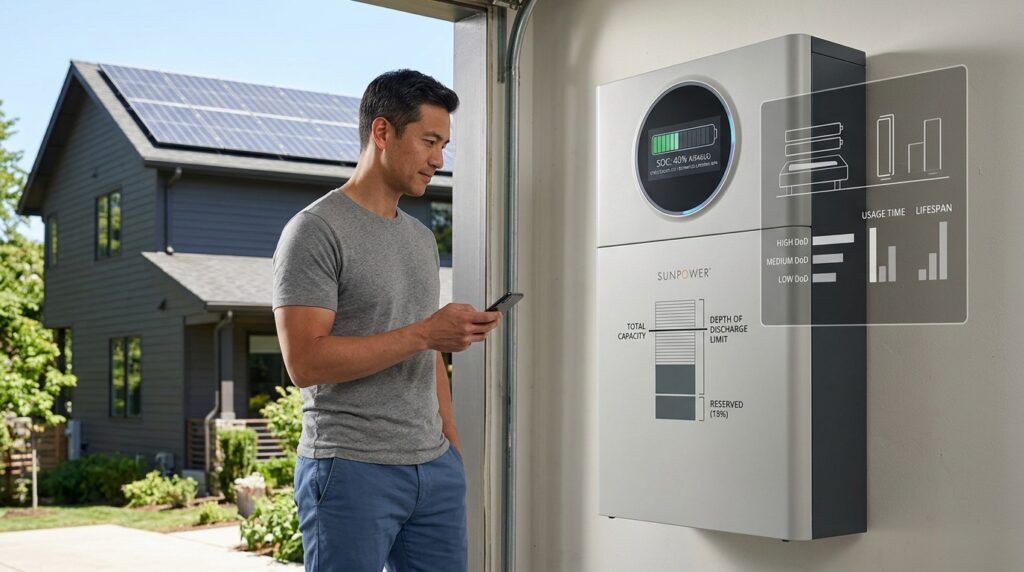
Solar integration: Battery backup is the natural complement to solar panels. Excess daytime solar production charges the battery; the battery powers the home at night and during outages. This creates a genuine path toward energy independence rather than fuel-dependent backup.
Instantaneous switchover: Systems like Tesla Powerwall 3 or Enphase IQ Battery switch from grid to battery power in milliseconds — so fast that clocks don’t reset and computers don’t lose sessions. Standby generators require 10–30 seconds to start, during which power is interrupted.
Daily value: A battery system provides value every day by shifting solar production to evening hours, avoiding demand charges (in applicable utility territories), and potentially earning money through grid services (vehicle-to-grid programs emerging in 2025–2026). A generator provides zero daily value — it just sits there.
Operating cost near zero: No fuel, no annual maintenance beyond occasional inspection. The only real cost is the electricity used to charge it (which is free if you have solar).
Weaknesses
Limited runtime without solar: A Tesla Powerwall 3 holds 13.5 kWh. The average home uses 30 kWh/day. Without solar recharging, one Powerwall runs a normally operated home for approximately 10–12 hours. Two Powerwalls: 20–24 hours. This is adequate for the most common outages (under 8 hours) but insufficient for extended events (3–5+ days).
Cannot run all appliances simultaneously (in most configurations): Standard residential battery systems have limited output current. Running central HVAC (3–5kW) + electric range (5–8kW) + EV charger (7–11kW) simultaneously may exceed the system’s output capacity, requiring load management or appliance prioritization.
Upfront cost: A single Tesla Powerwall 3 installed runs $12,000–$15,000 in most US markets. Two Powerwalls (for meaningful backup duration): $20,000–$25,000. The federal 30% Investment Tax Credit applies if paired with solar, bringing costs to $14,000–$17,500 — competitive with a large standby generator.
Side-by-Side Comparison
| Factor | Whole Home Generator | Battery Backup |
|---|---|---|
| Runtime | Unlimited (fuel dependent) | Limited (hours to days) |
| Power output | 20–26kW (whole home) | 5–11kW (essential loads) |
| Operating cost | $3–8/hr during outage | Near zero with solar |
| Noise | Loud (65–75dB) | Silent |
| Solar integration | Poor | Excellent |
| Daily value | None | High (with solar) |
| Installation cost | $8,000–$15,000 | $10,000–$25,000 |
| Switch time | 10–30 seconds | Milliseconds |
| Best for | Long outages, no solar | Short-medium outages, solar |
My Recommendation Framework
Choose a whole home generator if:
- You live in a hurricane, ice storm, or wildfire zone where multi-day outages occur
- You don’t have solar and aren’t planning to add it
- You need to run a central HVAC system continuously during outages
- You have medical equipment that cannot tolerate interruption or runtime limits
Choose battery backup if:
- You have solar or are adding it — battery is the logical partner
- Your outages are typically under 12–24 hours
- Noise and emissions are concerns (HOA restrictions, personal values)
- You want daily energy independence benefits, not just emergency backup
- You’re in a utility territory with high demand charges or good grid services programs
Consider both if: You live in a region with extended outage risk AND you have solar. A battery handles most outages; a generator handles extended events. This dual-system approach is increasingly common in Florida, Texas, and California.
FAQ: Generator vs Battery
What whole home generator do you recommend?
The Generac 7043 22kW Guardian is the market leader for residential standby — reliable, widely serviced, air-cooled (lower cost) with NG or LP fuel options.
Can a battery backup run my central air conditioning?
Yes, but it will deplete the battery faster. A 3-ton HVAC unit draws 3–4kW. Running it continuously drains a 13.5kWh Powerwall in about 3–4 hours. Smart load management (running AC in cycles, targeting the peak hours) extends this significantly.
Bottom Line
The whole home generator wins on runtime and power output for extended outages. Battery backup wins on daily value, solar integration, noise, and emissions. If you have solar or are going solar, battery backup is the right choice and the federal tax credit makes it financially competitive. If you need multi-day backup without solar, a standby generator remains the most practical solution.
Sources, uncertainty, safety, and affiliate disclosure
Check named sources for their publication date, geography, exact product, utility, and jurisdiction. Product specifications and programs change. Estimates are not guarantees. Electrical work, service upgrades, storage systems, transfer equipment, interconnection, and code compliance should be reviewed by the serving utility and a qualified electrician or installer as appropriate.
Some links may be affiliate links. SunBacked may earn a commission at no added cost to you; that does not determine editorial conclusions.