
Editorial quick answer
Tesla Powerwall 3 Review: Still the Best in 2026?
Mike, a electrician and solar installer, breaks down the Tesla Powerwall 3 with real specs, installed costs, a head-to-head competitor comparison, and the honest drawbacks installers won’t always tell you.
Who this is for
Homeowners using this topic to compare choices, identify tradeoffs, or prepare better questions.
What this cannot promise
A guaranteed bill reduction, output, runtime, incentive, code approval, interconnection result, or project-specific electrical design.
Assumptions, date, and local checks
Costs and performance depend on location, date, model, configuration, weather, tariffs, utility rules, program funding, installation details, and household loads. Incentive, net-metering, code, battery-sizing, and electrical statements require current jurisdiction and source checks. Confirm project-specific details with the serving utility, program administrator, manufacturer, and a qualified electrician or installer.
How evidence is labeled
Mike context
Limited to his 20 years as an electrician, going solar in 2019, and having no installer ties.
Manufacturer specification
Maker-published data for an identified model or version, not an independent measurement.
Public source
Utility, government, program, code, standards, or other dated public information.
Estimate
Math based on stated inputs and assumptions, not a quote or guarantee.
Editorial analysis
SunBacked’s synthesis of tradeoffs, separated from sourced facts.
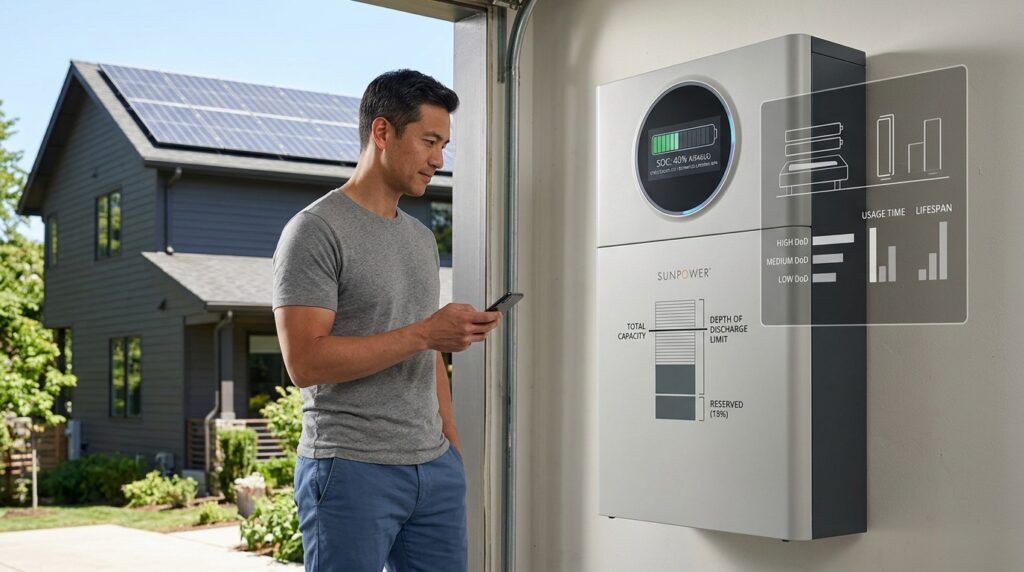
I’ve installed a lot of home batteries over the past few years. Enphase, FranklinWH, the original Powerwall 2 — I’ve run wire on most of the major brands. So when the Tesla Powerwall 3 started showing up on my job sites, I wanted to give you a proper review from someone who’s actually bolted these things to a wall and wired them up, not just read a spec sheet.
Short answer: Yes, it’s still the best home battery for most people. But “best” comes with caveats. Let me walk you through the numbers, what’s actually improved over the Powerwall 2, where it falls short, and who might want to look elsewhere.
Tesla Powerwall 3 Specs: What You’re Actually Buying
Before I get into the review, let’s establish the baseline. Here’s what the Powerwall 3 delivers:
- Usable capacity: 13.5 kWh per unit
- Continuous power output: 11.5 kW — nearly double the old Powerwall 2’s 5.8 kW
- Peak power: 30 kW (brief surges for motor startups)
- Round-trip efficiency: Up to 97.5% DC-coupled; approximately 90% AC
- Battery chemistry: Lithium Iron Phosphate (LFP) — safer and longer-lived than the old NMC cells
- Built-in solar inverter: Yes. 6 independent MPPT inputs, handles up to 20 kW DC solar directly
- Expandability: Up to three Expansion Packs for 54 kWh total
- Warranty: 10 years / 70% retained capacity
That 11.5 kW continuous output is the number that matters most. It means the Powerwall 3 can run your whole home during an outage — HVAC, well pump, EV charger, kitchen appliances — simultaneously. The Powerwall 2 couldn’t do that. You had to be careful about what you ran at the same time. That limitation is gone.
What Actually Changed From Powerwall 2
The Powerwall 3 is a fundamentally different product, not just an incremental update. The biggest change: it now has a built-in solar inverter. The old unit was AC-coupled only — you needed a separate string inverter or microinverters to handle your solar, and the Powerwall just stored what they produced. Now the Powerwall 3 does both jobs.
From an installation standpoint, this is a big deal. On new solar installs, I’m running one set of conduit instead of two. The equipment footprint shrinks. There are fewer points of failure. And direct DC coupling means less energy is lost in conversion — that’s where the 97.5% round-trip efficiency comes from when you’re running solar-to-battery without going through an AC conversion step first.
The switch to LFP chemistry also matters. The old Powerwall 2 used NMC (nickel manganese cobalt) cells, which are more energy-dense but less thermally stable. LFP cells run cooler, last longer, and don’t have the same thermal runaway risk profile. For a device mounted in a garage or on an exterior wall, that’s meaningful. I’ve seen enough recall paperwork on NMC battery systems to appreciate the change.
Installed Cost: What to Actually Expect
Tesla’s website will quote you around $9,200 for the hardware. That’s not what you’ll pay. Installed cost, all-in, typically runs $11,000 to $16,500 depending on your electrical setup.
Here’s where that range comes from:
- Simple install (newer home, 200A panel, good conduit run): $11,000–$13,000
- Complex install (panel upgrade needed, long conduit runs, older wiring): $14,000–$16,500+
- Expansion Pack (each additional 13.5 kWh): approximately $6,000 installed
One current incentive worth knowing: Tesla’s “Next Million Powerwall” promotion gives you $500 off per unit (up to $1,000 on two or more) for orders placed through March 31, 2026 with installation completed by September 30, 2026. The 30% federal battery storage tax credit expired at the end of 2025, but state-level rebates remain strong in California, New York, North Carolina, and Colorado.
Before you buy direct from Tesla, I’d strongly recommend getting competing quotes. EnergySage is the platform I point homeowners to — it’s a free marketplace where you can compare quotes from multiple certified installers in your area, including Powerwall installers. I’ve seen meaningful price differences between installers for identical equipment and installs.
Real-World Performance: What I’ve Seen on Job Sites
The 11.5 kW output isn’t marketing math — it’s real. I’ve been on callbacks after Powerwall 3 installations and the homeowners who live through grid outages are consistently impressed. One client in the Pacific Northwest ran their 4-ton heat pump, all kitchen appliances, and an EV charger simultaneously during a winter storm outage. The system handled it cleanly.
The built-in active thermal management also shows up in cold climates in a way the old unit didn’t. If you’re in Minnesota or Vermont, the Powerwall 3 maintains efficiency down to extreme temperatures better than most competing products. That’s a real differentiator.
Tesla’s app is straightforward. Time-of-use programming, storm watch mode (automatically charges to 100% before predicted outage events), VPP enrollment if your utility supports it — it’s all there and it actually works reliably. The app beats Enphase’s for simplicity, though Enphase gives you more granular data if you’re a numbers person.
How It Stacks Up Against the Competition
Here’s my honest head-to-head breakdown:
Tesla Powerwall 3 vs. Enphase IQ Battery 10C
Enphase uses a distributed microinverter architecture — no single point of failure. Their 15-year warranty beats Tesla’s 10-year. And the Enphase system integrates seamlessly with generators, which the Powerwall 3 does not. If you already have Enphase microinverters and want to add storage, staying in the Enphase ecosystem often makes more sense.
The Powerwall 3 wins on raw power output (11.5 kW vs. 7.08 kW continuous for the Enphase 10C) and cold-climate performance. If whole-home backup during an outage is your primary goal and you’re installing new solar, Powerwall 3 edges Enphase.
Tesla Powerwall 3 vs. FranklinWH aPower 2
FranklinWH gives you more capacity per unit (15 kWh vs. 13.5 kWh) and full generator integration — if your batteries drain during a multi-day outage, a generator can recharge them. For homes in hurricane-prone or rural areas with extended outage risk, this is a real advantage. Franklin also runs 10 kW continuous, which is solid if not quite at Tesla’s level.
Powerwall 3 wins on power output and brand track record. Franklin wins on capacity and generator compatibility.
The Honest Drawbacks
I’m not going to sell you on the Powerwall 3 without telling you what I tell my own clients:
No generator support. This is the biggest gap. If you drain your Powerwall 3 during a week-long outage, a generator can power your loads but it cannot recharge the battery. Competing systems from Enphase and FranklinWH both support generator integration. If you live somewhere with extended outages or rural grid instability, this is a serious consideration.
Customer support is genuinely bad. I’ve dealt with Tesla’s support on behalf of clients and it’s frustrating. Long hold times, slow escalations, inconsistent callbacks. The product itself is reliable, but if something does go wrong you’re going to fight for service. This is widely reported and hasn’t improved meaningfully.
Firmware connectivity issues on multi-unit installs. A small percentage of installations — particularly multi-unit daisy chains — experience connectivity glitches that require reboots. I’ve seen this personally. It’s not universal, but it’s real.
Grid reconnection flicker. When grid power is restored after an outage, there’s a brief 1-2 second interruption as the Powerwall transitions back. Smart bulbs and some electronics reset during this. It’s a minor annoyance but worth knowing about.
Single-phase only. Even three stacked units only cover one phase. If you have a three-phase home (uncommon in residential, but it exists), the Powerwall 3 isn’t a viable whole-home backup solution without significant workarounds.
Who Should Buy the Powerwall 3
The Powerwall 3 is the right choice if:
- You’re installing new solar and want an all-in-one system
- Whole-home backup during outages is your primary goal
- You’re in a cold climate where thermal performance matters
- You want a proven, widely deployed system with a solid track record
- You want VPP enrollment potential to earn bill credits from your utility
Consider alternatives if:
- You already have Enphase microinverters installed
- You need generator integration for extended outages
- You’re in a hurricane zone or rural area with multi-day outage exposure
- Brand optics matter to you (some installers are reporting pushback from customers on Tesla branding given current events)
A Note on Getting the Best Price
I’ll be direct: don’t just accept Tesla’s online quote. Certified third-party Powerwall installers often price the same equipment competitively and may have units in stock with faster installation timelines. Use EnergySage to compare multiple certified installer quotes side-by-side. It’s free, takes about five minutes to set up, and I’ve seen homeowners save $1,500–$3,000 on identical installs just by getting competitive bids.
If you want to go deeper on monitoring your system’s performance once it’s installed, a home energy monitor like the Emporia Vue (around $50 on Amazon) pairs well with any home battery setup and gives you granular circuit-level data that even the Powerwall app doesn’t provide.
The Bottom Line
The Tesla Powerwall 3 is the best all-around home battery for most new solar installations in 2025–2026. The doubled power output, built-in inverter, LFP chemistry, and active thermal management represent genuine improvements over its predecessor. For a typical single-phase home wanting whole-home backup and grid services participation, nothing else in the same price range delivers as much usable power.
But “best for most” isn’t “best for everyone.” If you need generator backup for extended outages, have Enphase microinverters already installed, or live in an area with week-long outage risk, run the numbers on alternatives before committing. And whoever you buy from — get at least three quotes before signing anything.
Sources, uncertainty, safety, and affiliate disclosure
Check named sources for their publication date, geography, exact product, utility, and jurisdiction. Product specifications and programs change. Estimates are not guarantees. Electrical work, service upgrades, storage systems, transfer equipment, interconnection, and code compliance should be reviewed by the serving utility and a qualified electrician or installer as appropriate.
Some links may be affiliate links. SunBacked may earn a commission at no added cost to you; that does not determine editorial conclusions.