
Editorial quick answer
Enphase vs SolarEdge 2026: Which Inverter Wins?
Enphase vs SolarEdge: an installer's honest comparison of the two dominant solar inverter systems in 2026. Covers efficiency, shading, battery storage, cost, warranty, and real-world reliability.
Who this is for
Homeowners using this topic to compare choices, identify tradeoffs, or prepare better questions.
What this cannot promise
A guaranteed bill reduction, output, runtime, incentive, code approval, interconnection result, or project-specific electrical design.
Assumptions, date, and local checks
Costs and performance depend on location, date, model, configuration, weather, tariffs, utility rules, program funding, installation details, and household loads. Incentive, net-metering, code, battery-sizing, and electrical statements require current jurisdiction and source checks. Confirm project-specific details with the serving utility, program administrator, manufacturer, and a qualified electrician or installer.
How evidence is labeled
Mike context
Limited to his 20 years as an electrician, going solar in 2019, and having no installer ties.
Manufacturer specification
Maker-published data for an identified model or version, not an independent measurement.
Public source
Utility, government, program, code, standards, or other dated public information.
Estimate
Math based on stated inputs and assumptions, not a quote or guarantee.
Editorial analysis
SunBacked’s synthesis of tradeoffs, separated from sourced facts.
Affiliate Disclosure: This post contains affiliate links. If you purchase through our links, we may earn a small commission at no extra cost to you. As an Amazon Associate, we earn from qualifying purchases. We only recommend products we believe in based on real-world installation experience.
Enphase vs SolarEdge: Which Inverter System Wins in 2026?
If you’re shopping for solar and your installer handed you a quote with Enphase vs SolarEdge as your two inverter options, you’re not alone. These two brands dominate the US residential solar market — together accounting for over 90% of all home installations. I’ve installed hundreds of systems using both platforms, and I’m going to give you the straight talk on which one actually performs better, which saves you money, and which one I’d put on my own house.
The short answer: Enphase wins for most homeowners. But SolarEdge isn’t a bad choice — it’s just better suited for specific situations. Let me break it down.
How These Systems Actually Work
Enphase Microinverters: One Per Panel
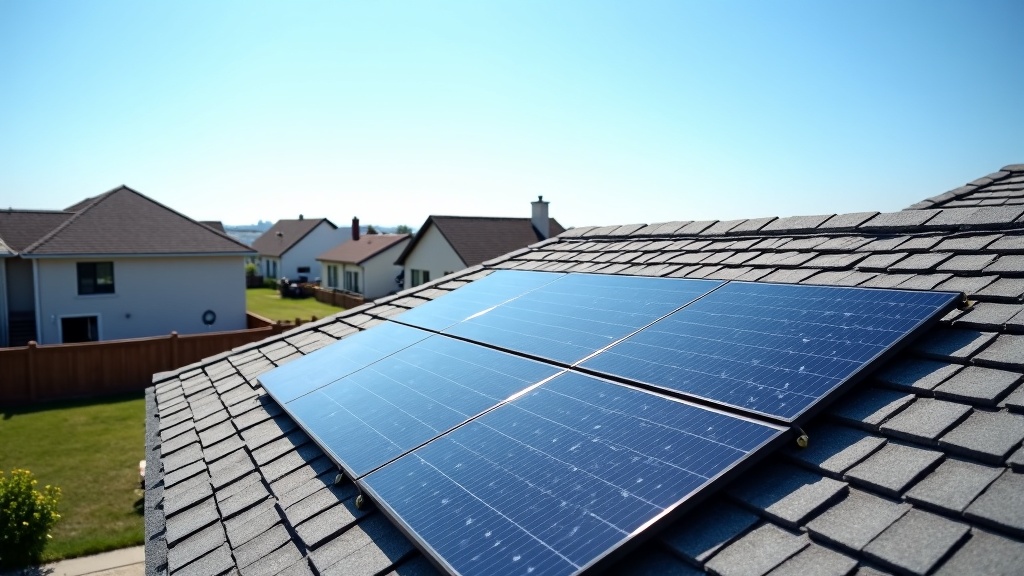
Enphase’s system puts a small inverter behind every single solar panel. Each microinverter converts DC power to AC right at the panel — before it ever travels to your main panel. The current flagship is the IQ8 series, which includes the IQ8A (up to 366W input, 97.5% peak CEC efficiency) and the IQ8M for higher-wattage panels.
What this means practically: if a tree branch shades one panel for two hours a day, only that panel is affected. The rest of your array keeps pumping at full capacity. Each microinverter also communicates independently, so your Enphase Envoy gateway can show you exactly what every panel is producing, in real time.
The downside? More components on the roof. An IQ8 microinverter on every panel means 20 or 30 individual units up there instead of one box on the wall.
SolarEdge String Inverter + Power Optimizers
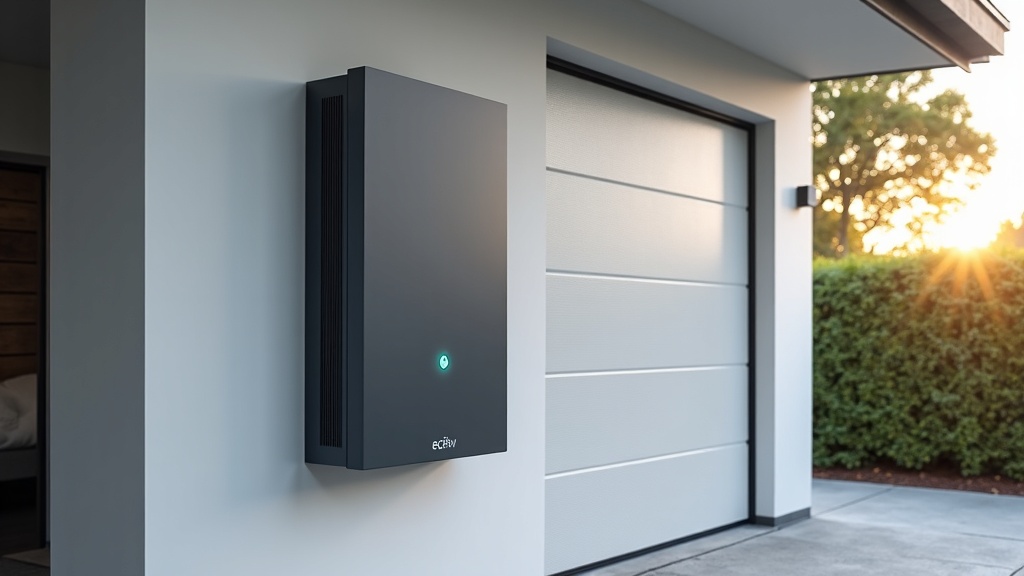
SolarEdge takes a different approach. They put a small power optimizer behind each panel — similar to a microinverter, but it doesn’t do the full DC-to-AC conversion. Instead, the optimizer does maximum power point tracking (MPPT) and passes optimized DC power down to a single HD-Wave string inverter on your wall.
That main inverter handles the DC-to-AC conversion for the whole array. The SolarEdge HD-Wave (SE7600H-US and similar models) achieves an impressive 99% peak efficiency — one of the highest in the industry. Because you’re doing a single DC-to-AC conversion instead of multiple AC-to-DC-to-AC conversions, you lose less energy in the process.
The tradeoff? That inverter box on your wall is your single point of failure. If it goes down, your whole system goes down.
Enphase vs SolarEdge: Head-to-Head Comparison
| Feature | Enphase IQ8 Series | SolarEdge HD-Wave |
|---|---|---|
| System Type | Microinverters (AC-coupled) | String inverter + power optimizers (DC) |
| Peak Efficiency | 97.5% (CEC weighted) | 99% (CEC weighted) |
| Shading Tolerance | Excellent — panel-level independence | Very good — optimizer-level MPPT |
| Single Point of Failure | No (per-panel redundancy) | Yes (main inverter) |
| Battery Compatibility | Enphase IQ Battery (AC-coupled) | SolarEdge Home Battery (DC-coupled, more efficient) |
| Inverter Warranty | 25 years (included) | 12 years (25-year costs extra) |
| Optimizer Warranty | N/A | 25 years |
| Monitoring | Per-panel, highly detailed | Per-panel, good (improving) |
| Cost Premium | ~$0.10–0.15/W higher | Lower upfront |
| System Expandability | Excellent (add panels any time) | Limited by inverter size |
| Installer Preference | ~60%+ prefer Enphase | Popular for battery-first installs |
Shading Performance: Which Handles Partial Shade Better?
This is where Enphase has historically won the argument, and it’s still true in 2026. With microinverters, each panel operates completely independently. One shaded panel has zero impact on its neighbors.
SolarEdge’s power optimizers do a solid job of minimizing shading losses — each optimizer tracks its own panel’s maximum power point. In a standard string inverter without optimizers, one shaded panel can drag down the entire string by 30–60%. With SolarEdge optimizers, that loss is mostly isolated to the affected panel.
But here’s the real-world difference: In heavily shaded situations — think a roof with multiple obstructions at different times of day — Enphase microinverters consistently outperform SolarEdge optimizers by 2–5% in annual yield. For a typical 10 kW system, that’s 200–500 kWh per year in extra production.
If your roof is completely unobstructed, the shading advantage of Enphase is minimal. But most residential roofs have at least some shading from chimneys, vents, or neighboring trees.
Battery Storage: Where SolarEdge Has a Genuine Edge
This is the one area where I’ll give SolarEdge a clear win for certain buyers.
The SolarEdge Home Battery (formerly StorEdge) is DC-coupled. That means solar energy flows directly from your panels into battery storage without being converted from DC to AC and back again. You lose less energy, and the system can charge the battery even during a grid outage.
Enphase’s IQ Battery 5P (5 kWh usable capacity) is AC-coupled. The extra conversion step costs a small efficiency penalty — roughly 2–5% — though Enphase has improved this with the IQ8 architecture, which includes a partial-load microinverter that can genuinely island without the grid.
The IQ8’s “Sunlight Backup” feature is a real differentiator: during a grid outage, your Enphase system can continue operating on solar alone during daylight hours, even without a battery. No other mainstream microinverter does this.
Bottom line on batteries: If your primary goal is battery storage efficiency and you’re doing a solar+battery install from day one, SolarEdge’s DC-coupled system has a slight edge. If you want flexibility to add batteries later or want the Sunlight Backup feature, Enphase wins.
Enphase vs SolarEdge Cost: What’s the Real Price Difference?
Enphase costs more. That’s just the truth. On a typical 8 kW residential system, expect to pay $800–$1,200 more for Enphase than a comparable SolarEdge installation. The equipment itself is the main driver — microinverters cost more per panel than a single string inverter plus optimizers.
Is it worth it? Do the math on your specific situation:
- If you have significant shading, Enphase’s production gains can offset the cost premium within 3–5 years
- The 25-year warranty on every microinverter is included — SolarEdge charges extra for the extended warranty on their string inverter
- Enphase’s redundancy means you never lose your whole system to a single inverter failure
To get real competing quotes for your home with both Enphase and SolarEdge options, I always recommend running them through EnergySage — it’s the fastest way to see what local installers will actually charge for each system in your area, and you can compare apples-to-apples.
For DIY solar monitoring upgrades and accessories that work with both systems, check out solar energy monitors on Amazon — a whole-home energy monitor like the Emporia Vue pairs well with either platform to give you complete visibility into your home’s power flow.
Warranty and Reliability: The Numbers That Matter
I’ve been installing solar for over a decade. Warranty service speed is something most comparison articles won’t tell you about — but it’s one of the biggest factors in real-world satisfaction.
Enphase’s warranty process for microinverters has been consistently smooth in my experience. You identify the failed unit via the app, submit a claim, and a replacement arrives in a few days. A homeowner can even swap a microinverter themselves with basic tools — it’s just a connector swap. The whole system keeps running while one unit is down.
SolarEdge’s warranty process for their string inverter has been more frustrating. In 2023–2024, there were widespread reports in the installer community of long wait times for replacement units and difficult customer service interactions. A failed SolarEdge inverter means your entire system is offline until the replacement arrives and gets installed — which requires a electrician.
Warranty coverage summary:
- Enphase IQ8 microinverters: 25 years, included
- SolarEdge HD-Wave inverter: 12 years standard, 20 or 25-year extension available for additional cost
- SolarEdge power optimizers: 25 years (these almost never fail, to be fair)
According to a SolarReviews survey of professional solar installers, more installers reported warranty and reliability issues with SolarEdge equipment than with Enphase. The US solar market, which the Solar Energy Industries Association (SEIA) reported installed 32.4 GW of new capacity in 2024, increasingly favors equipment with strong manufacturer support and accessible warranty service.
What Installers Actually Prefer (And Why)
I’ll be straight with you: the majority of experienced installers I know prefer Enphase. Not because of brand loyalty, but because of callbacks.
When a homeowner calls me a year after installation saying their system is down, I want the fix to be simple. With Enphase, nine times out of ten it’s one or two microinverters that need swapping. With SolarEdge, if the main inverter fails, I’m blocking out half a day for a full inverter replacement, dealing with service scheduling, and the homeowner gets zero production during that window.
That said, I’ve installed SolarEdge on plenty of homes — especially when the homeowner is doing a battery-first approach or when the cost difference matters significantly. SolarEdge makes good products. The efficiency numbers are real. For a south-facing roof with zero shading and a battery storage priority, SolarEdge is a completely defensible choice.
I keep a solar installation toolkit stocked with gear for both systems — because in 2026, you need to be fluent in both.
Monitoring: Enphase Enlighten vs SolarEdge Monitoring Portal
Both platforms offer per-panel monitoring. Enphase’s Enlighten app is widely considered more user-friendly — it’s cleaner, more intuitive, and homeowners can actually understand what they’re looking at. SolarEdge’s monitoring has improved significantly in recent years, but the interface is still more complex for the average homeowner.
Both platforms alert you to underperforming panels. Enphase Enlighten’s mobile app gets consistently higher ratings from homeowners for ease of use and actionable data.
Frequently Asked Questions
Is Enphase or SolarEdge better for shading?
Enphase is better for shading. Microinverters provide complete panel-level independence, so a shaded panel has zero impact on its neighbors. SolarEdge power optimizers minimize (but don’t eliminate) shading losses. For roofs with complex shading patterns, Enphase typically produces 2–5% more annual energy.
Which inverter system has a better warranty?
Enphase wins on warranty coverage. Every IQ8 microinverter comes with a 25-year warranty at no extra cost. SolarEdge’s string inverter ships with a 12-year warranty; extending to 25 years costs extra. SolarEdge power optimizers carry 25-year warranties.
Can Enphase work during a power outage?
Yes — and this is a unique Enphase advantage. The IQ8 microinverter can operate in “Sunlight Backup” mode during a grid outage, producing power from solar alone without a battery. Most traditional inverter systems shut down completely when the grid goes down. Adding an Enphase IQ Battery 5P gives you full backup capability day and night.
Is SolarEdge more efficient than Enphase?
On paper, yes. SolarEdge HD-Wave inverters achieve 99% peak CEC efficiency vs. 97.5% for Enphase IQ8 microinverters. However, Enphase’s per-panel optimization often recovers more than enough production to offset this efficiency gap, especially on roofs with any shading. In practice, annual energy output is very similar on unshaded roofs.
Which system is better if I want to add a battery later?
Enphase is easier to add battery storage to after the fact. The AC-coupled Enphase IQ Battery can be added to any existing Enphase system without replacing the inverter. Adding a SolarEdge battery to an older SolarEdge system may require a full inverter upgrade. If you’re planning solar-only now and battery later, Enphase is the more flexible choice.
The Verdict: Which Inverter System Should You Choose in 2026?
Choose Enphase if:
- Your roof has any shading from trees, chimneys, or neighboring structures
- System reliability and redundancy matter more than maximum efficiency
- You want included 25-year warranty coverage with no upcharges
- You want the option to expand your system easily in the future
- You value straightforward monitoring and easy warranty service
Choose SolarEdge if:
- Your roof is completely unshaded and you want maximum conversion efficiency
- You’re doing a solar+battery install from day one and want DC-coupled storage
- Upfront cost is a significant factor and you’re working with a tight budget
- Your installer strongly recommends SolarEdge and has a solid service track record
For most homeowners in 2026, Enphase is the safer, smarter long-term bet. The higher upfront cost is offset by better reliability, stronger warranty coverage, and production advantages on any roof that isn’t perfectly unobstructed.
Ready to see what both systems would actually cost on your roof? Get competing quotes from local installers through EnergySage — it’s free, you’ll get multiple bids, and you can specify that you want quotes for both Enphase and SolarEdge so you can compare them directly.
Mike is a electrician (IBEW) and solar PV installer with over 10 years of field experience across residential and commercial projects in the Pacific Northwest. He has installed solar systems using Enphase, SolarEdge, APsystems, and Fronius equipment.
Sources, uncertainty, safety, and affiliate disclosure
Check named sources for their publication date, geography, exact product, utility, and jurisdiction. Product specifications and programs change. Estimates are not guarantees. Electrical work, service upgrades, storage systems, transfer equipment, interconnection, and code compliance should be reviewed by the serving utility and a qualified electrician or installer as appropriate.
Some links may be affiliate links. SunBacked may earn a commission at no added cost to you; that does not determine editorial conclusions.