
Editorial quick answer
Solar Hits 17% of US Power: What It Means for You
The numbers are in, and they’re kind of remarkable: wind and solar together generated a record 17% of all US electricity in 2025. For solar specifically, the growth trajectory over the past five years has been steep enough that analysts who were calling “peak solar adoption” a few years ago are quietly revising their models. […]
Who this is for
Homeowners using this topic to compare choices, identify tradeoffs, or prepare better questions.
What this cannot promise
A guaranteed bill reduction, output, runtime, incentive, code approval, interconnection result, or project-specific electrical design.
Assumptions, date, and local checks
Costs and performance depend on location, date, model, configuration, weather, tariffs, utility rules, program funding, installation details, and household loads. Incentive, net-metering, code, battery-sizing, and electrical statements require current jurisdiction and source checks. Confirm project-specific details with the serving utility, program administrator, manufacturer, and a qualified electrician or installer.
How evidence is labeled
Mike context
Limited to his 20 years as an electrician, going solar in 2019, and having no installer ties.
Manufacturer specification
Maker-published data for an identified model or version, not an independent measurement.
Public source
Utility, government, program, code, standards, or other dated public information.
Estimate
Math based on stated inputs and assumptions, not a quote or guarantee.
Editorial analysis
SunBacked’s synthesis of tradeoffs, separated from sourced facts.
The numbers are in, and they’re kind of remarkable: wind and solar together generated a record 17% of all US electricity in 2025. For solar specifically, the growth trajectory over the past five years has been steep enough that analysts who were calling “peak solar adoption” a few years ago are quietly revising their models.
I’ve been covering home solar for years, and I want to explain why this milestone actually matters for homeowners who are still evaluating whether now is the right time to install panels — because the implications go beyond just a feel-good headline.
Why the 17% Number Is a Big Deal
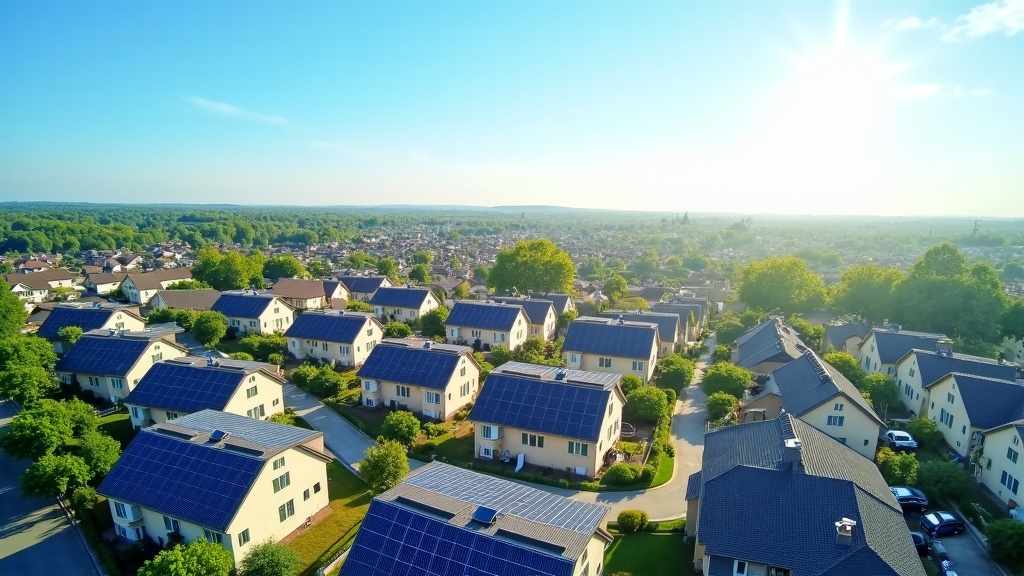
To put it in context: just a decade ago, solar was generating around 1% of US electricity. The jump to 17% (combined with wind) in 2025 represents an infrastructure transformation that’s happening faster than most utilities planned for. That matters for a few reasons:
Grid dynamics are changing. More solar generation during peak daylight hours is shifting when electricity is most abundant and cheapest — which directly affects the value of time-of-use rates, net metering, and battery storage. If you have solar plus a battery, you’re increasingly on the right side of these dynamics.
Supply chains have matured. The rapid scale-up of solar has driven panel costs down by roughly 90% over the past fifteen years. That curve hasn’t flattened out completely — panel costs and installation prices are still declining gradually, and the domestic manufacturing push has added resilience to the supply chain.
The installer market is more competitive. More installed capacity means more experienced installers, more competition on pricing, and better consumer protection (warranty support, financing options, etc.).
What This Means for the “Wait or Buy?” Question
I hear from homeowners every week who are waiting for some imaginary better moment — better panels, lower prices, a different political environment. Here’s my honest take after years of watching this market:
The 30% federal investment tax credit (ITC) is the most powerful incentive in the history of residential solar, and it’s currently scheduled to remain at 30% through 2032. That alone is worth understanding before you decide to wait.
Panel efficiency is incrementally improving, but we’re not on the verge of a breakthrough that would make current panels obsolete. A quality solar system installed today will still be generating clean electricity (and offsetting your utility bill) in 30 years. Waiting for “better panels” is a little like waiting to buy a laptop because a faster one is coming — technically true, practically never-ending.
The more significant wildcard is net metering policy. Several states have already reduced net metering compensation for new solar installations. If you’re in a state with strong net metering today, there’s a reasonable argument that installing sooner locks in better buyback rates before policy potentially changes.
The Macro Forces Currently Driving Adoption
What’s behind the 17% record? A few things have converged:
Electricity prices. The national average residential electricity rate has increased significantly over the past decade and shows no sign of reversing. Every cent the rate goes up increases the financial return on solar. In states where rates are already high (California, Hawaii, New England), the payback period for solar has compressed dramatically.
Power outage awareness. Between wildfires, ice storms, and aging grid infrastructure, more homeowners are thinking about energy resilience — not just cost savings. Solar paired with a home battery addresses both concerns simultaneously.
Home value premiums. Research consistently shows solar installations add meaningful value to home resale prices — often in the $10,000-$25,000 range depending on system size and market. That’s part of the ROI calculation that doesn’t show up in monthly savings but matters when you sell.
What I Tell Friends Who Ask
If you own your home, plan to stay at least 5-7 years, have reasonable roof orientation and sun exposure, and you’re in a state with decent net metering — the math almost always works in your favor. The question isn’t really whether solar makes financial sense; it’s which company, which equipment, and which financing structure is right for your situation.
The single best thing you can do before signing anything is get 3-5 quotes from different installers. A solar monitoring system to track your production versus expectations is also worth having from day one — it keeps your installer honest and helps you spot any underperformance early.
The record 17% isn’t just a statistic. It’s evidence that millions of American homeowners have run the math and decided solar makes sense. Most of them were right. If you’re still on the fence, this might be the moment to actually run your own numbers rather than waiting for a better moment that may not come.
The Bottom Line
Solar has crossed a threshold where it’s no longer an early-adopter choice — it’s a mainstream home improvement with a proven track record, strong financial incentives, and a mature installer market. The 17% milestone is a signal, not a destination. By 2030, analysts expect solar and wind to approach 30% of the US grid.
The homeowners who installed five years ago are collecting savings checks every month. The ones waiting for the “perfect time” are still paying full utility rates. The trend is clear. The question is which side of it you want to be on.
What’s holding you back from getting quotes? Drop it in the comments — I’ve probably heard it before and might be able to help you think through it.
Sources, uncertainty, safety, and affiliate disclosure
Check named sources for their publication date, geography, exact product, utility, and jurisdiction. Product specifications and programs change. Estimates are not guarantees. Electrical work, service upgrades, storage systems, transfer equipment, interconnection, and code compliance should be reviewed by the serving utility and a qualified electrician or installer as appropriate.
Some links may be affiliate links. SunBacked may earn a commission at no added cost to you; that does not determine editorial conclusions.