

Editorial quick answer
Next-Gen Solar Panels 2026: What Perovskite Means
Every few months a headline goes viral claiming that some new solar technology is about to make current panels obsolete. Usually it’s hype. But the recent wave of activity around perovskite solar cells is different — not because it’s ready for your roof today, but because understanding where it stands and what it actually means […]
Who this is for
Homeowners using this topic to compare choices, identify tradeoffs, or prepare better questions.
What this cannot promise
A guaranteed bill reduction, output, runtime, incentive, code approval, interconnection result, or project-specific electrical design.
Assumptions, date, and local checks
Costs and performance depend on location, date, model, configuration, weather, tariffs, utility rules, program funding, installation details, and household loads. Incentive, net-metering, code, battery-sizing, and electrical statements require current jurisdiction and source checks. Confirm project-specific details with the serving utility, program administrator, manufacturer, and a qualified electrician or installer.
How evidence is labeled
Mike context
Limited to his 20 years as an electrician, going solar in 2019, and having no installer ties.
Manufacturer specification
Maker-published data for an identified model or version, not an independent measurement.
Public source
Utility, government, program, code, standards, or other dated public information.
Estimate
Math based on stated inputs and assumptions, not a quote or guarantee.
Editorial analysis
SunBacked’s synthesis of tradeoffs, separated from sourced facts.
Every few months a headline goes viral claiming that some new solar technology is about to make current panels obsolete. Usually it’s hype. But the recent wave of activity around perovskite solar cells is different — not because it’s ready for your roof today, but because understanding where it stands and what it actually means for homeowners will help you make a smarter buying decision right now.
Here’s what I’ve been digging into.
What Are Perovskite Solar Cells, Actually?
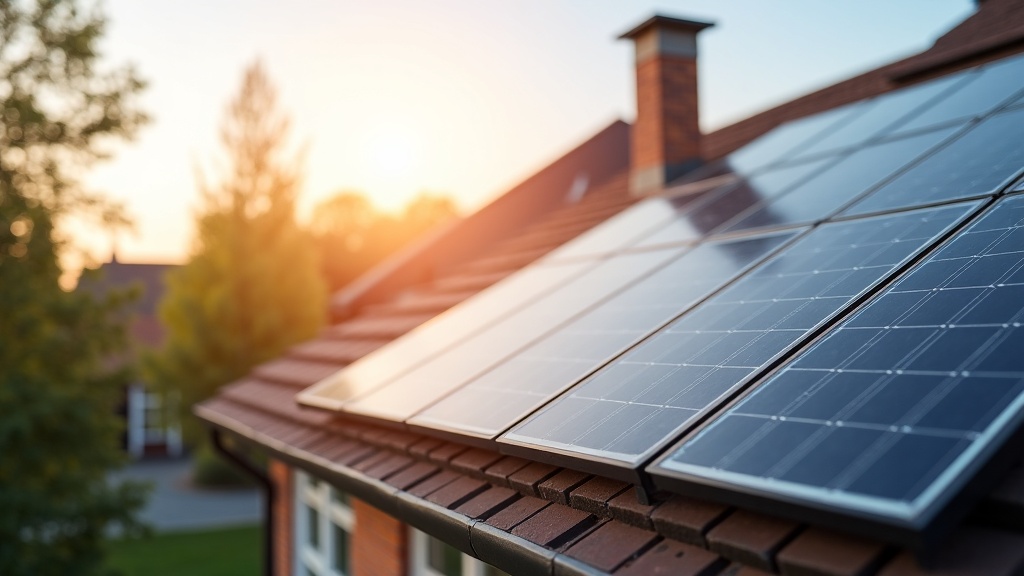
Traditional solar panels use crystalline silicon to convert sunlight to electricity. Silicon works well — it’s durable, efficient (20–23% in modern residential panels), and we’ve been manufacturing it at scale for decades. But silicon panels are also relatively expensive and energy-intensive to produce.
Perovskite is a class of crystal structure that can be applied as a thin film and manufactured at much lower cost and temperature than silicon. In lab conditions, perovskite cells have achieved efficiency ratings above 25% — already better than most residential silicon panels. And in what’s called a “tandem” configuration (a perovskite layer on top of a silicon layer), researchers have demonstrated efficiencies above 33%, which is genuinely remarkable.
The catch has always been durability. Early perovskite cells degraded quickly when exposed to moisture, heat, and UV — exactly the conditions your roof panels face every day.
What’s Changed in 2026
The recent surge of activity in perovskite is driven by a few companies who’ve cracked the durability problem to a meaningful degree. Oxford PV, Saule Technologies, and several Chinese manufacturers have perovskite-silicon tandem products either in limited commercial production or on the near-term roadmap. Oxford PV reported panels passing the IEC durability standards (1,000 hours of damp heat, thermal cycling tests) that silicon panels routinely clear.
That’s significant. It means the technology has cleared a real-world durability hurdle — not just a lab benchmark.
CleanTechnica recently reported a fresh wave of commercial activity with multiple companies announcing pilot programs and early commercial deployments. We’re not talking about mass consumer availability yet — but we are talking about early commercial product, not just university research.
What This Means If You’re Buying Solar in 2026
Here’s my honest take as someone who researches this space constantly.
Do not wait for perovskite. If you’re seriously considering solar, the economics right now — with the 30% federal tax credit still in place, current panel pricing, and where utility rates are heading — are genuinely good. Waiting for the “next thing” is a trap that has cost people years of energy bill savings and tax credit eligibility.
But do pay attention to efficiency ratings. The perovskite wave is already pushing silicon manufacturers to push their efficiency numbers higher. Premium monocrystalline panels (like the SunPower Maxeon or Panasonic EverVolt) are hitting 22–23% efficiency and coming down in price. The competitive pressure from perovskite development is good for consumers buying silicon today.
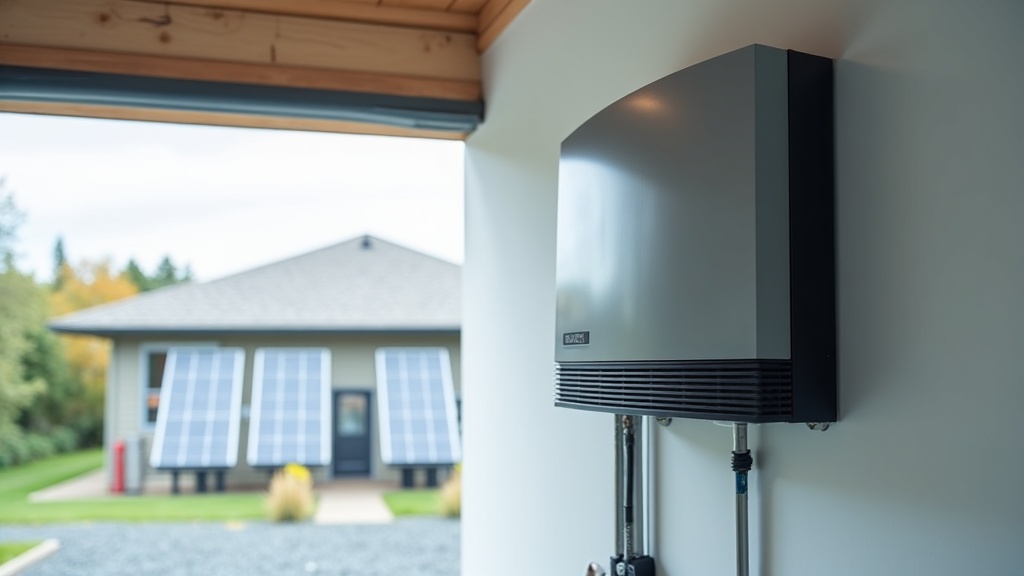
Ask your installer about future expansion. One underrated benefit of a well-designed system: if higher-efficiency panels are available in 5–7 years and you want to expand, a properly sized inverter and panel layout makes that easier. Ask your installer how they’re sizing the inverter relative to your array — leaving headroom is worth thinking about.
The Bigger Picture: Why This Matters for Energy Independence
More efficient panels mean the same roof can generate more power. For a lot of homeowners — especially those with limited south-facing roof space, or those trying to offset an EV or heat pump in addition to household consumption — efficiency gains are genuinely meaningful.
A 33%-efficient tandem panel on the same footprint would generate roughly 40% more power than a typical 23% silicon panel today. That’s the difference between a system that covers 70% of your energy needs and one that covers close to 100%.
The Timeline Honestly
If history with solar tech is any guide, here’s a realistic projection: early commercial perovskite-silicon tandem panels will be available in limited quantities through select installers within 2–3 years. Broad residential availability at competitive prices is probably 5–7 years out. The technology will almost certainly arrive — but “arrive” means mainstream, not niche-premium.
That’s too long to hold off if you’re paying $200–$400/month in electricity bills right now.
What I’d Do
If you’re evaluating solar in 2026: get your quotes now, take the tax credit, install a high-efficiency silicon system, and buy a well-designed system with a quality inverter that gives you expansion options. When better panels eventually arrive, you’ll have a running system, years of energy savings already banked, and a paid-down solar loan.
The best solar system is the one on your roof generating power today — not the theoretical one waiting for next-gen tech to arrive.
If you want to compare current quotes without the sales pressure, a quality solar monitoring setup is a worthwhile addition regardless of panel generation — knowing exactly what your system produces is how you catch problems early and verify your installer’s production estimates.
Sources, uncertainty, safety, and affiliate disclosure
Check named sources for their publication date, geography, exact product, utility, and jurisdiction. Product specifications and programs change. Estimates are not guarantees. Electrical work, service upgrades, storage systems, transfer equipment, interconnection, and code compliance should be reviewed by the serving utility and a qualified electrician or installer as appropriate.
Some links may be affiliate links. SunBacked may earn a commission at no added cost to you; that does not determine editorial conclusions.