
Editorial quick answer
Best Solar Monitoring Systems and Apps in 2026
Solar Monitoring Systems: Best Apps and Devices 2026 The short version: if your system cost five figures and you still only look at your utility bill, you are missing the easiest way to catch underperformance early. Monitoring is not a gadget add-on anymore. It is operating discipline. If your solar panels have been up for […]
Who this is for
Homeowners using this topic to compare choices, identify tradeoffs, or prepare better questions.
What this cannot promise
A guaranteed bill reduction, output, runtime, incentive, code approval, interconnection result, or project-specific electrical design.
Assumptions, date, and local checks
Costs and performance depend on location, date, model, configuration, weather, tariffs, utility rules, program funding, installation details, and household loads. Incentive, net-metering, code, battery-sizing, and electrical statements require current jurisdiction and source checks. Confirm project-specific details with the serving utility, program administrator, manufacturer, and a qualified electrician or installer.
How evidence is labeled
Mike context
Limited to his 20 years as an electrician, going solar in 2019, and having no installer ties.
Manufacturer specification
Maker-published data for an identified model or version, not an independent measurement.
Public source
Utility, government, program, code, standards, or other dated public information.
Estimate
Math based on stated inputs and assumptions, not a quote or guarantee.
Editorial analysis
SunBacked’s synthesis of tradeoffs, separated from sourced facts.
Solar Monitoring Systems: Best Apps and Devices 2026
The short version: if your system cost five figures and you still only look at your utility bill, you are missing the easiest way to catch underperformance early. Monitoring is not a gadget add-on anymore. It is operating discipline.
If your solar panels have been up for a year and you’ve never looked at more than your monthly utility bill to gauge performance, you’re flying blind. A proper solar monitoring system is how you know whether your investment is actually doing what it’s supposed to do — and catch problems before they cost you thousands in lost production. I’ve been installing solar for 14 years, and the monitoring tools available in 2026 are genuinely impressive. Here’s what to know and what to buy.
Which solar monitoring setup fits you best?
- Want the best all-around homeowner dashboard: prioritize clean production plus consumption tracking.
- Want the lowest-friction answer: use the native monitoring tied to your inverter ecosystem first.
- Want deeper savings and anomaly insight: look for panel-level data, alerts, and exportable history.
This page is strongest when you use it with our guides to solar panel brands, cost per watt, and whether solar is really worth the money on your house.
What Does a Solar Monitoring System Actually Do?
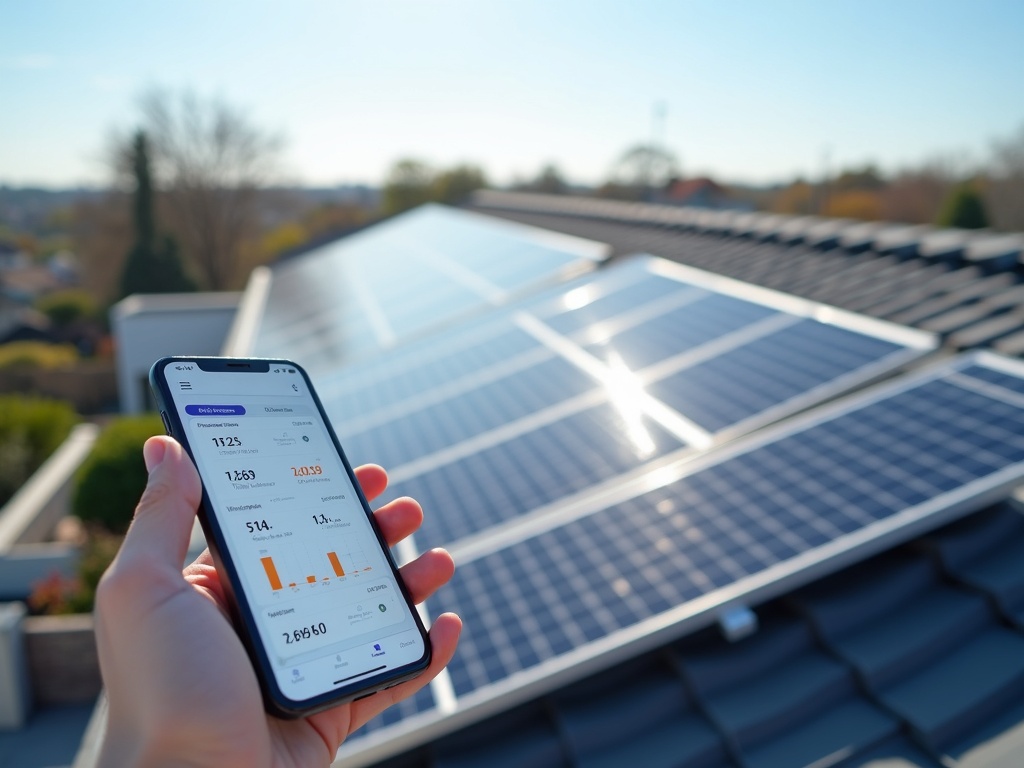
At its core, a solar monitoring system measures the electricity your panels produce and gives you real-time and historical data through an app or web dashboard. But the good ones do a lot more than that:
- Real-time production tracking — see exactly how many watts your system is generating right now
- Historical data logging — compare day-over-day, month-over-month, year-over-year output
- Consumption monitoring — understand how much energy your home uses and when
- Alerts and anomaly detection — get notified when production drops unexpectedly
- ROI tracking — see your actual savings vs. your projected payback period
- Inverter-level and panel-level data — with the right system, pinpoint exactly which panel or string is underperforming
Without monitoring, a single shaded or degraded panel can quietly drag down your whole system’s output for months — and you’d never know it until you do the math on your utility bill.
Why Solar Monitoring Matters More Than You Think
Solar panels degrade slowly — typically about 0.5% per year under normal conditions. But equipment failure, soiling (dirt and debris), shading from new tree growth, or inverter issues can tank your production much faster. I’ve gone out to sites where the homeowner thought everything was fine because the system “still seemed to be working,” only to find that a failed microinverter had been killing a third of their output for six months.
Here’s the ROI math that makes monitoring a no-brainer:
- Average 10 kW residential system generates roughly 14,000–16,000 kWh/year depending on location
- At $0.14/kWh average residential rate, that’s $1,960–$2,240 per year in production value
- A 15% underperformance issue = $294–$336 in lost value per year
- A $130 monitoring device that catches that problem in month 1 pays for itself 2–3x over
Monitoring isn’t optional. It’s part of actually owning solar responsibly.
Common solar-monitoring mistakes homeowners make
- Checking the app without knowing the baseline: a pretty dashboard is useless if you do not know what normal output looks like for your system.
- Ignoring consumption data: production-only views miss half the story when you are trying to manage savings.
- Waiting for a huge bill surprise: the whole point is catching underperformance before months pass.
- Assuming the installer will notice issues for you: some do, many do not, and you still need your own visibility.
Key Features to Look For in 2026
Not all monitoring systems are created equal. When evaluating options, here’s what I look for:
- Real-time data updates — 5-second to 15-minute intervals; avoid anything that only updates hourly
- Both production AND consumption data — you need the full picture to manage your energy use
- Historical logging with export capability — you’ll want this for warranty claims or performance disputes
- Smart alerts — push notifications when production drops below expected thresholds
- Inverter compatibility — check that your monitoring hardware/software works with your inverter brand
- Easy install — most clamp-based CT (current transformer) monitors take under an hour in the panel
- App quality — you’ll use this daily; make sure the UX isn’t garbage
Best Solar Monitoring Systems in 2026
1. Sense Energy Monitor (~$330)
The Sense Energy Monitor is the most sophisticated whole-home energy monitor on the market. It uses machine learning to automatically detect and identify individual appliances — your AC, your EV charger, your refrigerator — and tracks them separately. For solar owners, it has a dedicated solar expansion module that integrates production and consumption data into a single real-time view.
Pros:
- Best-in-class appliance-level device detection
- Seamless solar + consumption integration
- Active community and frequent app updates
- Works with any inverter type (string, microinverter, hybrid)
Cons:
- Most expensive option at ~$330
- Device detection can take weeks to “learn” your home
- Requires professional electrical panel access for install (though it’s DIY-friendly if you’re comfortable in a panel)
Best for: Homeowners who want the most detailed energy intelligence and don’t mind the price.
2. Emporia Vue Gen 2 (~$130)
The Emporia Vue Gen 2 is the best value in solar monitoring right now. At around $130, it gives you whole-home energy monitoring with up to 16 individual circuit monitors included — meaning you can track not just your solar production but your dryer, your HVAC, your EV charger, all separately.
Pros:
- Outstanding value — 16 circuit monitors included
- Real-time data with 1-second resolution in the app
- Solar production monitoring built in
- Works with Alexa and Google Home
- Clean, functional app
Cons:
- No machine learning appliance detection like Sense
- App occasionally has sync delays
Best for: Budget-conscious solar owners who want serious circuit-level data without spending $300+.
3. SolarEdge Built-In Monitoring
If you have a SolarEdge inverter (one of the most popular string inverter brands in residential solar), you already have access to SolarEdge’s monitoring portal — and it’s genuinely good. SolarEdge provides panel-level power optimization through its DC optimizers, and the monitoring platform reflects that granularity.
Pros:
- Comes free with SolarEdge inverter systems
- Panel-level production data via power optimizer telemetry
- Inverter health monitoring and fault alerts
- Professional installer portal for O&M
Cons:
- Only works with SolarEdge hardware
- No consumption monitoring without add-on hardware
- Some users report app latency
Best for: SolarEdge system owners — you’re already paying for it, use it.
4. Enphase Enlighten App
Enphase microinverter systems come with the Enlighten monitoring platform baked in — and it’s one of the most granular monitoring tools available because every panel has its own microinverter reporting data independently.
Pros:
- True panel-level monitoring — each microinverter reports independently
- Excellent fault detection — you’ll know immediately if one panel drops out
- Clean web and mobile app
- Battery integration if you have an Enphase Encharge system
Cons:
- Locked to Enphase ecosystem
- No third-party consumption monitoring integration without IQ Gateway add-ons
Best for: Enphase microinverter owners. The platform is excellent and it’s free with your system.
5. Emporia Energy App (with Vue Gen 2)
This is the software side of the Emporia Vue Gen 2 setup mentioned above. The Emporia Energy app is well-designed, fast, and gives you a clean real-time view of your solar production, home consumption, and net grid import/export. It also provides time-of-use cost modeling if you enter your utility rate structure, which is a genuinely useful feature for understanding when to run high-draw appliances.
Best for: Emporia Vue users — but the app quality is good enough that it’s a reason to choose Emporia over competitors at the same price point.
How to Choose the Right Solar Monitoring System
Here’s my decision framework:
- Already have SolarEdge or Enphase? Start with the included monitoring — it’s panel-level and free. Add Emporia Vue Gen 2 if you want consumption data on top of it.
- String inverter with no built-in monitoring? Emporia Vue Gen 2 at ~$130 is the obvious first choice. Great data, great price.
- Want the absolute best energy intelligence? Go Sense at ~$330. The appliance detection is in a class of its own.
- Have an EV or battery storage? Make sure your monitoring system supports EV charging and battery state-of-charge tracking. Sense and Emporia both have this; SolarEdge and Enphase have it within their ecosystems.
- New install? If you’re getting a new solar system, ask your installer about monitoring options upfront. Some installers lock you into proprietary platforms with ongoing subscription fees — ask about that before signing.
Getting New Solar? Get Multiple Quotes First
If you’re shopping for a new solar installation and thinking about monitoring, I always tell homeowners: get at least 3 quotes before signing anything. Solar pricing varies wildly between installers — I’ve seen the same system quoted at $28,000 and $19,000 by different companies in the same city.
EnergySage is the best way to do this. You put in your address and energy use, and you get multiple competing quotes from vetted installers — without a sales call if you don’t want one. It takes 5 minutes and can save you $5,000–$10,000 on an average-sized system. I recommend it to every homeowner asking me about solar.
FAQ: Solar monitoring systems
Do I really need extra monitoring if my inverter already has an app?
Sometimes no. If the native app gives you reliable production history, alerts, and enough visibility for your goals, it may already be enough. The problem is that many homeowners never verify whether they are seeing the full picture.
What matters more: production data or consumption data?
Both, but consumption data often changes behavior faster because it shows where your savings leak out inside the house. Production-only dashboards can still miss the bigger bill-management story.
How often should I check my solar monitoring app?
Look closely during the first few weeks, then settle into a lighter rhythm. A quick periodic scan plus alerts is usually enough unless you are actively troubleshooting.
What pages should I compare with this one before buying?
Start with solar panel brands, cost per watt, and battery backup without solar if you are building a broader home-energy stack.
Related reads
Final Word
A solar monitoring system isn’t a luxury — it’s due diligence on a $15,000–$35,000 investment. Whether you go with the free monitoring from Enphase or SolarEdge, the excellent-value Emporia Vue Gen 2, or the premium Sense Energy Monitor, the point is to know what your system is actually doing.
Panels don’t fail loudly. They fail quietly, and slowly, until one day you do the math and realize you’ve been shortchanged for two years. Don’t let that happen to you.
See also our guide to How to Read Your Solar Production Report and our breakdown of Best Home Battery Backup Systems in 2026.
: and certified solar installer with 14 years of residential and commercial solar installation experience. He has installed over 800 solar systems across the Pacific Northwest and writes about practical, numbers-driven approaches to home energy independence.
Sources, uncertainty, safety, and affiliate disclosure
Check named sources for their publication date, geography, exact product, utility, and jurisdiction. Product specifications and programs change. Estimates are not guarantees. Electrical work, service upgrades, storage systems, transfer equipment, interconnection, and code compliance should be reviewed by the serving utility and a qualified electrician or installer as appropriate.
Some links may be affiliate links. SunBacked may earn a commission at no added cost to you; that does not determine editorial conclusions.