
Editorial quick answer
Standby Generator vs Battery Backup: Honest Compare
Whole-Home Standby Generator vs. Battery Backup: The Honest Comparison When my neighbor’s Generac kicked on during an ice storm last February while I was running my EcoFlow from solar-charged...
Who this is for
Homeowners using this topic to compare choices, identify tradeoffs, or prepare better questions.
What this cannot promise
A guaranteed bill reduction, output, runtime, incentive, code approval, interconnection result, or project-specific electrical design.
Assumptions, date, and local checks
Costs and performance depend on location, date, model, configuration, weather, tariffs, utility rules, program funding, installation details, and household loads. Incentive, net-metering, code, battery-sizing, and electrical statements require current jurisdiction and source checks. Confirm project-specific details with the serving utility, program administrator, manufacturer, and a qualified electrician or installer.
How evidence is labeled
Mike context
Limited to his 20 years as an electrician, going solar in 2019, and having no installer ties.
Manufacturer specification
Maker-published data for an identified model or version, not an independent measurement.
Public source
Utility, government, program, code, standards, or other dated public information.
Estimate
Math based on stated inputs and assumptions, not a quote or guarantee.
Editorial analysis
SunBacked’s synthesis of tradeoffs, separated from sourced facts.
Whole-Home Standby Generator vs. Battery Backup: The Honest Comparison
When my neighbor’s Generac kicked on during an ice storm last February while I was running my EcoFlow from solar-charged batteries, I realized I’d come down pretty strongly on one side of a debate that doesn’t have a simple right answer. I’d already written about battery backup vs. generator from a pure cost perspective. This piece goes deeper on the whole-home standby side specifically — with real installation quotes and the factors that actually push you one direction or the other.
Here’s what I found. Neither option is universally better. The right answer depends on your home, your location, your power reliability history, and what you actually need to run during an outage.
Option 1: Whole-Home Standby Generator
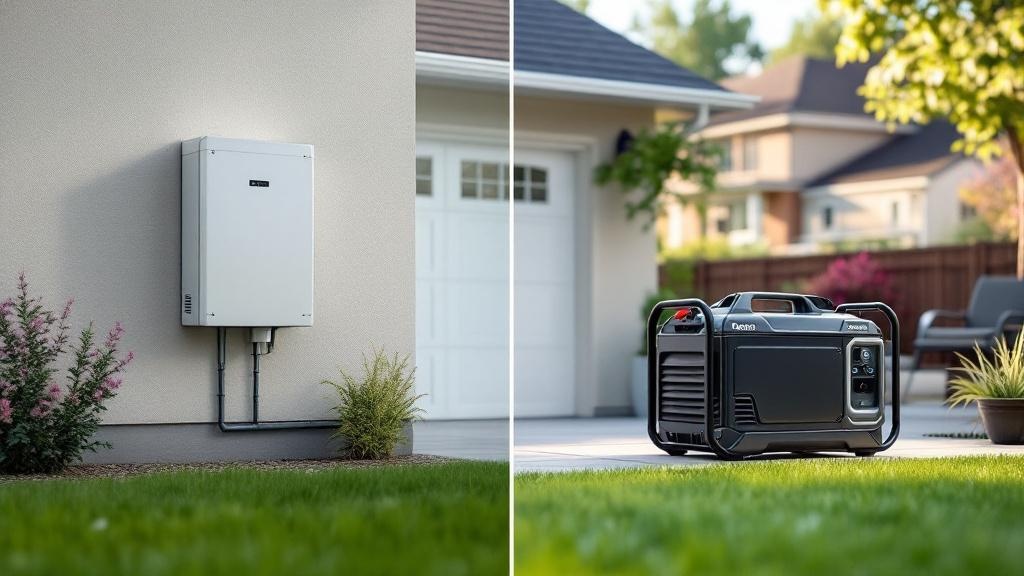
A whole-home standby generator sits outside your house on a concrete pad, connects to your natural gas or propane line, and automatically starts within seconds of detecting a grid outage. The most common brands are Generac, Kohler, Briggs & Stratton, and Cummins. Sizes range from 10 kW (suitable for smaller homes) to 22 kW+ (whole-home coverage for larger homes).
Real Cost Breakdown
The equipment itself runs $2,500–$6,000 depending on brand and capacity. But the installed cost is a different story. You need:
- A electrician to install the automatic transfer switch and make panel connections
- A licensed gas plumber to run the gas line if not already in place
- Permits in most jurisdictions
- Concrete pad (if not already present)
- Inspections
All-in, I got quotes ranging from $8,500 to $14,200 for a 20 kW Generac at my house. The spread is wide because gas line distance and local labor rates vary significantly. My neighbor paid $9,400 for his installation two years ago. Another friend in the same city paid $13,800 for a similar unit — the difference was that he needed a new gas line run 60 feet from the meter.
Ongoing Costs
This is where people get surprised. A standby generator isn’t install-and-forget:
- Annual maintenance: Oil changes, air filter, spark plugs, battery check. Professional service runs $150–$300/year.
- Weekly self-test cycles: Most standby generators run a weekly 10–20 minute self-test. Not free fuel, but not a lot either.
- Actual outage fuel consumption: A 20 kW generator burns roughly 2–3 gallons of propane per hour at half load, or about 200–300 cubic feet of natural gas. Extended outages add up fast on propane.
- Expected major service at 1,500–2,000 hours of use.
What It Does Well
The standby generator has one overwhelming advantage: unlimited runtime as long as fuel is available. If you have natural gas, you can theoretically run indefinitely during an extended outage. It powers your entire electrical panel — HVAC, water heater, electric range, everything. For people on well water with electric pumps, this matters enormously. For people with medical equipment that demands 24/7 power, this matters enormously.
It also starts automatically. You don’t have to do anything. Power goes out at 2am, the generator kicks on within 30 seconds, and you sleep through it. That automation has real value.
Option 2: Battery Backup Systems
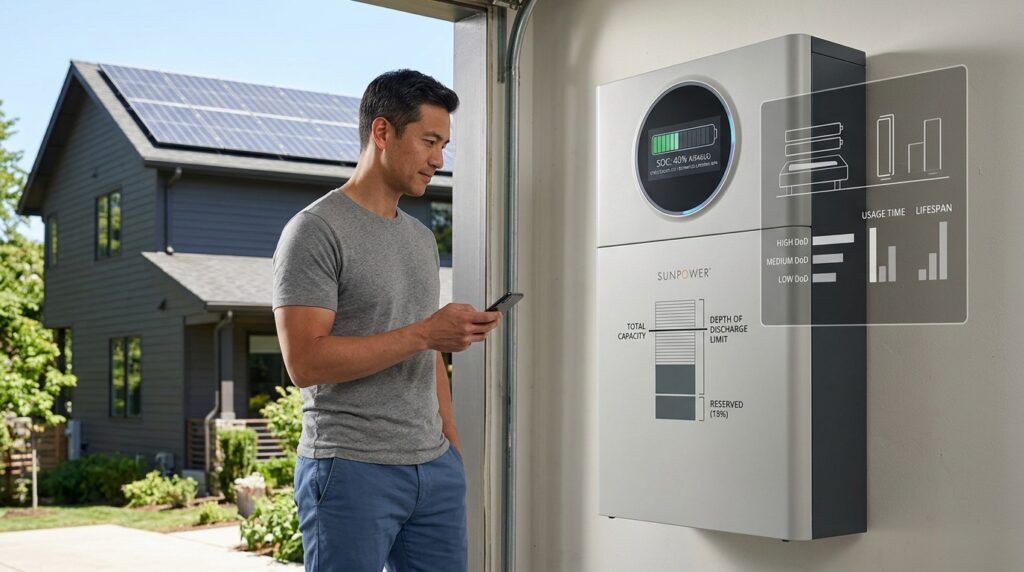
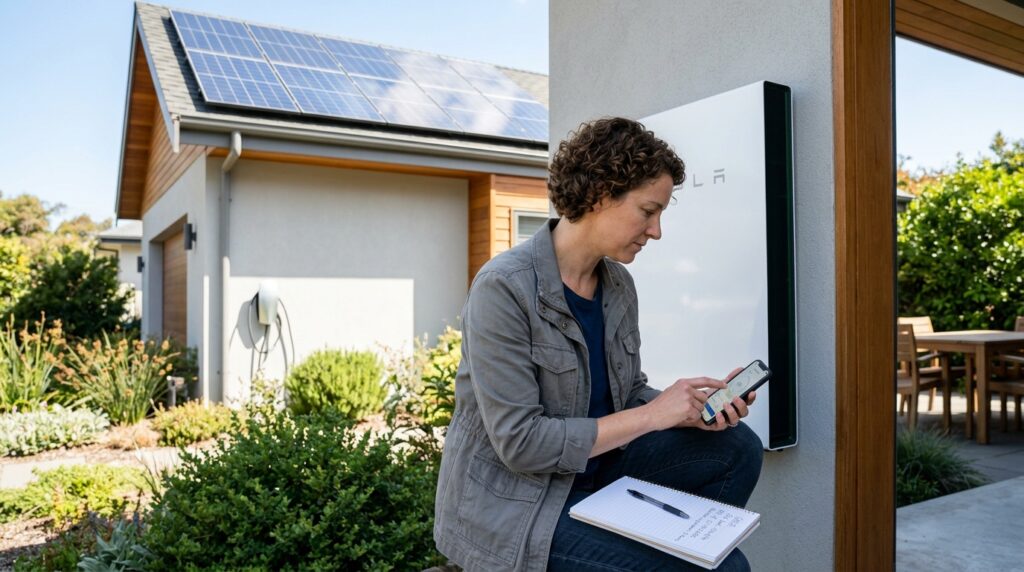
The battery backup market has exploded. At the premium end, you have the Tesla Powerwall 3 (13.5 kWh, approximately $9,000–$11,000 installed) and the Enphase IQ Battery 5P. At the portable end, units like the EcoFlow DELTA Pro (3.6 kWh) and Bluetti AC500 sit in the $2,500–$4,000 range. Stackable systems can reach 20–30 kWh if you’re willing to spend.
Real Cost Breakdown
For a meaningful whole-home battery backup — something that can handle your essential loads for 24+ hours — you’re looking at:
- Tesla Powerwall 3 (installed): $9,000–$12,000 for one unit (13.5 kWh). Two units gets you 27 kWh and runs $18,000–$22,000 installed.
- Enphase IQ Battery 5P: Similar price range, often paired with Enphase microinverter systems.
- Portable systems (EcoFlow, Bluetti): $3,000–$8,000 for meaningful capacity, no installation cost, but no automatic transfer and no whole-home coverage.
If you want a properly installed, code-compliant whole-home battery backup that switches automatically and integrates with solar, plan for $10,000–$20,000. That’s comparable to or more expensive than a standby generator for the same functional capability.
A portable option like a mid-size portable generator runs $800–$2,500 and gives you considerably more raw capacity for the money — but requires manual operation, external ventilation, and ongoing fuel management.
What Battery Backup Does Well
- Silent operation: Zero noise, zero fumes. This matters in dense neighborhoods and for sensitive sleepers.
- Integration with solar: A properly installed home battery charges from solar during the day and discharges at night or during outages. This is the setup that actually makes the economics interesting.
- No maintenance: LFP batteries require essentially no ongoing maintenance. No oil changes, no filter swaps, no weekly self-tests that annoy your neighbors.
- Instant switchover: Installed home battery systems switch to backup mode essentially instantaneously — faster than a standby generator’s 30-second delay.
- Indoor installation possible: Some systems can be installed in conditioned space, which is better for battery longevity in extreme climates.
What Battery Backup Does Poorly
- Limited capacity for extended outages without solar recharge. 13.5 kWh (one Powerwall) powers an average home for about 12 hours. Without solar recharging, a multi-day outage drains any reasonable battery setup.
- Cannot run high-draw appliances indefinitely. Central AC, electric dryers, and electric ranges are capacity killers.
- Higher cost per kWh of storage compared to generator capacity.
For those researching battery backup options, EcoFlow’s lineup of home battery systems is worth comparing alongside whole-home installed options — they’ve expanded their product line significantly and the stackable systems are increasingly competitive with installed solutions.
Who Should Choose What
Choose a Standby Generator if:
- You’re in a rural area with frequent multi-day outages
- You have a well pump that requires continuous power
- You have medical equipment requiring 24/7 reliable power
- You have natural gas service (propane gets expensive for extended runs)
- You need to run central HVAC during outages
- Simplicity and unlimited runtime are your top priorities
Choose Battery Backup if:
- You’re pairing with solar (this is where batteries become genuinely economical)
- You’re in a suburban area where outages are typically under 24 hours
- Noise and fumes are dealbreakers (HOA, close neighbors, indoor air quality concerns)
- You want a dual-purpose system that helps with daily energy management, not just emergencies
- You’re comfortable accepting limited capacity in exchange for simplicity and silence
My Setup and Why
I have both, and I’m not ashamed of it. My EcoFlow DELTA Pro handles 95% of outage scenarios silently and automatically with solar recharging. A mid-size propane generator lives in my garage for extended outage scenarios where I need to run the sump pump for days on end. Total investment: about $7,500. For my specific situation — a suburb with mostly short outages, a solar system, and a sump pump I can’t ignore — this combination makes more sense than either option alone.
There’s no universal right answer here, which I know is frustrating when you’re trying to make a decision. The honest version is: look at your actual outage history, list what you absolutely must power, and do the math. The numbers usually point clearly in one direction.
If you’re still in the research phase, it’s worth spending time with both categories of equipment before committing to anything. The cost difference between choosing wrong and choosing right is in the thousands of dollars.
Sources, uncertainty, safety, and affiliate disclosure
Check named sources for their publication date, geography, exact product, utility, and jurisdiction. Product specifications and programs change. Estimates are not guarantees. Electrical work, service upgrades, storage systems, transfer equipment, interconnection, and code compliance should be reviewed by the serving utility and a qualified electrician or installer as appropriate.
Some links may be affiliate links. SunBacked may earn a commission at no added cost to you; that does not determine editorial conclusions.