

Editorial quick answer
Best Home Battery Backup Without Solar (2026)
electrician Mike Reeves breaks down the best home battery backup systems that work without solar panels in 2026.
Who this is for
Homeowners using this topic to compare choices, identify tradeoffs, or prepare better questions.
What this cannot promise
A guaranteed bill reduction, output, runtime, incentive, code approval, interconnection result, or project-specific electrical design.
Assumptions, date, and local checks
Costs and performance depend on location, date, model, configuration, weather, tariffs, utility rules, program funding, installation details, and household loads. Incentive, net-metering, code, battery-sizing, and electrical statements require current jurisdiction and source checks. Confirm project-specific details with the serving utility, program administrator, manufacturer, and a qualified electrician or installer.
How evidence is labeled
Mike context
Limited to his 20 years as an electrician, going solar in 2019, and having no installer ties.
Manufacturer specification
Maker-published data for an identified model or version, not an independent measurement.
Public source
Utility, government, program, code, standards, or other dated public information.
Estimate
Math based on stated inputs and assumptions, not a quote or guarantee.
Editorial analysis
SunBacked’s synthesis of tradeoffs, separated from sourced facts.
Disclosure: This post contains affiliate links. As an Amazon Associate I earn from qualifying purchases at no extra cost to you.
Most people assume you need solar panels to make home battery backup without solar work. That’s simply not true — and as a electrician who’s been installing battery systems for years, I can tell you the standalone battery market has exploded with genuinely great options in 2026.
Whether you want protection from grid outages, a way to reduce peak-hour electricity costs, or just peace of mind knowing your fridge and lights will stay on during a storm, there’s a home battery backup solution that doesn’t require a single solar panel on your roof.
How Home Battery Backup Without Solar Works
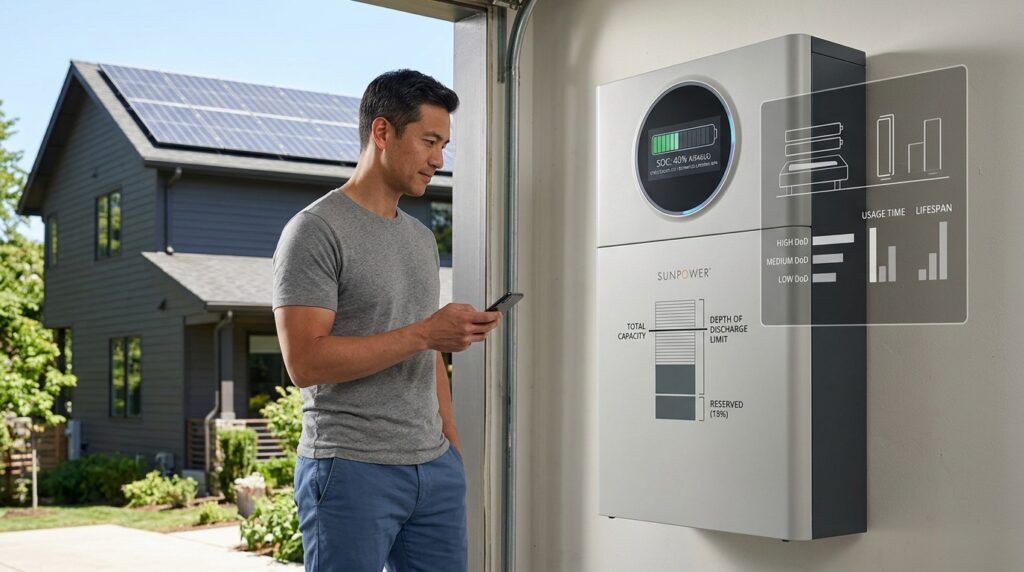
A standalone home battery system charges directly from the grid — just like charging your phone, only at a much larger scale. During normal times, your battery charges at standard grid rates (or overnight when rates may be lower, depending on your utility’s time-of-use pricing). When the grid goes down, the battery automatically kicks in and powers your home.
Some systems also allow “load shifting” — charging overnight when electricity is cheap, then discharging during peak hours when rates are highest. Depending on your utility rates, this can meaningfully reduce your monthly bill even without solar production.
Best Home Battery Backup Options Without Solar in 2026
1. Tesla Powerwall 3 — Best Overall
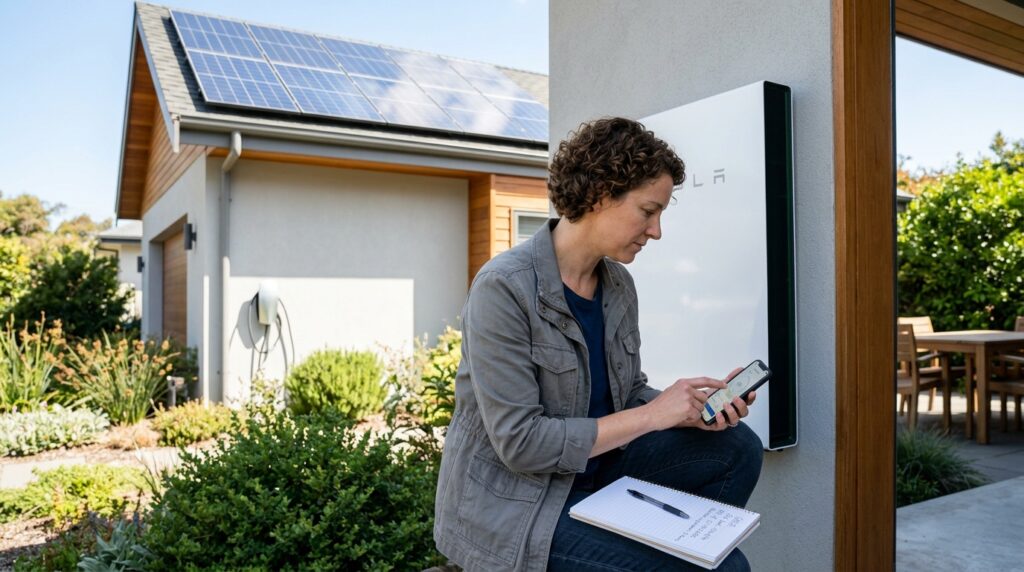
The Tesla Powerwall 3 remains the gold standard for residential battery backup in 2026. With 13.5 kWh of usable capacity and a continuous output of 11.5 kW (with surge capability), a single Powerwall 3 can handle most of a home’s essential loads during an outage.
What makes the Powerwall 3 excellent for non-solar use is its flexible charging: it charges fully from the grid, and Tesla’s Gateway handles automatic backup switching with near-zero transfer time. Setup through the Tesla app is smooth, and the system is compatible with Tesla’s energy monitoring tools.
Cost: ~$9,200–$11,500 installed (varies by region). Tesla sells directly and you do not need Tesla solar to purchase one.
2. Generac PWRcell — Best for Scalability
The Generac PWRcell system starts at 9 kWh and scales up to 18 kWh by adding battery modules. It’s compatible with Generac’s standby generator ecosystem, making it a smart choice if you already have (or plan to get) a Generac whole-home generator. The PWRcell operates independently of solar and charges from the grid.
Installed cost ranges from $10,000–$18,000 depending on capacity. The modular design is a genuine advantage for homeowners who want to start small and expand.
3. Enphase IQ Battery 5P — Best for Partial-Home Backup
The Enphase IQ Battery 5P offers 5 kWh of usable capacity per unit and can be stacked up to three units for 15 kWh total. It’s a LFP (lithium iron phosphate) battery, which means better thermal safety and longer cycle life compared to older NMC chemistry.
The IQ Battery 5P works without solar — you can charge it from the grid and use it for backup power. The Enphase app provides solid monitoring. At $4,000–$6,000 per unit installed, it’s a reasonable entry point if you want a partial-home backup (circuits you actually need: fridge, lights, internet, medical equipment).
4. Franklin WH aGate — Best Value Whole-Home Backup
Franklin Whole Home (WH) has been making waves as a cost-competitive alternative to the Powerwall. Their aGate system offers up to 13.6 kWh per unit, charges from the grid, and works without solar. Homeowners report solid performance and the company has a good reputation for customer support.
Expect all-in costs of $9,000–$13,000 depending on capacity and installer.
5. EcoFlow DELTA Pro Ultra — Best Portable/Semi-Permanent Option
If you’re not ready for a full whole-home battery installation, the EcoFlow DELTA Pro Ultra is the most capable portable battery system on the market in 2026. With a base capacity of 6 kWh (expandable to 21.5 kWh with add-on batteries), it can power major appliances via a 7,200W AC output.
The DELTA Pro Ultra can charge from a standard 120V outlet, a 240V outlet (much faster), or even a portable solar panel if you add one later. For renters, those who can’t do a permanent install, or homeowners who want flexibility, this is an outstanding option. No electrician required for basic use (though whole-home integration does require professional hookup).
6. Anker SOLIX X1 — New Contender Worth Watching
Anker, known for consumer electronics charging, entered the home battery space seriously with the SOLIX X1. It offers 15 kWh base capacity (expandable to 180 kWh for large commercial setups), charges from the grid, and features an impressive 12 kW continuous output. Pricing is competitive, and Anker SOLIX products are available on Amazon with professional installation required for the wall-mount system.
What Size Battery Do You Need?
Here’s a rough guide I use with homeowners:
- 5–10 kWh: Covers essential circuits (fridge, lights, internet, phone charging) for 12–24 hours
- 10–15 kWh: Partial-home backup including HVAC (smaller units) for 8–16 hours
- 15–20+ kWh: Near whole-home backup for 24+ hours, or pairing with a generator for extended outages
Your actual usage varies significantly based on season, HVAC efficiency, and lifestyle. I always recommend pulling 3 months of utility bills to calculate your average daily kWh before sizing a system.
Is Home Battery Backup Without Solar Worth It?
For pure backup purposes, the economics are straightforward: a home battery system costs $8,000–$15,000 installed, while a whole-home standby generator runs $8,000–$15,000 as well. Batteries win on maintenance (nearly zero), noise (completely silent), and fuel dependency (none — they charge from the grid). Generators win on runtime (unlimited, as long as fuel supply lasts) and cost-per-kWh for very long outages.
If you’re in an area with frequent short outages (a few hours to a day), battery backup is an excellent standalone solution. If you’re in an area prone to multi-day outages (hurricanes, ice storms), consider combining a battery system with a smaller standby generator for extended coverage.
Federal tax incentives: The 30% federal Investment Tax Credit (ITC) applies to home battery storage systems installed in 2026, even without solar, making the economics significantly more attractive.
Installation: What to Expect
Most whole-home battery systems require a electrician for installation. The typical process:
- Site assessment and load calculation
- Permit application (required in most jurisdictions)
- Utility notification (for grid-connected systems)
- Physical installation of battery unit, gateway, and critical load panel (if needed)
- System commissioning and app setup
A straightforward single-battery install typically takes 4–8 hours for an experienced crew. Budget $1,500–$3,000 for installation labor on top of equipment costs.
Frequently Asked Questions: Home Battery Backup Without Solar
Can you really use a home battery without solar panels?
Absolutely. All major home battery systems — Powerwall, PWRcell, Enphase, and others — charge from the grid and operate fully independently of solar panels.
How long will a home battery power my house?
It depends on capacity and your usage. A 13.5 kWh Powerwall 3 can power essential loads (fridge, lights, internet) for 24–48 hours, or a whole home for 8–12 hours depending on AC usage.
Is there a federal tax credit for home battery backup without solar?
Yes. The 30% federal ITC (Inflation Reduction Act) covers standalone battery storage systems installed in 2026 — no solar required. Consult a tax professional for your specific situation.
What is the best home battery backup for no solar?
For whole-home backup: Tesla Powerwall 3. For budget/scalable options: Enphase IQ Battery 5P or Franklin WH aGate. For portable/flexible: EcoFlow DELTA Pro Ultra.
How much does a home battery backup system cost without solar?
Typically $8,000–$15,000 all-in (equipment + installation) for a whole-home system. Smaller partial-home systems start around $5,000–$7,000 installed. After the 30% federal tax credit, effective costs are meaningfully reduced.
with over 15 years of experience installing battery backup systems, solar arrays, and standby generators across the Pacific Northwest.
Sources, uncertainty, safety, and affiliate disclosure
Check named sources for their publication date, geography, exact product, utility, and jurisdiction. Product specifications and programs change. Estimates are not guarantees. Electrical work, service upgrades, storage systems, transfer equipment, interconnection, and code compliance should be reviewed by the serving utility and a qualified electrician or installer as appropriate.
Some links may be affiliate links. SunBacked may earn a commission at no added cost to you; that does not determine editorial conclusions.