

Editorial quick answer
How do home batteries work?
I have wired enough backup systems to tell you this upfront: home batteries are useful, but they are not magic, and I would only buy one if your outage risk, utility rate structure, or backup priorities justify the price. If you are trying to decide whether a battery belongs in your house, focus on what […]
Who this is for
Homeowners using this topic to compare choices, identify tradeoffs, or prepare better questions.
What this cannot promise
A guaranteed bill reduction, output, runtime, incentive, code approval, interconnection result, or project-specific electrical design.
Assumptions, date, and local checks
Costs and performance depend on location, date, model, configuration, weather, tariffs, utility rules, program funding, installation details, and household loads. Incentive, net-metering, code, battery-sizing, and electrical statements require current jurisdiction and source checks. Confirm project-specific details with the serving utility, program administrator, manufacturer, and a qualified electrician or installer.
How evidence is labeled
Mike context
Limited to his 20 years as an electrician, going solar in 2019, and having no installer ties.
Manufacturer specification
Maker-published data for an identified model or version, not an independent measurement.
Public source
Utility, government, program, code, standards, or other dated public information.
Estimate
Math based on stated inputs and assumptions, not a quote or guarantee.
Editorial analysis
SunBacked’s synthesis of tradeoffs, separated from sourced facts.
I have wired enough backup systems to tell you this upfront: home batteries are useful, but they are not magic, and I would only buy one if your outage risk, utility rate structure, or backup priorities justify the price.
If you are trying to decide whether a battery belongs in your house, focus on what you want it to do. Your best answer depends on whether you want lights and internet during outages, lower peak electric bills, better use of your solar production at night, or whole-house backup. Those are very different goals, and homeowners get into trouble when they buy for the brochure instead of their real load list.
The Short Answer
Home batteries work by storing electricity in a rechargeable battery pack, then sending that stored power back through an inverter when your house needs it. If you have solar, the battery can charge from excess daytime production. If you do not have solar, many battery systems can still charge from the grid during lower-cost hours and discharge later when rates are higher or when the power goes out.
In plain English, the battery is a middleman between the power source and the appliances you care about. It watches incoming power, stores extra energy, and releases it when preset conditions are met. I pay attention first to three numbers: usable capacity in kilowatt-hours, continuous output in kilowatts, and whether the system can start heavy loads like a well pump or air conditioner without tripping out. Those numbers matter a lot more than flashy app screenshots.
What This Means for a Homeowner
A battery does not power your whole home forever. It buys you time and control. Whether that time is a few hours or a full day depends on how much energy you store and how disciplined you are about what stays on during an outage.
- Capacity tells you duration. A 10 kWh battery can run a modest essentials load for several hours, but not an all-day electric heating and cooling lifestyle.
- Power output tells you what can run at once. You might have enough stored energy for the refrigerator, lights, router, and garage door, but not the oven, dryer, and central AC at the same time.
- Solar helps recharge the battery, but only if the system is designed for backup. Not every solar setup automatically keeps working during an outage.
- Load management is the difference between “works great” and “why is this dead already?” Most homeowners underestimate how fast big appliances empty a battery.
The easiest way to picture it is this: your battery is like a fuel tank, and your appliances are the engine load. Small essentials sip from that tank. Electric resistance heat, large AC systems, pool pumps, and EV charging gulp from it. That is why I usually steer people away from vague “whole-home backup” expectations unless they have a large budget and a realistic plan for what actually needs to stay on.
How the System Actually Works Day to Day
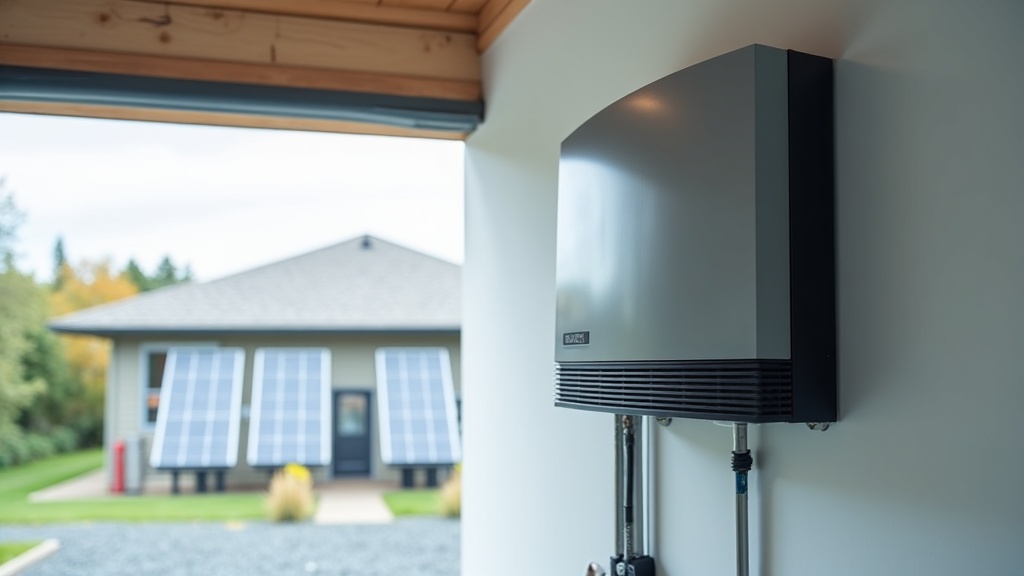
Most modern home battery systems have four main pieces: the battery pack, the inverter, a transfer mechanism that isolates your home from the grid during an outage, and control software. Under normal conditions, the system decides when to charge and when to discharge based on its programming. During an outage, it disconnects from the utility side so it does not backfeed the lines, then it powers the backed-up circuits from the battery and, if available, from solar.
That transfer is usually fast enough that your lights may blink and your internet may reboot, but the bigger issue is what sits behind the backup panel. I have seen expensive battery installs disappoint people because too many non-essential loads were left on the backed-up side.
A Quick Decision Table
| Your Goal | Battery Helps | What To Watch |
|---|---|---|
| Keep essentials running during outages | Yes, often a strong fit | Need accurate load list and backup subpanel planning |
| Save money on time-of-use rates | Sometimes | Only makes sense if rate spread is wide enough |
| Use more of your solar at night | Yes | Economics vary by local net metering rules |
| Run the whole house like nothing happened | Sometimes, but expensive | Usually needs multiple batteries and careful load control |
When Battery Backup Makes Sense
Battery backup makes sense when outages are common enough to be a real problem, not just an inconvenience you grumble about twice a year. If your neighborhood gets repeated storm outages, fire-related shutoffs, unreliable rural service, or voltage issues that knock out work-from-home equipment, a battery can move from “nice upgrade” to “practical tool.” I would say the same if you rely on a sump pump, medical equipment, refrigerated medications, a well pump, or a home office that costs you money when the grid drops.
It also makes sense when your utility rates reward energy shifting. If your power is cheap all day and only a little higher in the evening, the payback may be weak. But if your utility slams you with expensive peak periods, a battery can reduce those costly hours. The same goes for homeowners with solar who are paid poorly for exported power.
Scenarios Where I Usually Say Yes
- You want refrigerator, freezer, lights, internet, phone charging, and a few outlets to stay up through short outages.
- You have solar and low export compensation, so self-consuming more of your production matters.
- You live where outages are long enough that spoiled food, missed work, or water system downtime costs real money.
- You are already replacing service equipment or doing a major electrical upgrade, which can reduce installation friction.
If you are building out an outage kit around a battery setup, this is where a few simple accessories actually help. I like homeowners to keep a whole house energy monitor or at least a circuit-level way to watch usage, because guessing at loads is how people overspend on storage. A plug-in appliance watt meter is also useful if you are auditing refrigerators, freezers, office gear, or entertainment equipment before sizing a backup plan.
When It Does Not
Battery backup does not make much sense if your only reason is “it sounds smart” and your grid is stable, your utility rates are flat, and your budget is tight. I have seen homeowners spend a lot on storage before fixing insulation, air sealing, old refrigerators, or oversized standby loads. That is backwards. If your house wastes energy all day, a battery just stores expensive electricity for a leaky system.
It also does not make sense when your expectations are bigger than your budget. If you want central air, electric water heating, oven, clothes dryer, pool equipment, EV charging, and normal life during a two-day outage, that is not a single-battery problem. That is a major backup design problem with a major price tag. Marketing language tends to blur the difference between “whole-home capable” and “whole-home practical.” I do not like that. In the real world, most homeowners are better served by backing up the right circuits, not all circuits.
Scenarios Where I Usually Say No or Not Yet
- Your outages are rare and short, and losing power is mostly an annoyance rather than a financial or safety issue.
- You are carrying high-interest debt or have deferred basic home maintenance.
- Your main goal is lowering your bill, but your utility pricing does not create enough spread to justify storage.
- Your house has large electric loads and no realistic plan to reduce or manage them during backup operation.
If that is your situation, a portable power station may bridge the gap for phones, routers, small electronics, and a basic modem-and-lamp setup without forcing a full battery installation decision.
What I Would Prioritize First
Before I spent money on a home battery, I would do a simple three-step check. First, make an essentials list: fridge, freezer, lights, internet, garage door, furnace blower, medical devices, well pump, and a few kitchen outlets. Second, look at what those loads actually draw, not what you think they draw. Third, decide how long you need those loads to run. That process usually tells you more than a dozen sales calls.
I would also look hard at efficiency and panel setup before chasing more battery capacity. In a lot of houses, sealing air leaks, replacing a power-hungry old fridge, adding smart load control, or splitting critical circuits onto a clean backup subpanel improves the result more than jumping straight to a larger battery. Homeowners tend to overlook the boring prep work, but that prep is what makes the expensive equipment perform the way they expect.
My Practical Checklist
- List the must-run loads and ignore the nice-to-have loads for the first pass.
- Measure or estimate wattage and startup surges for each essential item.
- Decide whether your goal is outage backup, bill savings, solar self-use, or some mix of the three.
- Check whether your current solar inverter and service equipment are compatible with battery integration.
- Price one battery and two-battery scenarios, because many homeowners discover the first quote does not match the backup experience they want.
- Compare that cost against easier wins like efficiency upgrades, a generator, or a smaller backup plan.
Useful Gear for Planning and Preparedness
You do not need to turn your house into a gadget lab, but a few tools help you plan better. A clamp meter is useful if you know how to use one safely around electrical equipment. For most homeowners, a Kill A Watt style meter, a rechargeable emergency lantern, and a surge protector power strip are practical buys.
Bottom Line for Homeowners
Home batteries work well when you treat them like a targeted electrical upgrade, not a status purchase. If your house has meaningful outage pain, expensive peak rates, poor solar export credits, or critical loads that truly need continuity, then battery backup can be a smart move. If your goal is basic resilience, I would much rather see you buy the right-sized system for essential circuits than overreach for a vague whole-home promise you will rarely use.
If your outages are rare, your budget is stretched, or your biggest problem is simply that your home uses too much power, I would wait and fix the fundamentals first. My recommendation is simple: buy battery backup when it solves a real problem for your house and your load profile, not because the idea sounds futuristic.
Sources, uncertainty, safety, and affiliate disclosure
Check named sources for their publication date, geography, exact product, utility, and jurisdiction. Product specifications and programs change. Estimates are not guarantees. Electrical work, service upgrades, storage systems, transfer equipment, interconnection, and code compliance should be reviewed by the serving utility and a qualified electrician or installer as appropriate.
Some links may be affiliate links. SunBacked may earn a commission at no added cost to you; that does not determine editorial conclusions.