
Editorial quick answer
Is it better to buy solar panels or subscribe to solar?
Is it Better to Buy Solar Panels or Subscribe to Solar? After helping over 200 homeowners navigate their solar options, I’ll cut to the chase: buying solar panels outright gives you the best long-term savings and home value increase, but solar subscription programs make more sense if you’re renting, can’t install panels on your roof, […]
Who this is for
Homeowners using this topic to compare choices, identify tradeoffs, or prepare better questions.
What this cannot promise
A guaranteed bill reduction, output, runtime, incentive, code approval, interconnection result, or project-specific electrical design.
Assumptions, date, and local checks
Costs and performance depend on location, date, model, configuration, weather, tariffs, utility rules, program funding, installation details, and household loads. Incentive, net-metering, code, battery-sizing, and electrical statements require current jurisdiction and source checks. Confirm project-specific details with the serving utility, program administrator, manufacturer, and a qualified electrician or installer.
How evidence is labeled
Mike context
Limited to his 20 years as an electrician, going solar in 2019, and having no installer ties.
Manufacturer specification
Maker-published data for an identified model or version, not an independent measurement.
Public source
Utility, government, program, code, standards, or other dated public information.
Estimate
Math based on stated inputs and assumptions, not a quote or guarantee.
Editorial analysis
SunBacked’s synthesis of tradeoffs, separated from sourced facts.
Is it Better to Buy Solar Panels or Subscribe to Solar?
After helping over 200 homeowners navigate their solar options, I’ll cut to the chase: buying solar panels outright gives you the best long-term savings and home value increase, but solar subscription programs make more sense if you’re renting, can’t install panels on your roof, or need to keep upfront costs near zero. The right choice depends entirely on your situation, not some one-size-fits-all advice from salespeople with commissions on the line.
I went solar myself in 2019 and bought my system outright. But I’ve worked with plenty of folks where a subscription model was the smarter play. Let me walk you through both options so you can make the call that actually fits your circumstances.
What Does “Solar Subscription” Actually Mean?
When people talk about solar subscriptions, they’re usually referring to one of two setups: community solar programs or solar-as-a-service agreements (also called PPAs or solar leases).
Community solar lets you subscribe to a portion of a large solar farm somewhere else. You don’t own any panels, nothing goes on your roof, and you get credits on your electric bill for your share of the power generated. Think of it like a CSA for electricity—you’re buying a share of the harvest without farming yourself.
Solar-as-a-service (or Power Purchase Agreements) means a company installs panels on your roof at no upfront cost, owns and maintains them, and you buy the electricity they produce at a set rate. You’re essentially renting your roof space in exchange for (usually) lower electricity rates.
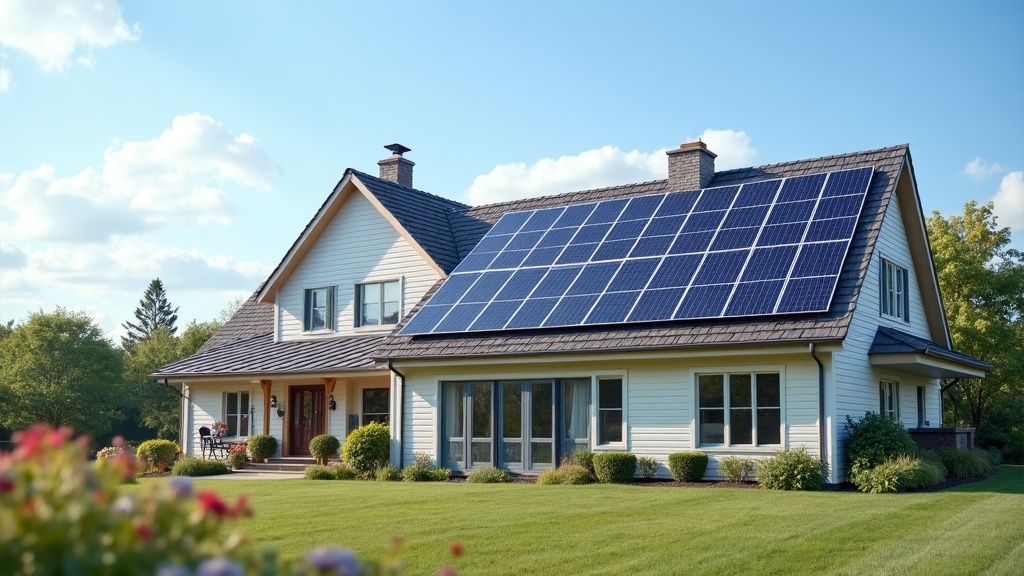
Buying solar panels means you own the system outright, whether you pay cash or finance it. You get all the electricity, all the tax credits, and all the long-term savings. You’re also responsible for maintenance, though modern systems are pretty bulletproof.
The Real Cost Breakdown
Let’s talk numbers, because this is where the rubber meets the road. I’m using realistic figures based on what I’ve seen with actual installations, not the cherry-picked scenarios you’ll see in marketing materials.
Buying Solar Panels
A typical 8kW residential system costs $20,000-$25,000 before incentives. After the federal tax credit (30% as of 2026), you’re looking at $14,000-$17,500. If you finance, you’ll pay interest—figure another $3,000-$6,000 over a 10-15 year loan depending on rates.
Your payback period typically hits around 8-12 years in most states. After that, it’s 10-15+ years of nearly free electricity. Over 25 years, you’re looking at $30,000-$50,000 in total savings depending on your local electricity rates.
If you buy a quality system with microinverters and proper mounting hardware, maintenance is minimal—maybe $500-$1,000 over 25 years for inverter replacements or repairs.
Solar Subscription Programs
Community solar subscriptions typically save you 5-15% on your electricity costs with zero upfront investment. If you’re paying $150/month for electricity, you might save $7-$22 monthly. Over 25 years, that’s $2,100-$6,600 in savings.
Solar leases and PPAs usually promise 10-20% savings off your utility rate. Same $150/month household might save $15-$30 monthly. But here’s the catch: your rate often includes annual escalators (typically 2-3%), while your utility rates might not rise that fast. Over 20-25 years, your savings get eaten away. Total savings often land around $5,000-$12,000.
With subscription models, you never own anything. When the contract ends, so do your savings. No tax credits. No home value increase. You’re just renting a discount.
The Comparison Table You Actually Need
| Factor | Buying Solar Panels | Solar Subscription |
|---|---|---|
| Upfront Cost | $14,000-$17,500 (after tax credit), or $0 with financing | $0 |
| 25-Year Savings | $30,000-$50,000+ | $2,000-$12,000 |
| Ownership | You own it | Company owns it |
| Tax Credits | You get 30% federal credit | Company keeps the credits |
| Home Value | Increases $15,000-$20,000 | No increase (or complication when selling) |
| Maintenance | You handle it (~$500-$1,000 over 25 years) | Company handles it |
| Good For | Homeowners planning to stay 7+ years | Renters, unsuitable roofs, need zero upfront cost |
| Flexibility | Can add batteries, modify, control fully | Locked into contract terms |
When Buying Makes Sense
If you check most of these boxes, buying is your better option:
- You own your home and plan to stay at least 7-10 years
- Your roof is in good shape with 15+ years of life left and good sun exposure
- You have decent credit (if financing) or cash available
- Your electricity costs are $100+/month—the more you pay, the faster your payback
- You want to add battery backup eventually—subscription programs don’t offer this flexibility
- You care about home value—owned solar typically adds $15,000-$20,000 to resale value
I bought my system because I knew I’d be in my house for the long haul and wanted the option to add battery storage later. Seven years in, my system has paid for itself, and I’ve got another 18+ years of basically free electricity ahead. That math works.
When Subscription Makes Sense
Don’t let anyone shame you for considering a subscription if these apply:
- You rent your home—community solar is often your only option
- Your roof is shaded, facing north, or needs replacement soon—community solar sidesteps these issues
- You can’t access the upfront capital and don’t want to finance
- You’re not sure you’ll stay in your home long-term—subscription contracts are usually transferable or cancellable
- Your credit won’t qualify for financing
- You just want some savings with zero hassle—not everyone wants to deal with ownership
I worked with a couple last year in an older home with a roof that needed replacement in 3-5 years. Instead of solar panels, I pointed them toward community solar. They’re saving about 10% on electricity without the complication of pulling panels off for a new roof. That was the right call for them.
The Hidden Gotchas Nobody Mentions
Subscription Escalation Clauses
Most PPAs and solar leases include annual rate increases of 2-3%. Your utility rates might not increase that fast—and in some states, they’ve actually decreased recently. Read the contract carefully. I’ve seen people end up paying more than their utility after year 10 because they didn’t catch the escalator.
Selling Your Home With a Subscription
If you have panels on your roof through a PPA or lease, you’ll need to either transfer the contract to the buyer or buy out the contract. Some buyers walk away when they see solar leases. I’ve watched deals fall apart over this. Community solar doesn’t have this issue since nothing is on your roof.
The “Free Solar” Trap
Nothing is free. When a company offers “free solar,” they’re getting the tax credits, the electricity sales, and often renewable energy credits they can sell. You get a discount. It’s not a bad deal necessarily, but don’t mistake it for charity.
What I’d Do in Your Shoes
If you own your home, have decent credit, and plan to stay put, buy the system. Finance it if you need to—even with interest, you’ll come out ahead of a subscription by year 15.
If you’re renting, your roof is unsuitable, or you need to keep cash free for other priorities, go with community solar. You’ll save something with zero hassle.
If you’re considering a rooftop PPA or lease, compare it carefully against a financed purchase. Run the numbers yourself—don’t trust the sales pitch. In most cases, financing your own system beats a 20-25 year PPA even when accounting for interest and maintenance.
The worst decision is doing nothing because you’re overwhelmed by options. Even a modest subscription saves you money compared to staying on the grid with no solar at all.
Frequently Asked Questions
Can I switch from a subscription to owning panels later?
With community solar, yes—just cancel your subscription (usually 30-60 days notice) and install your own system. With rooftop PPAs or leases, it’s complicated. You’d need to buy out the contract, which is often expensive, or wait until the contract ends (typically 20-25 years). Most contracts do offer a buyout option after 5-7 years.
Do subscription programs work during power outages?
Community solar doesn’t help during outages—you’re just buying credits, not actual backup power. Rooftop PPAs won’t provide backup either unless you separately purchase a battery backup system, which subscription programs rarely offer. If you want backup power, you need to own your system and add batteries.
What happens if the subscription company goes out of business?
With community solar, your subscription likely ends and you revert to normal utility billing. With rooftop PPAs, another company usually buys the contracts. Your panels stay put, you just send checks to someone new. It’s messy but not catastrophic. This is one reason I prefer ownership—you’re not dependent on a company’s financial health.
Can I get the federal tax credit with a subscription?
No. The company that owns the system claims the tax credit. That’s part of how they make money on the deal. The 30% federal solar tax credit only applies if you own the system—either through cash purchase or financing where you’re the legal owner.
Is community solar available everywhere?
Not even close. As of 2026, about half of U.S. states have community solar programs, but availability varies wildly even within states. Your utility company or a quick search for “community solar [your state]” will tell you if it’s an option. If you’re in the Northeast, Minnesota, Colorado, or Illinois, you’ve got good options. If you’re in most of the South, you’re probably out of luck.
Sources, uncertainty, safety, and affiliate disclosure
Check named sources for their publication date, geography, exact product, utility, and jurisdiction. Product specifications and programs change. Estimates are not guarantees. Electrical work, service upgrades, storage systems, transfer equipment, interconnection, and code compliance should be reviewed by the serving utility and a qualified electrician or installer as appropriate.
Some links may be affiliate links. SunBacked may earn a commission at no added cost to you; that does not determine editorial conclusions.