
Editorial quick answer
DIY Solar Panel Installation: What You Can and Can’t Do Yourself
I’ve walked hundreds of homeowners through the DIY solar question, and here’s the truth: you can absolutely handle 40-60% of a solar installation yourself and save $3,000-$8,000, but the other half requires licensed work—and crossing that line will void warranties, violate code, and potentially burn your house down. After 20 years as a electrician […]
Who this is for
Homeowners using this topic to compare choices, identify tradeoffs, or prepare better questions.
What this cannot promise
A guaranteed bill reduction, output, runtime, incentive, code approval, interconnection result, or project-specific electrical design.
Assumptions, date, and local checks
Costs and performance depend on location, date, model, configuration, weather, tariffs, utility rules, program funding, installation details, and household loads. Incentive, net-metering, code, battery-sizing, and electrical statements require current jurisdiction and source checks. Confirm project-specific details with the serving utility, program administrator, manufacturer, and a qualified electrician or installer.
How evidence is labeled
Mike context
Limited to his 20 years as an electrician, going solar in 2019, and having no installer ties.
Manufacturer specification
Maker-published data for an identified model or version, not an independent measurement.
Public source
Utility, government, program, code, standards, or other dated public information.
Estimate
Math based on stated inputs and assumptions, not a quote or guarantee.
Editorial analysis
SunBacked’s synthesis of tradeoffs, separated from sourced facts.
I’ve walked hundreds of homeowners through the DIY solar question, and here’s the truth: you can absolutely handle 40-60% of a solar installation yourself and save $3,000-$8,000, but the other half requires licensed work—and crossing that line will void warranties, violate code, and potentially burn your house down.
After 20 years as a electrician and installing my own 8.2kW system in 2019, I know exactly where the DIY line sits. Let me show you what you can tackle, what you can’t, and how to maximize savings without compromising safety or legality.
What You CAN Do Yourself (The Money-Saving Work)
The grunt work is where DIY shines. These tasks are perfectly legal, safe with basic precautions, and account for 30-50% of typical installation labor costs.
Site Preparation and Layout
You can handle 100% of the planning and physical prep work. I always tell homeowners to start here because it’s straightforward and immediately cuts $500-$1,200 from your bid.
Measure and mark your roof penetrations, plan conduit runs, and determine optimal panel placement. Use a solar pathfinder to map shading throughout the year—I’ve caught issues in February that would’ve killed production come June.
Roof Mounting Hardware Installation
This is where you’ll spend most of your DIY time. Installing roof mounting rails and flashings is tedious but not technically complex. You’re just finding rafters, drilling pilot holes, sealing penetrations, and bolting down the racking system.
Critical: use proper flashing under every roof penetration. I’ve repaired three water-damaged attics this year alone from DIYers who skipped this step. A quality roof flashing kit costs $80 and prevents $8,000 in future repairs.
Panel Mounting (But Not Wiring)
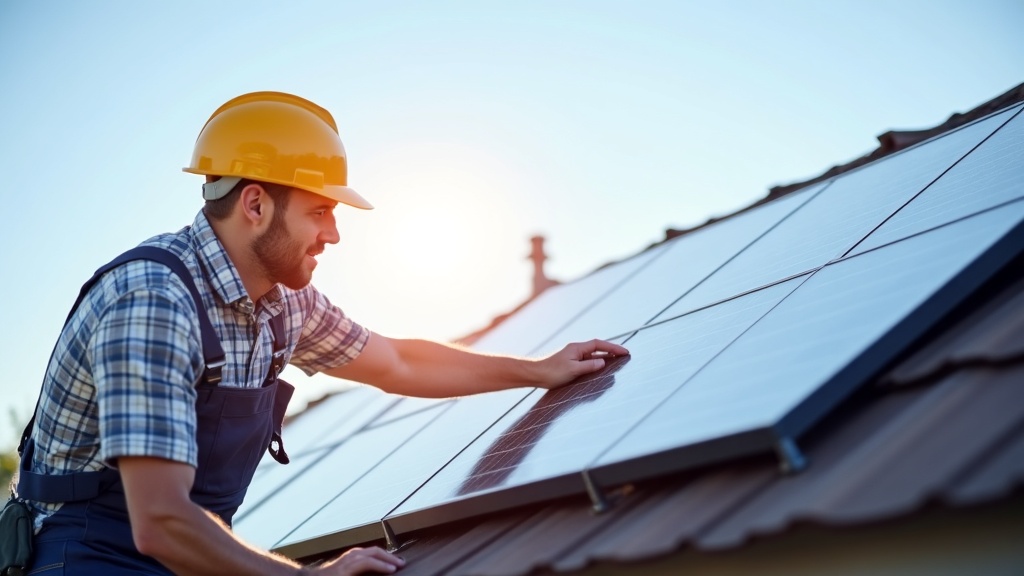
Once your racking is up, you can physically mount the panels. This is just bolting panels to rails using the manufacturer’s hardware. Work with a partner—panels are awkward at 40-50 pounds each, and I’ve seen too many slip off steep roofs.
Use proper fall protection. A basic roof safety harness runs $120 and keeps you alive. Not negotiable on anything steeper than 4/12 pitch.
Trenching and Conduit Runs
You can dig trenches and install empty conduit from your roof penetration to your electrical panel location. Just don’t pull wire through it yet—that’s where the electrical permit comes in.
Use schedule 40 PVC for underground runs (bury it 18″ minimum in most jurisdictions) and rigid metal conduit for exposed runs. Check local code—some areas require metal conduit everywhere.
Equipment Mounting (Inverter, Disconnect, etc.)
You can physically mount your inverter, AC disconnect, and other balance-of-system components. Just bolt the boxes to the wall where your electrician specifies. Don’t make any wire terminations inside.
What You CANNOT Do Yourself (Don’t Even Think About It)
This is where people get in trouble. These tasks require licensed work in every U.S. jurisdiction I’m aware of, and for good reason.
Any Electrical Connections or Wiring
Full stop: you cannot legally make any electrical connections in a solar PV system without a license. This includes:
- DC wiring from panels to inverter
- AC wiring from inverter to main panel
- Grounding electrode connections
- Main panel modifications or breaker installation
- Meter base work
I don’t care if you’ve wired 50 outlets in your house. Solar DC systems operate at 300-600V, and one mistake creates an arc flash that can kill you or burn down your home. The NEC (National Electrical Code) has an entire article (Article 690) dedicated to solar PV systems because they’re uniquely dangerous.
Electrical Permit Applications and Inspections
Only licensed electricians can pull permits for solar installations in most jurisdictions. Even if your local code technically allows homeowners to permit their own work, your utility won’t approve interconnection without a licensed installer’s stamp.
I’ve seen DIYers spend $15,000 on equipment only to discover their utility requires licensed installation for net metering approval. Check with your utility before buying anything.
Utility Interconnection
Your utility will not process interconnection paperwork from a homeowner DIY install in most cases. They require a licensed contractor’s signature, proof of insurance, and often certification that the installer is on their approved vendor list.
System Design and Engineering (Usually)
Unless you’re an engineer or electrician yourself, you need a PE (Professional Engineer) stamp on your system design for permit approval. This covers structural calculations for roof loading, electrical single-line diagrams, and equipment specifications.
You can’t just buy panels and hope for the best. I’ve seen a 10kW system collapse a garage roof because the homeowner didn’t account for snow loading.
The Hybrid Approach: Maximum Savings, Minimum Risk
Here’s what I recommend to every homeowner who asks: hire a licensed solar contractor for design and electrical work, but negotiate to do the labor-intensive prep and mounting yourself.
| Task | DIY? | Typical Cost Savings | Risk Level |
|---|---|---|---|
| Site assessment & planning | ✓ Yes | $300-$600 | Low |
| Roof mounting hardware | ✓ Yes | $1,500-$3,000 | Medium (fall risk) |
| Panel mounting | ✓ Yes | $800-$1,500 | Medium (fall risk) |
| Trenching & conduit | ✓ Yes | $400-$800 | Low |
| Equipment mounting | ✓ Yes | $200-$400 | Low |
| System design & engineering | ✗ No | N/A | Illegal/High |
| Electrical wiring (DC & AC) | ✗ No | N/A | Illegal/Extreme |
| Permitting & inspection | ✗ No | N/A | Illegal |
| Utility interconnection | ✗ No | N/A | Impossible |
Total realistic DIY savings: $3,200-$6,300 on a typical residential system
Tools and Skills You’ll Actually Need
Don’t start this project if you’re not comfortable on a roof or using power tools. Here’s my honest assessment of what you need:
Essential Tools
- Impact driver and drill combo kit (18V minimum)
- Stud finder that can locate rafters through shingles
- Torque wrench (roof mounting bolts have specific torque specs)
- Fall protection harness and anchor
- Laser level for racking alignment
- Caulk gun and UV-rated sealant
Skills Required
You need to be comfortable with:
- Working on a roof safely (no fear of heights, good balance)
- Using power tools accurately
- Reading technical drawings and following specifications
- Lifting 50 pounds repeatedly
- Problem-solving when things don’t go according to plan (they won’t)
If you’ve successfully built a deck or done a roof repair, you can probably handle the DIY portions. If you’ve never used a drill or worked above ground level, hire this out.
Code and Warranty Gotchas
Here’s where DIYers shoot themselves in the foot even when doing “legal” work:
Warranty Implications
Most solar panel manufacturers require professional installation for warranty coverage. If you mount panels yourself and one fails in year 8, they may deny your claim. Read the fine print before you start.
Same goes for roof warranties. If your roofer discovers you penetrated their work without a licensed contractor, your roof warranty is likely void. Get it in writing before drilling.
Insurance Issues
Your homeowner’s insurance may not cover damage from DIY solar installation. I’ve seen insurers deny fire claims when they discovered unlicensed electrical work. Call your agent before starting—some require professional installation for coverage.
Resale Value Impact
When you sell your house, buyers will ask for permit records and warranty documentation. DIY systems without proper permits can kill a sale or force you to remove the system entirely. Appraisers often won’t add value for unpermitted solar.
The Realistic Timeline
If you’re doing the hybrid approach (DIY mounting, professional electrical), budget:
- Planning and permit prep: 1-2 weeks
- Mounting hardware installation: 2-4 weekends (for a typical 20-panel system)
- Panel mounting: 1-2 days with help
- Licensed electrical rough-in: 1 day
- Inspection and corrections: 1-2 weeks (waiting on inspector)
- Final electrical and commissioning: 1 day
- Utility interconnection approval: 2-8 weeks
Total: 2-4 months from start to flip-the-switch, assuming no major issues. I’ve seen it take 6+ months when permits get delayed or inspections fail.
My Honest Recommendation
After helping over 200 homeowners through this decision, here’s what I tell people: DIY makes sense if you’re handy, safety-conscious, patient, and willing to coordinate with a electrician who’s open to the hybrid approach.
It doesn’t make sense if:
- You’re uncomfortable on roofs
- You need the system running ASAP (full DIY takes months)
- Your utility or AHJ is hostile to owner-builder solar
- You can’t find a electrician willing to work with you
- The cost savings won’t exceed $3,000 (not worth the time investment)
For my own install in 2019, I did all the mounting work myself and hired an electrician buddy for two days of wiring and permitting. Saved $4,800 and learned exactly where my limits were—which was the point.
Frequently Asked Questions
Can I install solar panels myself without a permit?
Technically you can bolt anything to your roof, but you cannot legally energize a solar PV system without permits, inspections, and utility approval. Operating an unpermitted system risks fines, forced removal, insurance denial, and safety hazards. Every jurisdiction I know requires permits for solar—no exceptions.
How much can I realistically save doing DIY solar installation?
If you handle all the legal DIY work (mounting, trenching, equipment placement) and hire a electrician for wiring and permitting, expect to save $3,000-$6,500 on a typical 6-8kW residential system. Going completely DIY (where legal) might save $8,000-$12,000 but requires you to be a electrician or work in a very DIY-friendly jurisdiction.
Do I need to be an electrician to install solar panels?
No, you can legally do the mechanical installation (racking, mounting, conduit) without an electrician’s license. But you absolutely need a electrician for all wiring, connections, panel work, and permit sign-off. Don’t touch the electrical unless you hold the proper license—it’s illegal and dangerous.
Will my homeowner’s insurance cover a DIY solar installation?
Maybe. Many insurers require professional installation and proper permits for coverage. Some will deny claims for damage related to DIY electrical work. Call your insurance company before starting and get their requirements in writing. If they require professional installation, factor that into your decision.
What’s the biggest mistake DIYers make with solar installation?
Underestimating the permitting and utility interconnection complexity. I’ve seen people spend $10,000-$15,000 on equipment before discovering their utility won’t approve DIY interconnection or their jurisdiction requires licensed installation for permitting. Always confirm your local requirements and utility policies before buying anything.
Sources, uncertainty, safety, and affiliate disclosure
Check named sources for their publication date, geography, exact product, utility, and jurisdiction. Product specifications and programs change. Estimates are not guarantees. Electrical work, service upgrades, storage systems, transfer equipment, interconnection, and code compliance should be reviewed by the serving utility and a qualified electrician or installer as appropriate.
Some links may be affiliate links. SunBacked may earn a commission at no added cost to you; that does not determine editorial conclusions.