

Editorial quick answer
Tesla Solar Roof vs Solar Panels: Which Is Actually Worth It?
I’ve had homeowners ask me about the Tesla Solar Roof at least twice a week for the past three years, and my answer is always the same: unless you’re already replacing your roof and you’ve got cash to burn, traditional solar panels will save you more money. Let me break down exactly why. The Real […]
Who this is for
Homeowners using this topic to compare choices, identify tradeoffs, or prepare better questions.
What this cannot promise
A guaranteed bill reduction, output, runtime, incentive, code approval, interconnection result, or project-specific electrical design.
Assumptions, date, and local checks
Costs and performance depend on location, date, model, configuration, weather, tariffs, utility rules, program funding, installation details, and household loads. Incentive, net-metering, code, battery-sizing, and electrical statements require current jurisdiction and source checks. Confirm project-specific details with the serving utility, program administrator, manufacturer, and a qualified electrician or installer.
How evidence is labeled
Mike context
Limited to his 20 years as an electrician, going solar in 2019, and having no installer ties.
Manufacturer specification
Maker-published data for an identified model or version, not an independent measurement.
Public source
Utility, government, program, code, standards, or other dated public information.
Estimate
Math based on stated inputs and assumptions, not a quote or guarantee.
Editorial analysis
SunBacked’s synthesis of tradeoffs, separated from sourced facts.
I’ve had homeowners ask me about the Tesla Solar Roof at least twice a week for the past three years, and my answer is always the same: unless you’re already replacing your roof and you’ve got cash to burn, traditional solar panels will save you more money. Let me break down exactly why.
The Real Cost Difference Between Tesla Solar Roof and Solar Panels
Here’s what nobody wants to tell you: a Tesla Solar Roof costs roughly 2.5 to 3 times more than a traditional solar panel system with comparable output. I’m talking $50,000 to $75,000+ for an average 2,000 square foot home with the Solar Roof, versus $15,000 to $30,000 for conventional panels.
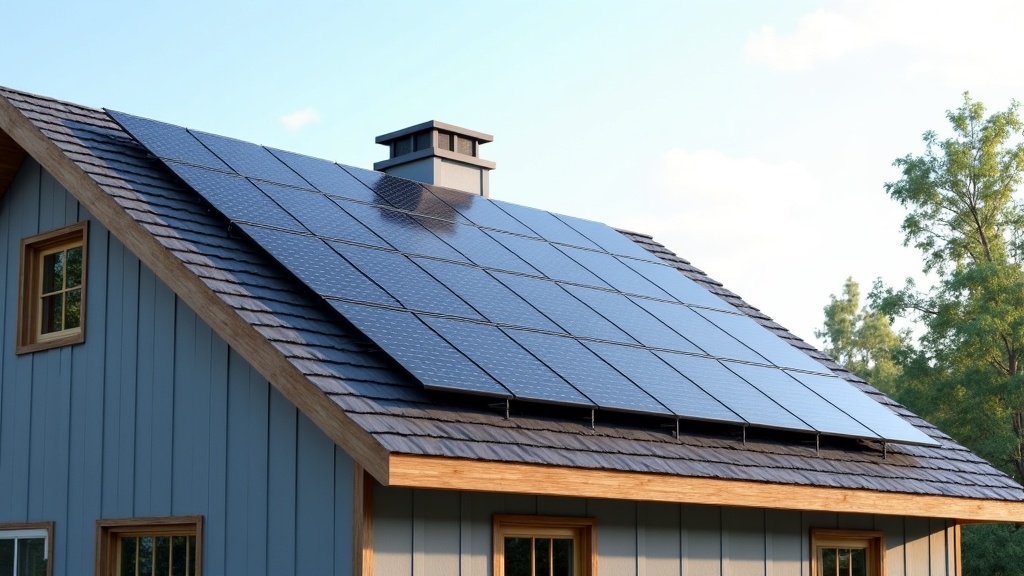
The Solar Roof gives you solar tiles that replace your entire roof. Traditional panels bolt onto your existing roof. That’s the fundamental difference, and it’s why the price gap is so massive.
When I went solar in 2019, I crunched these numbers hard. A 10 kW system with standard panels cost me $21,000 before incentives. The Tesla Solar Roof quote for the same output? $68,000. Same energy production, triple the price.
When the Tesla Solar Roof Actually Makes Sense
I’m not here to trash the Solar Roof completely. There are exactly three scenarios where I’ve seen it make financial sense:
1. Your Roof Needs Replacement Anyway
If you’re already dropping $12,000-$18,000 on a new roof, the math shifts. Now you’re comparing the difference between Solar Roof and (new roof + panels), not the full cost. That gap narrows to maybe $25,000-$35,000 extra for the integrated system.
Still expensive, but at least you’re not paying for two roofs.
2. HOA Restrictions Block Traditional Panels
Some homeowners associations are stuck in 1995 and hate the look of panels. Tesla’s solar tiles blend in better—they’re designed to look like premium roofing shingles. I’ve helped three clients navigate HOA nightmares where the Solar Roof was their only approved option.
3. You Value Aesthetics Over ROI
Look, if you’ve got the budget and you genuinely prefer the integrated look, that’s a valid choice. I’ve worked with homeowners on high-end properties where the Solar Roof fit their vision. Just go in knowing you’re paying a premium for design, not performance.
Tesla Solar Roof vs Solar Panels: Side-by-Side Comparison
| Factor | Tesla Solar Roof | Traditional Solar Panels |
|---|---|---|
| Cost (10 kW system) | $50,000-$75,000+ | $15,000-$30,000 |
| Installation Time | 2-4 weeks (full roof replacement) | 1-3 days |
| Efficiency | ~17-18% (solar tiles only) | 20-23% (typical panels) |
| Warranty | 25 years (power), 25 years (roof) | 25 years (panels), existing roof warranty |
| Payback Period | 20-30+ years | 6-12 years |
| Best For | New construction, roof replacement, HOA restrictions | Existing roof in good condition, ROI priority |
The Efficiency Problem Most People Miss
Here’s something Tesla doesn’t advertise: solar roof tiles are less efficient than standard panels. The tiles max out around 17-18% efficiency, while quality conventional panels hit 20-23%.
Why? Physics. Solar tiles have to compromise between being roof shingles and solar generators. They’re flatter, smaller, and constrained by roofing requirements. Standard panels are purpose-built for one job: converting sunlight to electricity.
On my own roof, I installed monocrystalline solar panels rated at 22% efficiency. To match my output with Solar Roof tiles, I’d need roughly 20-25% more roof area covered in active tiles.
Installation Reality Check
Traditional solar panels go up in 1-3 days. My own system took 8 hours of actual installation time.
The Tesla Solar Roof? You’re looking at a complete roof teardown and rebuild. Two to four weeks minimum, often longer. I’ve talked to homeowners who waited 6-8 weeks because of weather delays or material shortages.
That’s 6-8 weeks of construction noise, workers on your property, and hoping it doesn’t rain. Plus you need somewhere to stay if they hit major delays—your roof is literally off your house.
What About Maintenance and Repairs?
With standard panels, if one panel fails, you replace one panel. $200-400 part, maybe an hour of labor. I’ve helped homeowners swap out damaged panels in an afternoon.
Solar Roof tiles are integrated into your roofing system. If a section fails, you’re dealing with both solar replacement and roofing work. I haven’t seen enough long-term data yet (the product is still relatively new), but the complexity concerns me from a maintenance standpoint.
Standard panels also have decades of field data. We know how they age, what fails, and how to fix it. Tesla Solar Roof is still proving itself.
The ROI Calculation You Need to Run
Return on investment is where the Solar Roof completely falls apart for most people. Here’s the math I walk homeowners through:
Traditional solar panels: $20,000 system generates $200/month in savings = 100 months (8.3 years) to break even. After that, it’s pure profit for another 15-20 years.
Tesla Solar Roof: $60,000 system generates the same $200/month = 300 months (25 years) to break even. You’re hitting break-even right when components might start needing major service.
Even with the 26% federal tax credit (30% if you’re reading this before 2033), the Solar Roof payback period is still 18-22 years in most cases. Traditional panels drop to 6-9 years after incentives.
To track your actual solar production and verify savings, I recommend picking up a solar monitoring system that gives real-time data.
What I Actually Recommend to Homeowners
After helping over 200 homeowners go solar, here’s my standard advice:
Get traditional solar panels if:
- Your roof is less than 15 years old and in good condition
- You want the fastest payback period
- You care more about ROI than aesthetics
- You want proven, long-term reliability
Consider the Tesla Solar Roof if:
- Your roof needs replacement within the next 1-2 years anyway
- Your HOA blocks traditional panel installations
- You’re building new construction and can integrate from the start
- Budget isn’t your primary concern and you value the integrated look
For 90% of homeowners I consult with, traditional panels are the clear winner. The cost difference is just too massive to justify unless you’re in one of those specific scenarios.
The Hidden Costs Nobody Talks About
Tesla Solar Roof quotes often exclude things that should be included:
- Complex roof designs: Multiple dormers, valleys, or angles? Expect $10,000-$15,000 in upcharges.
- Electrical upgrades: Panel upgrades, trenching, or utility work can add $2,000-$5,000.
- Permitting delays: Some jurisdictions charge more for Solar Roof permits because they’re classified as major roof work, not just solar additions.
- Removal of old roof: Disposal fees, asbestos remediation if you have an older home, structural repairs discovered during teardown.
I’ve seen “firm” Solar Roof quotes balloon by 30% once these factors got priced in. Traditional panel quotes are more straightforward—what you see is usually what you pay.
Battery Storage: The Great Equalizer?
Both systems work with battery backup. Tesla pushes the Powerwall hard (understandably—they make it), but you can pair traditional panels with any compatible battery storage system.
I added two Powerwalls to my conventional panel setup in 2021. Total cost: $18,000 installed. Combined system price: $39,000. Still way under a Tesla Solar Roof without batteries.
If energy independence is your goal, you don’t need the Solar Roof to get there. Panels + batteries + a transfer switch give you the same backup capability for half the money.
Frequently Asked Questions
How long does a Tesla Solar Roof last compared to regular solar panels?
Both come with 25-year warranties, but traditional solar panels have 40+ years of field data showing they often produce power for 30-35 years at reduced efficiency. Tesla Solar Roof is too new to have long-term degradation data. Based on the technology, I’d expect similar 25-30 year lifespans, but we won’t know for certain until the early installations hit 20+ years.
Can you install Tesla Solar Roof on an existing house?
Yes, but it requires complete roof removal and replacement. Tesla tears off your existing roof down to the decking, inspects and repairs the structure, then installs the Solar Roof tiles. This is why installation takes weeks instead of days and why it’s so expensive. If your roof is relatively new, you’re essentially throwing away a perfectly good roof to install the Solar Roof.
Do solar panels damage your roof?
Properly installed panels don’t damage your roof. Installers use flashed mounting hardware that seals the penetration points. I’ve removed and reinstalled panels multiple times—the roof underneath is fine. Poor installation can cause leaks, which is why I always stress hiring certified installers with a solid track record. The Solar Roof bypasses this concern entirely since it is the roof, but traditional panels installed correctly pose zero roof risk.
Which has better resale value: Tesla Solar Roof or regular solar panels?
Data is limited, but early studies show both add roughly $15,000-$25,000 to home value—nowhere near the Solar Roof’s premium cost. Traditional panels have more market acceptance since buyers understand them. Solar Roof is still new enough that some buyers see it as a risk rather than a feature. From a pure resale ROI perspective, panels win because you’re recouping a higher percentage of your investment.
What happens if the Tesla Solar Roof gets damaged in a storm?
You’re dealing with both roofing and solar warranty claims, which can get complicated. Tesla’s warranty covers the tiles, but insurance handles storm damage. I’ve heard mixed reports about repair timelines—some homeowners waited months for replacement tiles. With traditional panels, you file an insurance claim for roof damage separately from panel damage, and replacement panels are widely available. One advantage of the Solar Roof: no separate roof to worry about, so there’s no roof-panel integration failure point.
Sources, uncertainty, safety, and affiliate disclosure
Check named sources for their publication date, geography, exact product, utility, and jurisdiction. Product specifications and programs change. Estimates are not guarantees. Electrical work, service upgrades, storage systems, transfer equipment, interconnection, and code compliance should be reviewed by the serving utility and a qualified electrician or installer as appropriate.
Some links may be affiliate links. SunBacked may earn a commission at no added cost to you; that does not determine editorial conclusions.


