

Editorial quick answer
How a Residential Solar System Actually Works: The Complete Guide
How a Residential Solar System Actually Works: The Complete Guide After 20 years as a electrician and seven years running my own solar system, I’ve seen homeowners waste thousands because they didn’t understand how these systems actually function. Here’s the truth: a residential solar system is simpler than most people think, but the devil’s […]
Who this is for
Homeowners using this topic to compare choices, identify tradeoffs, or prepare better questions.
What this cannot promise
A guaranteed bill reduction, output, runtime, incentive, code approval, interconnection result, or project-specific electrical design.
Assumptions, date, and local checks
Costs and performance depend on location, date, model, configuration, weather, tariffs, utility rules, program funding, installation details, and household loads. Incentive, net-metering, code, battery-sizing, and electrical statements require current jurisdiction and source checks. Confirm project-specific details with the serving utility, program administrator, manufacturer, and a qualified electrician or installer.
How evidence is labeled
Mike context
Limited to his 20 years as an electrician, going solar in 2019, and having no installer ties.
Manufacturer specification
Maker-published data for an identified model or version, not an independent measurement.
Public source
Utility, government, program, code, standards, or other dated public information.
Estimate
Math based on stated inputs and assumptions, not a quote or guarantee.
Editorial analysis
SunBacked’s synthesis of tradeoffs, separated from sourced facts.
How a Residential Solar System Actually Works: The Complete Guide
After 20 years as a electrician and seven years running my own solar system, I’ve seen homeowners waste thousands because they didn’t understand how these systems actually function. Here’s the truth: a residential solar system is simpler than most people think, but the devil’s in the details that installers don’t always explain.
In this guide, I’ll walk you through exactly how solar power flows from your roof to your outlets, what happens when the sun goes down, and why understanding your system’s components can save you from costly mistakes.
The Five Core Components Every Solar System Needs
Every grid-tied residential solar system has five essential parts working together. Miss one, and you don’t have a functional system.
Solar Panels (PV Modules)
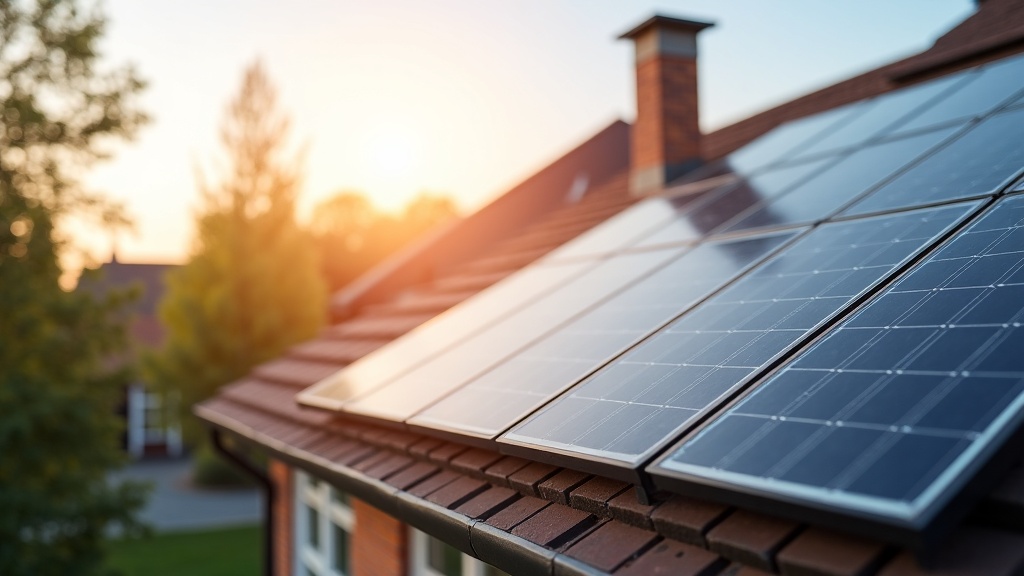
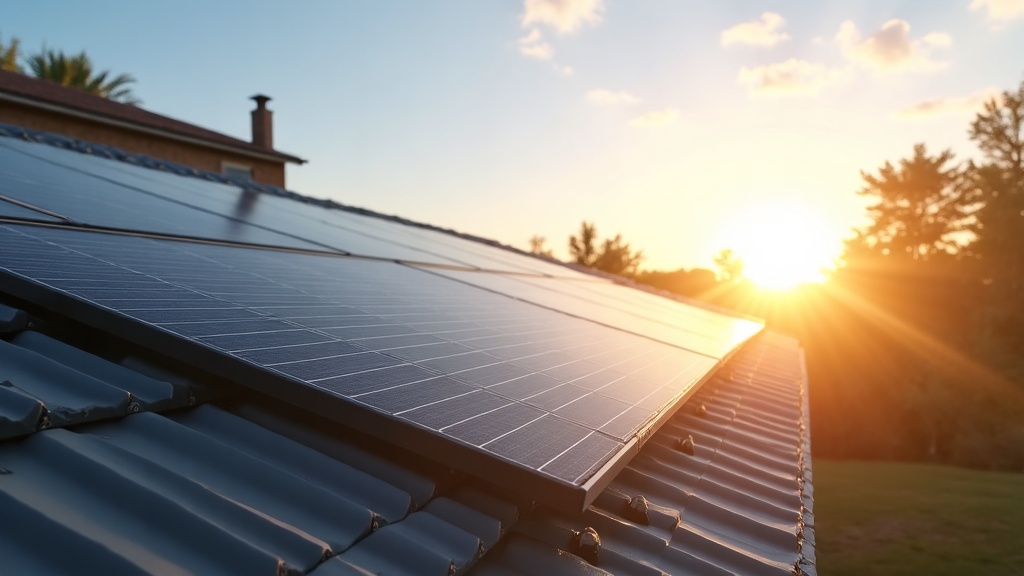
The panels on your roof contain photovoltaic cells that convert sunlight into DC (direct current) electricity. When photons from sunlight hit the silicon cells, they knock electrons loose, creating an electrical current. That’s it — no moving parts, no fuel, just physics.
Most residential systems use monocrystalline or polycrystalline panels rated between 300-400 watts each. The wattage tells you how much power one panel produces under ideal conditions (which you’ll rarely see in real life, but that’s another discussion).
Inverter
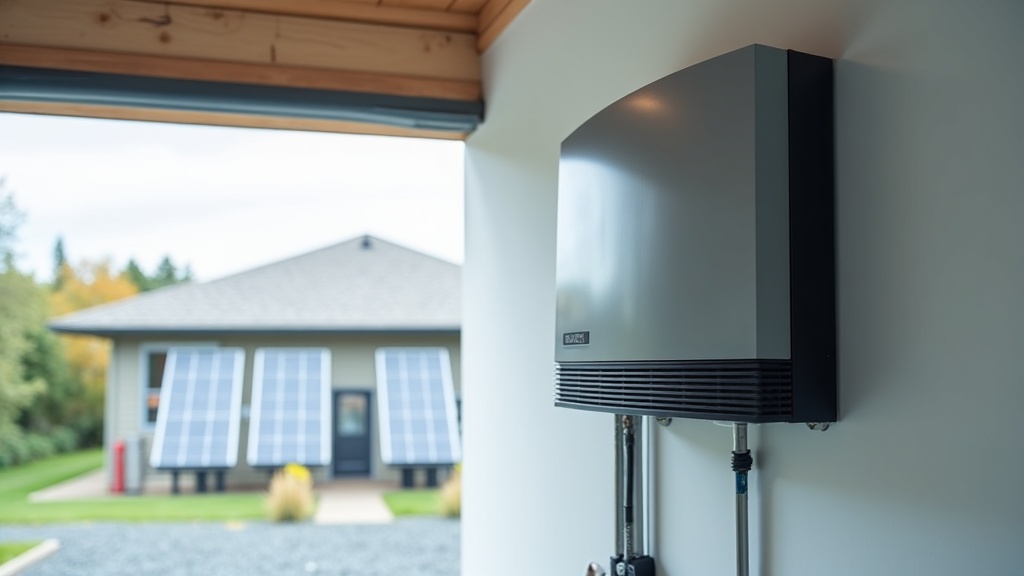
Your home runs on AC (alternating current) power at 120/240 volts. The inverter converts the DC electricity from your panels into AC electricity your appliances can use. This is the brain of your system.
You’ll find three types of inverters in residential installations:
- String inverters — One central unit for the whole array, cheapest option but entire system performs at the level of the weakest panel
- Microinverters — One small inverter per panel, better performance with shading but higher upfront cost
- Power optimizers — DC-to-DC converters at each panel with a central inverter, middle-ground solution
If you’ve got significant shading or multiple roof planes, microinverters or optimizers are worth the extra money. For a clean south-facing roof with no obstructions, a quality string inverter works fine and costs less.
Electrical Panel and Main Service
Solar power feeds into your existing electrical panel through a dedicated breaker. This is where solar electricity meets your home’s electrical system. Your main panel must have enough capacity to handle both the utility feed and the solar backfeed — this trips up a lot of DIYers who don’t understand the 120% rule.
Bi-Directional Meter
Your utility company replaces your old meter with one that measures electricity flowing both directions — power you pull from the grid and excess solar you send back. This enables net metering, which I’ll explain below.
Disconnect Switches and Safety Equipment
Code requires multiple disconnect points: one DC disconnect between the panels and inverter, one AC disconnect between the inverter and panel, and your main panel breaker. First responders need to kill your system fast in an emergency. Most systems also include a rapid shutdown system that de-energizes the array within seconds.
How Solar Power Actually Flows Through Your Home
Here’s the path your solar electricity takes from sunlight to running your refrigerator:
- Panels generate DC power — Sunlight hits the panels, electrons move, DC electricity flows through the wiring
- DC travels to the inverter — Wiring runs from your roof array down to the inverter (usually in your garage, basement, or on an exterior wall)
- Inverter converts DC to AC — The inverter transforms DC to 240V AC and synchronizes it with the grid frequency (60 Hz in North America)
- AC power enters your electrical panel — Solar electricity feeds into a dedicated breaker in your main panel
- Power flows to loads or the grid — Your home uses what it needs first; any excess automatically flows back through the meter to the utility grid
This happens instantaneously. When your air conditioner kicks on at 2 PM, your solar system is already feeding power to your panel. If your panels are producing 6 kW and your AC draws 4 kW, you’re using solar power with 2 kW going to the grid. If your AC draws 8 kW, you pull 2 kW from the grid and 6 kW from your panels.
Grid-Tied vs. Off-Grid vs. Hybrid Systems
Understanding these three configurations prevents expensive misunderstandings.
| System Type | Grid Connection | Battery Required | Power During Outage | Best For |
|---|---|---|---|---|
| Grid-Tied | Yes | No | No (system shuts down) | Most homeowners, lowest cost, net metering benefits |
| Off-Grid | No | Yes (large bank) | Yes (if battery charged) | Remote properties, no grid access |
| Hybrid (Grid-Tied + Battery) | Yes | Yes | Yes (backed-up circuits only) | Areas with unreliable grid, TOU rate optimization |
Most residential installations are grid-tied without batteries. It’s the most economical option because the grid acts as your “battery” — you bank credits during the day and draw power at night. Standard grid-tied systems shut down during power outages to protect utility workers fixing the lines (this surprises many new solar owners).
Net Metering: Your Virtual Battery
Net metering is the financial mechanism that makes grid-tied solar practical. When your panels produce more than you’re using, the excess flows to the grid and your meter literally spins backward (digitally, not mechanically anymore). You get credited for that excess generation.
At night or during cloudy weather when your panels aren’t producing enough, you pull power from the grid and those credits offset your consumption. At the end of your billing cycle, you pay only for your “net” usage — total consumption minus total solar production.
Here’s a real example from my August bill last year: I produced 920 kWh and consumed 1,050 kWh. My net usage was 130 kWh. At $0.14/kWh, I paid $18.20 plus a $12 connection fee. Without solar, that same month would’ve cost me $159.
Net metering policies vary by state and utility. Some do 1:1 credit (you get full retail rate), others pay wholesale rates for excess. This is critical to understand before you size your system.
What Happens at Night and on Cloudy Days
Solar panels need direct sunlight to produce meaningful power. At night, production drops to zero. On cloudy days, you’ll see 10-25% of your rated capacity depending on cloud thickness.
With a grid-tied system, you automatically draw from the utility when solar production is insufficient. The transition is seamless — you won’t notice it happening. Your inverter constantly monitors grid voltage and frequency, syncing your solar output perfectly.
If you have a hybrid system with battery storage, your home draws from the battery first before pulling from the grid. Most battery backup systems let you configure priority: use stored energy during expensive peak hours, or save the battery for outages only.
Monitoring Your System’s Performance
Every modern inverter includes monitoring — either through a display, app, or web portal. You’ll see real-time production, daily/monthly totals, and historical performance data.
I check mine every few days, looking for these red flags:
- Production drops more than 20% without weather explanation (could indicate panel soiling or equipment failure)
- One panel or string producing significantly less than others (shading, debris, or faulty panel)
- Frequent inverter errors or shutdowns (grid issues or inverter problems)
- Production doesn’t match seasonal expectations based on system size
Your monitoring system should show both current power output (measured in kW) and cumulative energy production (measured in kWh). A 7 kW system might produce 7 kW at solar noon but generate 35-45 kWh total on a sunny summer day.
The Safety Systems You Don’t See
As an electrician, I appreciate the multiple layers of protection built into modern solar systems. These aren’t optional — they’re code requirements that keep your family and utility workers safe.
Anti-Islanding Protection
Your inverter constantly monitors the grid. If it detects the grid is down (voltage drop, frequency shift), it shuts off within 2 seconds. This prevents “islanding” — your solar system energizing dead utility lines while crews think they’re safe to work on them.
Rapid Shutdown
NEC 2017 and later require rapid shutdown systems that de-energize DC conductors to 80 volts or less within 30 seconds of activation. This protects firefighters who might need to cut into your roof.
Ground Fault Protection
Solar arrays operate at high DC voltages (300-600V is common). Ground fault detection shuts down the system if current leaks to ground, preventing fires and electrical shock.
Arc Fault Protection
String inverters and power optimizers include arc fault circuit interrupters (AFCI) that detect dangerous arcing conditions and shut down before a fire starts. I’ve seen these prevent disasters from damaged MC4 connectors and rodent-chewed wiring.
Common Misconceptions About How Solar Systems Work
In seven years of helping homeowners, these myths come up constantly:
Myth: Solar panels work in moonlight
Moonlight is reflected sunlight, about 400,000 times dimmer. Your panels might generate a few milliwatts — not even enough to power an LED.
Myth: A solar system powers your home directly
Your solar system feeds into your electrical panel, mixing with grid power. Your refrigerator doesn’t know or care whether the electricity came from panels or the utility — it’s all just AC power at 120V.
Myth: You need batteries to use solar power
Grid-tied systems work perfectly without batteries. The grid is your battery. Batteries add resilience but aren’t required for basic solar functionality.
Myth: Solar systems require constant maintenance
I hose my panels twice a year if we’ve had a dry spell. That’s it. No moving parts means virtually zero maintenance beyond keeping them reasonably clean.
Frequently Asked Questions
Does my solar system automatically switch to battery power during an outage?
Only if you have a hybrid system with battery backup and a transfer switch. Standard grid-tied systems without batteries shut down completely during outages due to anti-islanding safety requirements. If you want backup power, you need to specifically design for it with a battery system and backup panel for critical loads.
How does my solar system know when to send power to the grid vs. use it in my home?
It doesn’t “know” anything — it just feeds power into your electrical panel continuously. Your home’s loads automatically consume whatever power they need. If solar production exceeds demand, the excess has nowhere to go except back through your meter to the grid. Think of it like water pressure: power flows to wherever there’s demand.
Will my solar panels produce power if the grid is down but the sun is shining?
Not with a standard grid-tied system. The inverter requires a stable grid signal to synchronize with. When the grid drops, anti-islanding protection shuts down your solar system even if it’s sunny. This frustrates new solar owners, but it’s a critical safety feature. Only hybrid systems with battery backup and special inverters can provide solar power during grid outages.
How efficient is the conversion from sunlight to usable electricity?
Modern solar panels are 18-22% efficient at converting sunlight to DC electricity. The inverter then converts DC to AC at 95-98% efficiency. So overall, you’re looking at roughly 17-21% of the sun’s energy hitting your panels becoming usable AC power in your home. That sounds low, but sunlight is free and abundant — efficiency matters less than total production and cost per watt.
Can I add more panels to my system later if my energy needs increase?
Maybe. It depends on your inverter capacity, roof space, and electrical panel rating. Most inverters can handle 10-20% more panel capacity than their rated output (this is called oversizing). Your electrical panel must also have room for additional backfeed current without exceeding the 120% rule. I’ve successfully expanded systems, but it’s always easier and cheaper to size correctly from the start.
Sources, uncertainty, safety, and affiliate disclosure
Check named sources for their publication date, geography, exact product, utility, and jurisdiction. Product specifications and programs change. Estimates are not guarantees. Electrical work, service upgrades, storage systems, transfer equipment, interconnection, and code compliance should be reviewed by the serving utility and a qualified electrician or installer as appropriate.
Some links may be affiliate links. SunBacked may earn a commission at no added cost to you; that does not determine editorial conclusions.