
Editorial quick answer
How to Clean Solar Panels on Your Roof Without Going Up There
After seven years running solar, I’ve figured out how to clean roof solar panels from the ground without risking my neck or paying someone $200. The secret? The right extension pole setup and knowing when to just let the rain do its job. Most solar panels stay clean enough from rainfall alone, but if you […]
Who this is for
Homeowners using this topic to compare choices, identify tradeoffs, or prepare better questions.
What this cannot promise
A guaranteed bill reduction, output, runtime, incentive, code approval, interconnection result, or project-specific electrical design.
Assumptions, date, and local checks
Costs and performance depend on location, date, model, configuration, weather, tariffs, utility rules, program funding, installation details, and household loads. Incentive, net-metering, code, battery-sizing, and electrical statements require current jurisdiction and source checks. Confirm project-specific details with the serving utility, program administrator, manufacturer, and a qualified electrician or installer.
How evidence is labeled
Mike context
Limited to his 20 years as an electrician, going solar in 2019, and having no installer ties.
Manufacturer specification
Maker-published data for an identified model or version, not an independent measurement.
Public source
Utility, government, program, code, standards, or other dated public information.
Estimate
Math based on stated inputs and assumptions, not a quote or guarantee.
Editorial analysis
SunBacked’s synthesis of tradeoffs, separated from sourced facts.
After seven years running solar, I’ve figured out how to clean roof solar panels from the ground without risking my neck or paying someone $200. The secret? The right extension pole setup and knowing when to just let the rain do its job.
Most solar panels stay clean enough from rainfall alone, but if you live in a dusty area, near farmland, or under trees that drop pollen and bird droppings, you’ll need a ground-based cleaning strategy. I’m going to walk you through exactly what works—and what’s a waste of money.
Why You Should Clean From the Ground
I’ve been on roofs for two decades as an electrician. Even with proper fall protection, it’s inherently risky. One wrong step on a wet panel, one moment of distraction, and you’re looking at a hospital visit or worse.
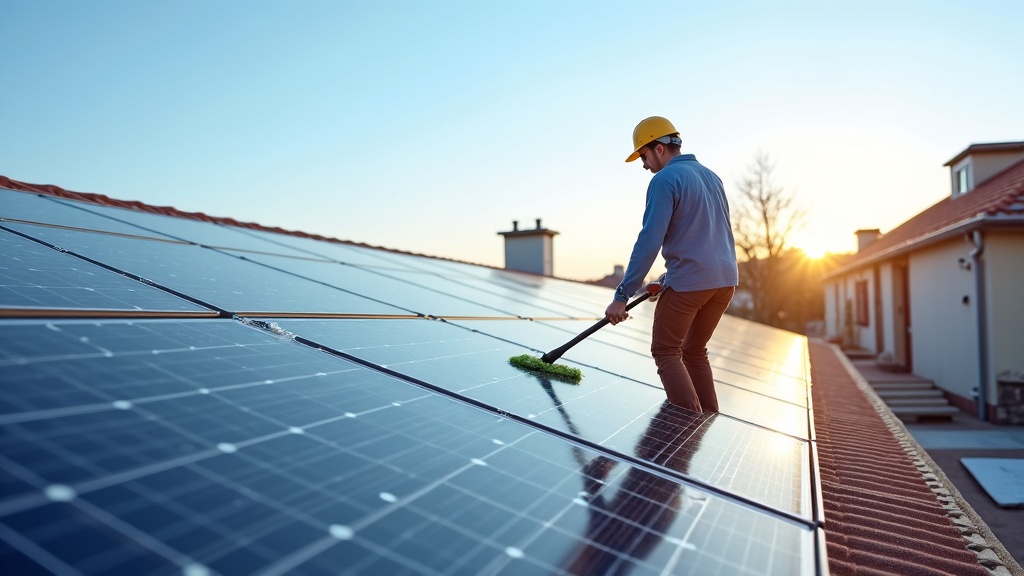
The other reason: it’s just not necessary to climb up there. Modern water-fed poles can reach 30+ feet, which covers most residential installations. I clean my own 8kW array in about 20 minutes from ground level, twice a year.
When Your Panels Actually Need Cleaning
Before we get into equipment, let’s talk about whether you even need to clean. I monitor my system through the inverter app, and here’s what I’ve learned:
- Light dust and pollen: Reduces output by 2-5%. Not worth cleaning unless it’s severe.
- Bird droppings and tree sap: Can block entire cells, reducing output by 20-40% in affected areas. Clean these ASAP.
- Heavy pollen season: Spring in my area means a yellow layer that cuts production by 8-12%. I clean after peak pollen drops.
- Drought conditions: No rain for 2+ months means dust accumulation. Time to clean.
If you’re seeing a 10% or greater drop in production compared to the same conditions last month (similar weather, same time of day), cleaning probably makes sense.
The Ground-Based Cleaning Setup
Here’s what actually works for cleaning solar panels from ground level. I’ve tried the cheap options and the overpriced “solar cleaning kits”—this is what I recommend:
Water-Fed Pole System
This is your primary tool. You want a telescoping pole that extends to at least 24 feet (for single-story) or 30+ feet (for two-story). I use a water-fed pole with brush attachment that connects directly to my garden hose.
The brush head should be soft bristle—never use anything abrasive. Solar panels have an anti-reflective coating that can scratch. I learned this the hard way when I used a medium-bristle deck brush and created micro-scratches that actually reduced my output.
Water Source Options
For light cleaning, regular tap water through a garden hose works fine. For heavier buildup or if you have hard water, you have two options:
- Deionized water system: Prevents water spots. I use a portable DI filter that connects inline with my hose. Costs about $80-120 and the resin lasts me a full year.
- Squeegee on the pole: If you’re using regular water, follow up with a squeegee attachment to prevent mineral spots from drying.
Cleaning Solution (When Needed)
For 90% of cleaning jobs, plain water is enough. For stubborn bird droppings or tree sap, use a few drops of dish soap in a pump sprayer. Avoid:
- Anything with ammonia (can degrade sealants)
- Abrasive cleaners
- Pressure washers (too much force can damage seals and frames)
- “Solar panel cleaning solutions” that cost $25 a bottle—they’re just diluted surfactants
Step-by-Step Ground Cleaning Process
I do this early morning or evening when the panels are cool. Never clean hot panels in direct sun—thermal shock can crack them, and water evaporates too fast leaving streaks.
1. Initial Rinse
Extend your water-fed pole and rinse the panels from top to bottom. This removes loose dust and pollen. Use low to moderate water pressure—you’re not trying to blast anything off.
2. Brush Scrubbing (If Needed)
If you see stuck-on debris, gently scrub with the soft-bristle brush while water is flowing. Work in straight lines from top to bottom, then side to side. Don’t scrub in circles—it can create swirl marks if there’s any grit on the surface.
For bird droppings, let water soak them for 30-60 seconds first. They’ll come off much easier. Scrubbing dry droppings risks scratching.
3. Final Rinse
Rinse everything again from top to bottom. If you’re using regular tap water, follow immediately with a squeegee to prevent water spots. If you’re using DI water, just let it air dry.
4. Spot Check
Walk around and look at the panels from different angles. You’ll be able to see any remaining streaks or spots from the ground. Hit those areas again if needed.
Equipment Comparison: What’s Worth the Money
| Equipment Type | Price Range | Pros | Cons |
|---|---|---|---|
| Basic garden hose + soft brush on pole | $30-50 | Cheap, works for light cleaning | No water flow through brush, limited reach |
| Water-fed pole system | $120-250 | Professional results, constant water flow, good reach | Initial investment, can be heavy when extended |
| Robotic solar panel cleaner | $300-1,500 | Automated, no effort | Expensive, you still have to get on roof to place it, limited effectiveness |
| Professional cleaning service | $150-300/visit | No equipment needed, liability is theirs | Recurring cost, scheduling hassle |
| DI water system add-on | $80-150 + resin refills | Spot-free drying, better results in hard water areas | Extra cost, resin needs replacing |
My recommendation for most homeowners: Start with a basic telescoping pole and soft brush. If you find yourself cleaning regularly and fighting water spots, upgrade to a proper water-fed system with DI filtration.
What NOT to Do
I’ve seen (and made) enough mistakes to save you some headaches:
- Don’t use a pressure washer. Even on low settings, you risk forcing water past seals or damaging the junction box. I’ve seen three systems develop electrical faults after pressure washing.
- Don’t clean at midday. Hot panels + cold water = potential thermal shock. Plus the water evaporates before you can rinse, leaving mineral deposits.
- Don’t use soap unless necessary. It leaves residue that actually attracts more dirt. Plain water works for 90% of jobs.
- Don’t let hard water air-dry. Those white spots reduce output more than the dust you just cleaned off. Either use DI water or squeegee immediately.
When to Call a Professional
I’m all about DIY, but there are situations where you should hire out:
- Steep roof (8/12 pitch or greater): Even professionals need extra safety equipment. Not worth the risk.
- Three-story installation: Standard extension poles max out around 30 feet. You’ll need specialized equipment.
- Panels with significant buildup under frames: Sometimes debris gets trapped under the mounting rails. This requires on-roof access to clean properly.
- Suspected damage or seal issues: If you see water intrusion or cracked glass, call a solar tech, not a cleaning service.
A good solar cleaning service should charge $150-250 for a residential system and carry liability insurance. Ask to see their certificate before they start work.
How Often Should You Clean?
This depends entirely on your location. My panels face south with no nearby trees—I clean twice a year (after spring pollen season and in late fall). If you have:
- Agricultural area: Quarterly cleaning (dust from tilling, harvest)
- Desert climate: Every 2-3 months during dry season
- Near trees: Every 1-2 months during leaf-drop season
- High-rain area: Maybe once a year, or just let nature handle it
- Coastal area: Every 2-3 months (salt spray creates a film)
Monitor your production through your inverter app. Set up alerts for unexpected drops in output—that’s your signal to inspect and possibly clean.
Frequently Asked Questions
Can I clean solar panels with just a garden hose?
Yes, for light dust and pollen. Attach a spray nozzle to a long extension wand and rinse from the ground. This works if you clean regularly and don’t have stubborn buildup. For stuck-on debris, you’ll need a brush attachment.
Will cleaning solar panels increase output enough to justify the cost?
It depends on how dirty they are. If you’re seeing a 15-20% production drop from buildup, cleaning can restore most of that. But if it’s just light dust causing a 3-5% loss, you might need 2-3 years to break even on a $200 water-fed pole system. I clean because dirty panels bother me, not because the ROI is spectacular.
Is it safe to clean solar panels myself from the ground?
Yes, ground-based cleaning is very safe as long as you’re not working near power lines or on unstable ground. The biggest risk is dropping the pole and damaging the panels, which is why I always use a foam grip and work in calm weather. Much safer than getting on the roof.
Do solar panels need special cleaning products?
No. The marketing around “solar panel cleaning solution” is mostly nonsense. Use plain water for routine cleaning. For stubborn organic matter, a tiny amount of dish soap works fine. The panel coating is durable glass—if the cleaner is safe for your car windshield, it’s safe for your panels.
Can I damage my solar panels by cleaning them?
You can if you use abrasive brushes, pressure washers, or clean hot panels with cold water. Stick to soft-bristle brushes, moderate water pressure, and clean when panels are cool. I’ve been cleaning my system this way for seven years with zero damage. The bigger risk is NOT cleaning in areas with heavy buildup—bird droppings are acidic and can etch the glass over time.
Sources, uncertainty, safety, and affiliate disclosure
Check named sources for their publication date, geography, exact product, utility, and jurisdiction. Product specifications and programs change. Estimates are not guarantees. Electrical work, service upgrades, storage systems, transfer equipment, interconnection, and code compliance should be reviewed by the serving utility and a qualified electrician or installer as appropriate.
Some links may be affiliate links. SunBacked may earn a commission at no added cost to you; that does not determine editorial conclusions.