

Editorial quick answer
Solar During a Grid Outage: What Nobody Told Me
I want to tell you about the conversation I had with my neighbor Dave, eight months after my solar install. There was a grid outage — a utility fault two streets over, about 4 hours in the middle of...
Who this is for
Homeowners using this topic to compare choices, identify tradeoffs, or prepare better questions.
What this cannot promise
A guaranteed bill reduction, output, runtime, incentive, code approval, interconnection result, or project-specific electrical design.
Assumptions, date, and local checks
Costs and performance depend on location, date, model, configuration, weather, tariffs, utility rules, program funding, installation details, and household loads. Incentive, net-metering, code, battery-sizing, and electrical statements require current jurisdiction and source checks. Confirm project-specific details with the serving utility, program administrator, manufacturer, and a qualified electrician or installer.
How evidence is labeled
Mike context
Limited to his 20 years as an electrician, going solar in 2019, and having no installer ties.
Manufacturer specification
Maker-published data for an identified model or version, not an independent measurement.
Public source
Utility, government, program, code, standards, or other dated public information.
Estimate
Math based on stated inputs and assumptions, not a quote or guarantee.
Editorial analysis
SunBacked’s synthesis of tradeoffs, separated from sourced facts.
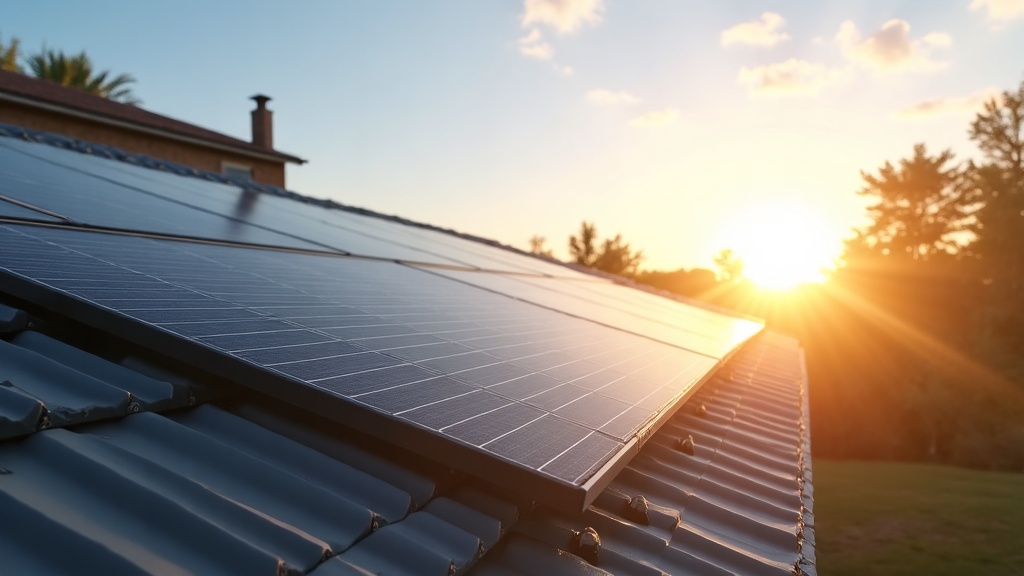
I want to tell you about the conversation I had with my neighbor Dave, eight months after my solar install. There was a grid outage — a utility fault two streets over, about 4 hours in the middle of a Saturday afternoon. My house went dark. My solar panels were producing at full capacity. I was not happy.
Dave found this hilarious. “You paid $26,000 for solar panels and you still lost power?”
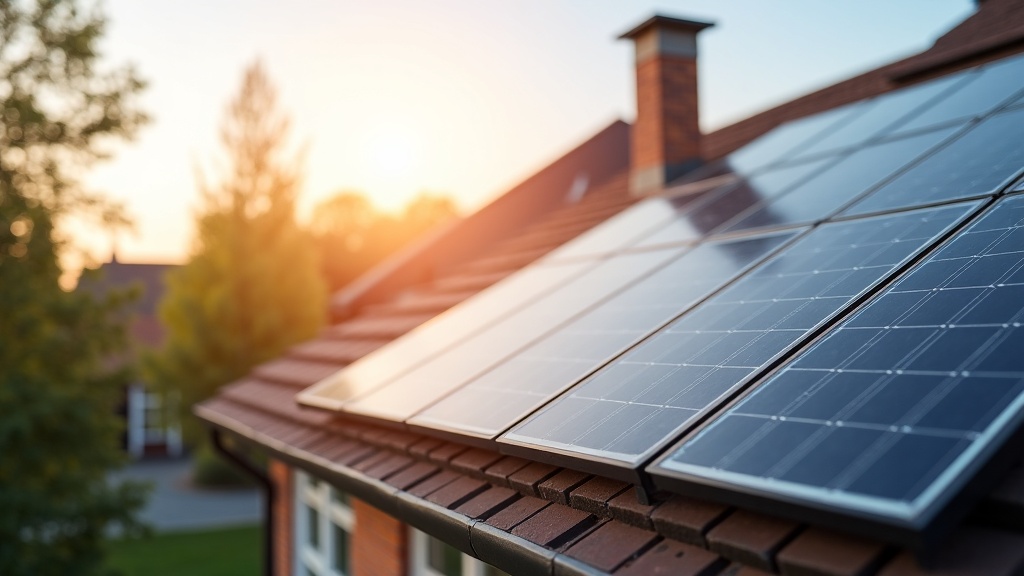
He wasn’t wrong. And here’s the thing: nobody told me this before I bought. My installer mentioned it briefly, but I didn’t fully internalize it until I was standing in my dark kitchen with 10.4 kW of solar on my roof doing nothing. Let me explain why this happens and what you can do about it.
The Anti-Islanding Requirement
Standard grid-tied solar systems are required by code (specifically IEEE 1547 and UL 1741 standards) to shut off automatically when the grid goes down. This is called anti-islanding protection, and it exists for a very important safety reason: if your solar system kept feeding power into a dead grid, utility workers repairing the fault could be electrocuted by power they didn’t expect to be there.
Your inverter constantly monitors the grid. When grid voltage and frequency disappear (i.e., a power outage), your inverter detects this within milliseconds and disconnects. It’s not optional. It’s not a setting you can change. It’s a fundamental safety feature baked into every grid-tied inverter sold in the United States.
So yes: your solar panels stop working during a grid outage, even on a sunny day, unless you have a system specifically designed for backup operation.
What I Wish My Installer Had Explained More Clearly
My installer did mention anti-islanding when we discussed the system. What he didn’t emphasize clearly was: this is not a minor footnote. It is the default behavior of your system. You are buying a machine that will reliably produce power during every sunny day, and will just as reliably stop producing power during the exact moments when you’d most want it (storms, grid failures).
For most homeowners whose primary goal is offsetting electricity costs, this is fine — you don’t actually need backup power often enough to justify the premium for backup capability. That’s a reasonable position, and it was the right economic choice for me at the time I bought.
But I would have made a more informed decision if the tradeoff had been presented more directly, rather than buried in paragraph six of a conversation about mounting hardware.
The Three Ways to Get Backup Power with Solar
If you want your solar to function during a grid outage, you have options:
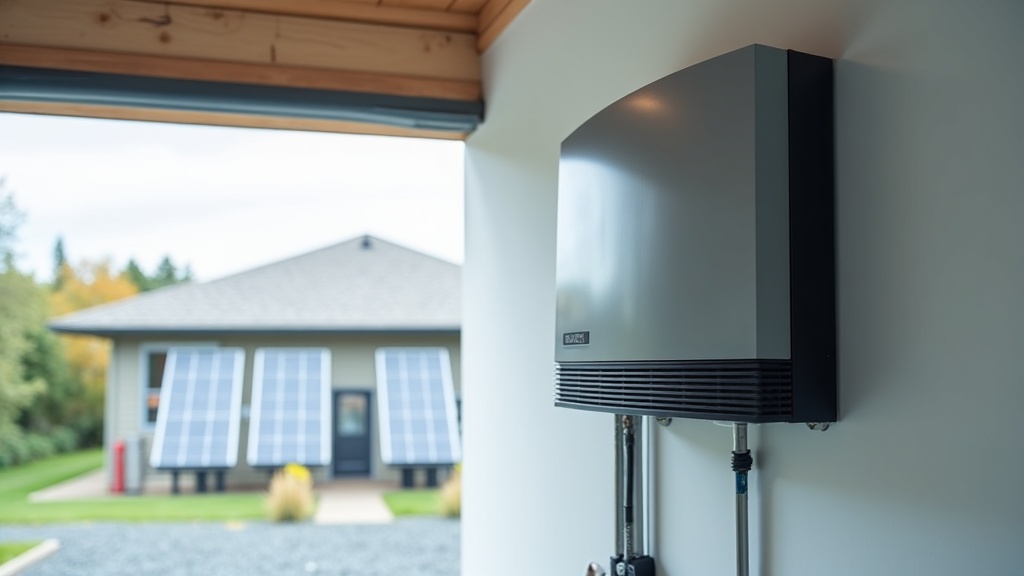
Option 1: Battery storage with a hybrid inverter. This is the Powerwall/Tesla route, or any other battery system that integrates directly with your solar. (I priced both the Powerwall and EcoFlow DELTA Pro in detail — here A hybrid inverter manages your solar panels, the battery, and the grid connection. When the grid fails, it island-modes: it disconnects from the grid (satisfying the safety requirement) and uses your solar plus battery to power your home. This is the most seamless solution — automatic switchover, no manual intervention required.
Cost: $14,000-$34,000 depending on system size. This is what most people mean when they say “solar with backup.”
Option 2: Backup gateway with a standard inverter. Some products (notably the Tesla Powerwall with its gateway device, or the Enphase IQ Battery with Enphase IQ Gateway) can retrofit onto an existing grid-tied system. The gateway controls the grid connection, can disconnect from the grid when needed, and allows the solar + battery to operate as an island. This is how I could theoretically add backup capability to my existing Enphase microinverter system.
Retrofit cost: roughly $10,000-$18,000 for an Enphase IQ Battery system installed on an existing Enphase solar system. Not cheap, but less than starting over.
Option 3: Standalone generator or battery (manual transfer). This is what I currently have — an EcoFlow DELTA Pro that I manually plug critical appliances into when the grid goes down. Zero integration with my solar panels; they’re still subject to anti-islanding. But for most outages I experience (4-8 hours), the DELTA Pro’s 3.6 kWh battery handles my critical loads with room to spare. When the grid comes back, everything returns to normal.
Cost: $2,500-$5,000 for a quality portable power station setup.
The SunLight Backup Mode Workaround
There is one more option worth knowing: some Enphase microinverter systems have a “Sunlight Backup” mode that allows the system to produce limited power (typically 10-15% of rated capacity) without battery storage during an outage. This is a relatively recent feature. It’s not full production — it’s designed to prevent damage from sudden solar production with no load — but it means you can power some loads directly from solar during a daytime outage.
I confirmed with Enphase support that my system supports this feature. I haven’t needed to test it yet, but it’s reassuring to know it exists. If you have a recent Enphase system, check whether your configuration supports Sunlight Backup.
What Would I Do Differently?
If I were starting fresh, I would have serious conversations about the backup question before signing the solar contract. Not because backup power is necessary for solar economics to work — it isn’t. But because understanding this limitation changes how you think about the total system.
For my situation, I’d probably still have bought the same grid-tied system, plus the EcoFlow DELTA Pro for infrequent outages. That combination handles my real-world needs and cost a lot less than a full battery-integrated backup system — a conclusion I reached after a careful battery backup vs. generator comparison.
But if I’d known I’d eventually get a Bolt EV, I might have thought harder about a whole-home battery system from the start — not just for backup, but for TOU rate optimization and EV charging management. The problem with retrofitting is that it costs more than planning correctly from the beginning.
The Practical Takeaway
Before you buy solar, ask this question directly: “If the grid goes down during the day while my panels are producing, what happens?” The honest answer is: your panels shut off too, unless you have a battery-integrated backup system. Know whether that matters for your situation. Know what it costs to add backup capability. Decide intentionally — don’t find out at 2 PM on a Saturday when you’ve got 10 kW of potential power doing nothing on your roof while you look for the flashlights.
One tool I’d recommend for understanding your home’s load during an outage: a whole-home energy monitor like the Emporia Vue 3 lets you see exactly how much power your critical circuits draw. That data is invaluable for sizing a battery backup system correctly, and it’s useful for regular energy tracking too. I installed one 6 months after my solar — it should have been part of the original install.
Sources, uncertainty, safety, and affiliate disclosure
Check named sources for their publication date, geography, exact product, utility, and jurisdiction. Product specifications and programs change. Estimates are not guarantees. Electrical work, service upgrades, storage systems, transfer equipment, interconnection, and code compliance should be reviewed by the serving utility and a qualified electrician or installer as appropriate.
Some links may be affiliate links. SunBacked may earn a commission at no added cost to you; that does not determine editorial conclusions.