

Editorial quick answer
My $412 Electric Bill Made Me Actually Look at Solar
My electric bill last August was 412 dollars. That is when I started actually paying attention to solar. I had ignored the door-to-door guys for years. Here is what six months of research actually found.
Who this is for
Homeowners using this topic to compare choices, identify tradeoffs, or prepare better questions.
What this cannot promise
A guaranteed bill reduction, output, runtime, incentive, code approval, interconnection result, or project-specific electrical design.
Assumptions, date, and local checks
Costs and performance depend on location, date, model, configuration, weather, tariffs, utility rules, program funding, installation details, and household loads. Incentive, net-metering, code, battery-sizing, and electrical statements require current jurisdiction and source checks. Confirm project-specific details with the serving utility, program administrator, manufacturer, and a qualified electrician or installer.
How evidence is labeled
Mike context
Limited to his 20 years as an electrician, going solar in 2019, and having no installer ties.
Manufacturer specification
Maker-published data for an identified model or version, not an independent measurement.
Public source
Utility, government, program, code, standards, or other dated public information.
Estimate
Math based on stated inputs and assumptions, not a quote or guarantee.
Editorial analysis
SunBacked’s synthesis of tradeoffs, separated from sourced facts.
My electric bill last August was 412 dollars. That is when I started actually paying attention to solar.
I had ignored the door-to-door guys for years. Assumed it was a scam or at least mostly a scam. Then I spent six months reading everything I could find – utility data, installer reviews, actual payback calculations – because I was not going to spend 30,000 dollars based on a sales pitch.
Here is what I actually found.
The Payback Math Is Real, But Complicated
The average solar system for a house my size – 2,200 square feet in homeowner – costs around 28,000 to 34,000 dollars before incentives. The federal tax credit currently covers 30 percent of that, which drops it to roughly 20,000 to 24,000 dollars out of pocket.
My electricity costs about 140 dollars a month on average. Solar would cover 80 to 90 percent of that in a good year, meaning I would save roughly 1,400 dollars annually. At that rate, payback is around 14 to 17 years.
That is not a great return. But here is what changes the math: homeownerelectricity rates have gone up an average of 3.4 percent per year for the last decade. If that continues, my payback drops to 10 to 12 years. And panels are warrantied for 25 years.
What the Installers Do Not Tell You Upfront
I got quotes from four companies. Three of them gave me a number on the first call without looking at my actual roof, my shading, or my usage history. That is a red flag. A real quote takes 30 to 45 minutes of your time and involves someone actually measuring your roof pitch and checking for trees or obstructions. Before those conversations, I had worked out how many solar panels I actually needed using my own consumption data — it made it much harder for anyone to oversell me.
Also: the cheapest quote is almost never the best deal. One company quoted me 22,000 dollars with panels I had never heard of from a manufacturer with no US presence. When I asked about warranty support, they fumbled the answer. I passed.
EnergySage is the tool that actually helped me compare apples to apples. You put in your address and usage, get multiple quotes in a standardized format, and can see exactly what panels, inverter, and production guarantee each company is offering. I am not getting paid to say that – it is just genuinely useful and free.
Battery Backup: Worth It or Not?
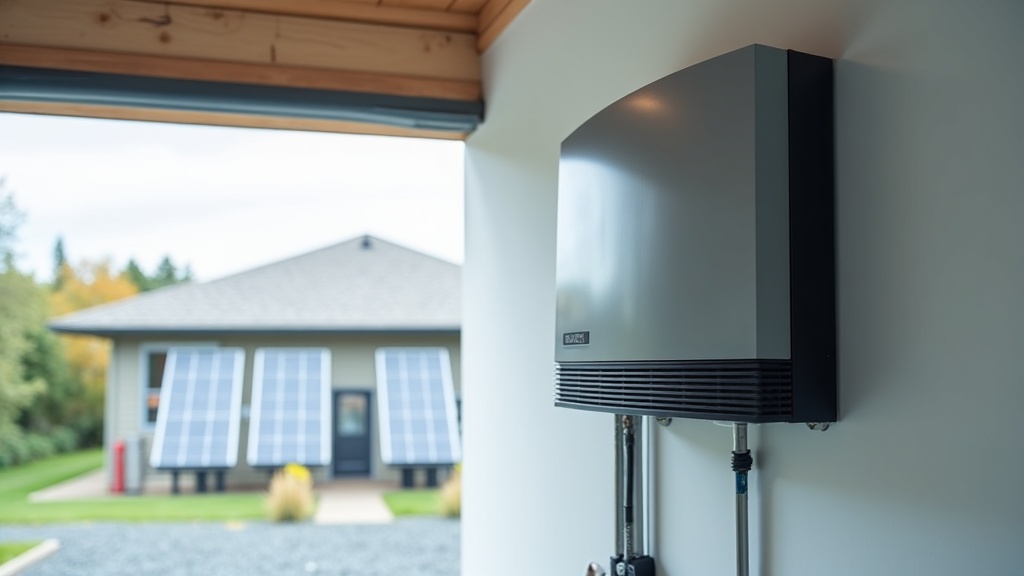
Everyone asks about the Powerwall. Here is my honest take: it adds 10,000 to 15,000 dollars to your project cost and makes sense in maybe three scenarios.
First, if your utility has time-of-use rates and charges a lot more during peak hours – storing solar power and using it at night actually saves real money. Second, if you live somewhere with regular outages and losing power is a real problem for your household. Third, if net metering in your state is being cut back or eliminated, because then you cannot just send excess power to the grid for credit.
In homeownernet metering is still reasonably good, outages are annoying but not catastrophic, and time-of-use rates are not yet standard. For me, right now, the battery does not pencil out. In two years that might change.
If you just want outage protection without the full solar-plus-battery system, smaller portable power stations are a different category. Something like the EcoFlow DELTA 2 runs 800 to 1,200 dollars and can power a refrigerator, lights, and essential devices for 12 to 24 hours. Not a whole-home solution, but real outage protection you can have this week.
Where I Actually Am on This
I have not pulled the trigger yet. I am waiting on one more quote and I want to time it with my roof replacement, which is due in the next year or two anyway. Adding solar at the same time as a new roof saves on installation costs.
What I know now that I did not know eight months ago: the math can work. The incentives are real. The savings projections are often optimistic but not fictional. And the difference between a good installer and a bad one is enormous.
If you are thinking about it, start with EnergySage to get real numbers for your house before you talk to anyone who wants to sell you something.
One thing that helped before I got quotes was doing a DIY home energy audit to understand where my power actually goes. A whole-home energy monitor is central to that process — the Emporia Vue 3 connects to your breaker panel and shows usage by circuit in real time. Turns out my EV charger was using 40 percent more than I estimated, which changed my solar sizing considerably.
Sources, uncertainty, safety, and affiliate disclosure
Check named sources for their publication date, geography, exact product, utility, and jurisdiction. Product specifications and programs change. Estimates are not guarantees. Electrical work, service upgrades, storage systems, transfer equipment, interconnection, and code compliance should be reviewed by the serving utility and a qualified electrician or installer as appropriate.
Some links may be affiliate links. SunBacked may earn a commission at no added cost to you; that does not determine editorial conclusions.