
Editorial quick answer
Best Solar Inverters of 2026: String vs Microinverter vs Power Optimizer
Back in September 2024, I spent three weeks straight researching solar inverters before pulling the trigger on my system. I lost sleep over it. String inverter or microinverters? Was spending an extra $2,400 on Enphase worth it? Would a cheap Chinese inverter blow up my house? Here’s what I wish someone had told me upfront: […]
Who this is for
Homeowners using this topic to compare choices, identify tradeoffs, or prepare better questions.
What this cannot promise
A guaranteed bill reduction, output, runtime, incentive, code approval, interconnection result, or project-specific electrical design.
Assumptions, date, and local checks
Costs and performance depend on location, date, model, configuration, weather, tariffs, utility rules, program funding, installation details, and household loads. Incentive, net-metering, code, battery-sizing, and electrical statements require current jurisdiction and source checks. Confirm project-specific details with the serving utility, program administrator, manufacturer, and a qualified electrician or installer.
How evidence is labeled
Mike context
Limited to his 20 years as an electrician, going solar in 2019, and having no installer ties.
Manufacturer specification
Maker-published data for an identified model or version, not an independent measurement.
Public source
Utility, government, program, code, standards, or other dated public information.
Estimate
Math based on stated inputs and assumptions, not a quote or guarantee.
Editorial analysis
SunBacked’s synthesis of tradeoffs, separated from sourced facts.
Back in September 2024, I spent three weeks straight researching solar inverters before pulling the trigger on my system. I lost sleep over it. String inverter or microinverters? Was spending an extra $2,400 on Enphase worth it? Would a cheap Chinese inverter blow up my house?
Here’s what I wish someone had told me upfront: the inverter is the brain of your solar system, and choosing the wrong one is expensive to fix later. I’m Mike, I went solar myself in 2019 in homeownerhomeownerand I’ve reviewed available costs and production context-hour since. This is everything I learned about solar inverters the hard way, so you don’t have to.
Understanding Solar Inverter Types
Solar panels produce DC power. Your home runs on AC power. The inverter does the conversion. Simple concept, but the execution varies wildly. Here’s the breakdown.
String Inverters: The Traditional Approach
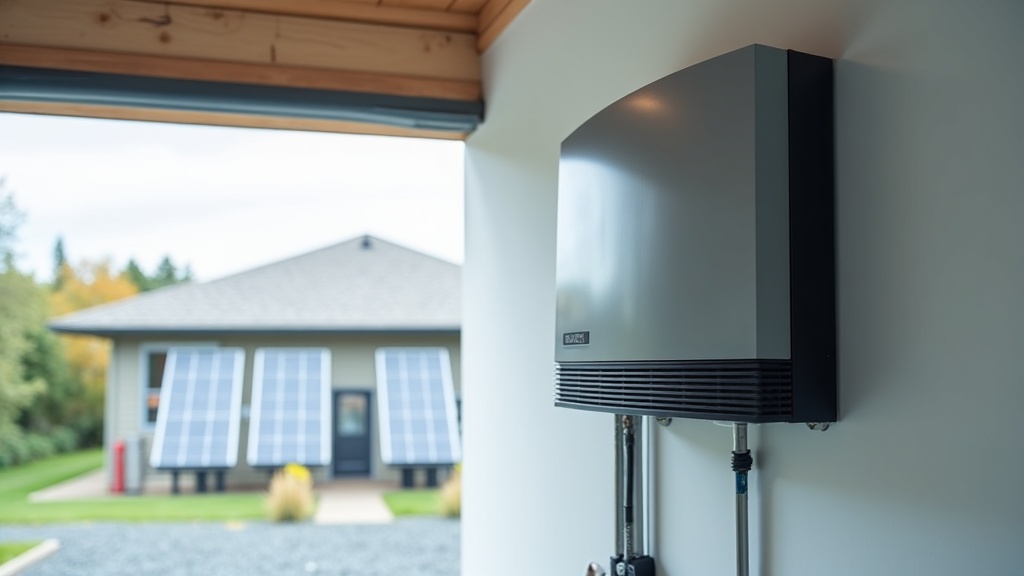
String inverters connect multiple solar panels in series (a “string”) to one central inverter, usually mounted on your garage wall or outside your house. Think of it like old-school Christmas lights — panels wired together, all feeding into one box.
Pros:
- Cost-effective: One inverter for the whole system costs less than 20+ microinverters
- Simplicity: Fewer components mean fewer potential failure points
- Proven technology: String inverters have been the industry standard for decades
- Efficiency: Top models hit 98%+ efficiency
Cons:
- Shade sensitivity: One shaded panel drags down the whole string’s output
- Single point of failure: If the inverter dies, your entire system goes offline
- Limited panel-level monitoring: You see system output, not individual panel performance
- Mismatch losses: If panels age differently or get dirty unevenly, you lose efficiency
I almost went with a string inverter. My roof has minimal shade, and saving $2,000+ was tempting. But the monitoring limitations bothered me — I wanted to know if one panel was underperforming.
Microinverters: Per-Panel Optimization
Microinverters attach to the back of each solar panel. Every panel has its own mini-inverter doing DC-to-AC conversion right there on the roof. They communicate wirelessly to a gateway that aggregates the data.
Pros:
- Panel-level optimization: Each panel operates independently — shade on one doesn’t affect the others
- Superior monitoring: You can see exactly which panels are producing what, down to the watt
- No single point of failure: One microinverter dies, the rest keep working
- Better for complex roofs: Different orientations and tilt angles aren’t a problem
- Easier expansion: Add panels later without inverter sizing constraints
Cons:
- Higher upfront cost: Expect to pay $1,500-$3,000 more than string inverters
- More components on the roof: More parts means statistically more that can fail (though warranties are excellent)
- Slightly lower efficiency: Heat on the roof can reduce efficiency marginally
Enphase dominates this category, and for good reason. Their IQ8 series is bulletproof. My neighbor has Enphase IQ7+ microinverters from 2019, and his monitoring app still shows every panel’s output in real-time. That convinced me.
Power Optimizers + String Inverter (The Hybrid Approach)
This is SolarEdge’s specialty. You attach a power optimizer to each panel (like a microinverter), but instead of converting to AC on the roof, they optimize the DC power and send it to a central string inverter. It’s a middle-ground solution.
Pros:
- Panel-level optimization: Each panel is independently managed
- Detailed monitoring: Panel-by-panel data like microinverters
- Rapid shutdown built-in: Safety feature required by code in most areas
- Lower cost than microinverters: Usually $500-$1,500 less than Enphase
Cons:
- Still has a single inverter: If the central inverter fails, you’re offline
- Proprietary system: You’re locked into SolarEdge optimizers with SolarEdge inverters
- More complex: More components than a straight string inverter
SolarEdge had some inverter reliability issues around 2018-2020, but their HD-Wave series (2021+) seems solid. My installer pushed SolarEdge hard because of the monitoring and rapid shutdown compliance.
Hybrid/Battery-Ready Inverters
If you’re planning to add battery storage now or later, you want a hybrid inverter. These handle both solar production and battery charging/discharging in one unit.
Key advantages:
- Future-proof: Add batteries without replacing your inverter
- Integrated backup: Seamless transition to battery power during outages
- One management system: Solar and storage controlled together
SolarEdge StorEdge and SMA Sunny Boy Storage are the leaders here. Enphase IQ8 microinverters can also integrate with Enphase batteries for a full ecosystem.
When Each Type Makes Sense
Here’s my decision framework after talking to four installers and running the numbers six different ways:
Choose a string inverter if:
- Your roof has minimal shade (less than 2 hours/day on any panel)
- All panels face the same direction with the same tilt
- You’re budget-constrained and every dollar counts
- You don’t care about panel-level monitoring
Choose microinverters if:
- Your roof has shade issues (trees, chimneys, vents)
- You have panels on multiple roof planes or orientations
- You want detailed monitoring and performance visibility
- You value redundancy (no single point of failure)
- You might expand your system later
Choose power optimizers if:
- You want panel-level optimization but at lower cost than microinverters
- You need rapid shutdown compliance (check local code)
- You’re okay with the SolarEdge ecosystem
Choose a hybrid inverter if:
- You’re adding battery storage now or within 3 years
- You want backup power capability
- Your utility has time-of-use rates where storage makes financial sense
Best Solar Inverters by Category (2026)
Best String Inverter: SMA Sunny Boy 7.7
Efficiency: 98% peak, 97.6% CEC weighted
Warranty: 10 years standard, extendable to 20 years
Monitoring: SMA Sunny Portal app (system-level only)
Price range: $1,200-$1,600 installed
Why it wins: SMA has been making inverters since 1981. The Sunny Boy series is bombproof. I’ve never heard of one catching fire or failing catastrophically. The efficiency is among the best in the industry, and the 10-year warranty is solid (though Enphase’s 25-year warranty makes this look short). The monitoring app is basic but functional.
Runner-up: Fronius Primo 6.0 — Similar efficiency, slightly better monitoring interface, but harder to find installers who stock it.
Best Microinverter: Enphase IQ8 Plus
Efficiency: 97.5% peak
Warranty: 25 years
Monitoring: Enphase Enlighten app (panel-level, real-time)
Price range: $3,000-$4,500 more than string inverter for typical residential system
Why it wins: This is what I installed, and I don’t regret it. The IQ8 series added “sunlight backup” capability — during an outage, you can run critical loads directly from solar without a battery. The Enlighten app is addictive; I check it daily. Panel-level monitoring caught a connection issue on one panel within the first month. The 25-year warranty matches the panel warranty, so everything ages together. Enphase’s reliability is legendary.
What to know: The IQ8 Plus is for 60-cell panels (most common). The IQ8M is for 72-cell panels. The IQ8A is for super high-power panels (400W+). Make sure your installer matches the right model to your panels.
Best Power Optimizer System: SolarEdge HD-Wave SE7600H
Efficiency: 99% peak (inverter only), 98.8% CEC weighted
Warranty: 12 years standard, extendable to 25 years
Monitoring: SolarEdge monitoring portal (panel-level via optimizers)
Price range: $2,000-$3,200 more than basic string (includes optimizers)
Why it wins: The HD-Wave technology reduced the size and weight compared to older SolarEdge inverters while boosting efficiency to 99%. The optimizers provide panel-level data without the cost of full microinverters. This was my second choice. The monitoring is excellent, and rapid shutdown is built-in (required by NEC 2017+ code in most jurisdictions).
Caution: SolarEdge had reliability issues with their older inverters (2018-2020 era). The HD-Wave series seems to have fixed most problems, but I still see more warranty claims on SolarEdge than Enphase in online forums.
Best Hybrid/Battery-Ready Inverter: SolarEdge Energy Hub
Efficiency: 97.5% (integrated solar + storage)
Warranty: 12 years
Monitoring: SolarEdge monitoring (solar + battery)
Price range: $2,500-$4,000 for inverter (before battery costs)
Why it wins: The Energy Hub integrates solar inverter, battery inverter, and backup gateway in one unit. It works with SolarEdge batteries or select third-party batteries. The single-unit design is cleaner than adding a separate battery inverter later. If you’re planning storage, this is the smart move.
Alternative: SMA Sunny Boy Storage — works with more third-party batteries, slightly better efficiency, but less integrated monitoring.
My Actual System: What I Chose and Why
I went with Enphase IQ8 Plus microinverters on a 26-panel, 10.4 kW system. Here’s why:
- My roof isn’t perfect: I have a small chimney that creates afternoon shade on 3 panels from November to February. Microinverters meant those 3 panels wouldn’t drag down the other 23.
- I’m a data nerd: I wanted panel-level monitoring. The Enlighten app scratches that itch perfectly.
- 25-year warranty: Matches my panel warranty. I don’t have to worry about replacing the inverter in year 11.
- Expansion plans: I’m adding 8 more panels to my garage roof in 2027. With microinverters, I just add more units — no inverter resizing needed.
- Redundancy: If one microinverter fails, I lose 400W, not 10kW.
The installer quoted me $2,400 more for Enphase vs. a SMA string inverter. I negotiated it down to $1,900 by agreeing to post a sign in my yard for 6 months. Worth every penny.
Key Specs to Understand
Don’t let installers baffle you with jargon. Here’s what actually matters:
Efficiency rating: Higher is better, but anything above 96% is fine. The difference between 97% and 99% efficiency on a 10kW system is about $30/year in lost production. Don’t obsess over this.
CEC weighted efficiency: More important than peak efficiency. This reflects real-world performance across different power levels. California Energy Commission tests this.
Warranty length: Minimum 10 years. Microinverters offer 25 years. Inverters typically fail between years 8-15, so longer warranties matter.
Rapid shutdown compliance: Required by NEC 2017+ code. Ensures your system shuts down within 30 seconds if there’s a fire or emergency. Microinverters and power optimizers have this built-in. String inverters need add-on hardware.
Maximum DC input: Must match or exceed your panel array’s max voltage. Your installer should size this — just verify they didn’t cut it too close.
Temperature coefficient: Inverters lose efficiency when hot. Better models have lower derating. Not a huge deal unless you’re in Arizona.
Red Flags to Watch For
After getting seven quotes, here are the red flags that made me walk away from installers:
Unknown Chinese brands: One installer quoted me a “Ginlong Solis” inverter at $800 less than SMA. I couldn’t find a single long-term review. Hard pass. Stick with SMA, SolarEdge, Enphase, Fronius, or Generac (formerly Pika).
No UL 1741 listing: This certification means the inverter meets safety and grid-connection standards. Non-negotiable in the US.
Oversizing or undersizing: Your inverter should be sized at 1.1x to 1.3x your panel array’s DC capacity. An installer who tries to save money with a too-small inverter is clipping your production. An oversized inverter is just wasted money.
Installer upselling storage you don’t need: Batteries don’t make financial sense in most areas yet unless you have frequent outages or terrible time-of-use rates. Don’t let installers scare you into buying them.
String inverter on a shady roof: If you have significant shade and the installer pushes a cheap string inverter, they’re prioritizing their margin over your production.
Comparison Table: String vs Micro vs Optimizer
| Feature | String Inverter | Microinverters | Power Optimizers |
|---|---|---|---|
| Upfront cost | Lowest ($1,200-$1,800) | Highest (+$2,000-$4,000) | Medium (+$1,000-$2,500) |
| Shade tolerance | Poor | Excellent | Excellent |
| Monitoring detail | System-level only | Per-panel | Per-panel |
| Warranty | 10-12 years | 25 years | 12-25 years |
| Efficiency | 97-98% | 96.5-97.5% | 98-99% (system) |
| Redundancy | Single point of failure | High | Medium |
| Expansion ease | Limited | Easy | Easy |
| Best for | Simple roof, no shade, tight budget | Complex roof, shade, monitoring nerds | Middle ground, rapid shutdown compliance |
Frequently Asked Questions
How long do solar inverters last?
String inverters typically last 10-15 years before needing replacement. Microinverters are rated for 25 years and often outlast that. The inverter is usually the first major component that fails in a solar system, which is why warranty length matters. Budget $1,500-$3,000 for inverter replacement around year 12 if you go with a string inverter.
Can I replace a string inverter with microinverters later?
Technically yes, but it’s expensive and impractical. You’d need to install microinverters on each panel, rewire the system, and potentially upgrade your junction boxes. The labor costs make it prohibitive. Choose the right inverter type from the start.
Do microinverters fail more because there are more of them?
This was my biggest concern. Statistically, yes — more components means higher total failure probability. But Enphase’s failure rate is under 0.1% per year, and when one fails, you lose 400W, not your whole system. With a string inverter, you have one component, but 100% of your production depends on it. I’ll take distributed risk over single-point risk.
Are string inverters louder than microinverters?
Yes. String inverters have cooling fans that hum. It’s not loud, but if it’s mounted near a bedroom window, you’ll hear it during peak production hours. Microinverters are on the roof and virtually silent. My neighbor’s SMA Sunny Boy has a noticeable hum during the day. My Enphase system is dead silent.
Should I get a hybrid inverter even if I’m not adding batteries soon?
Only if “soon” means within 3-5 years AND you’re in an area where batteries make economic sense (frequent outages, high time-of-use rate spreads, or terrible net metering). Otherwise, the extra $1,000-$2,000 upfront isn’t worth it. Battery prices are dropping fast — you might save money waiting and buying a better battery system later with a separate battery inverter.
The Bottom Line
If I were doing this again with today’s prices and technology, here’s what I’d choose:
- Simple roof, no shade, tight budget: SMA Sunny Boy string inverter
- Any shade, complex roof, or you want detailed data: Enphase IQ8 microinverters
- Want panel-level optimization but cost-conscious: SolarEdge HD-Wave with optimizers
- Planning battery storage: SolarEdge Energy Hub or Enphase IQ8 + Enphase battery system
The inverter decision matters more than most people realize. It affects your production, your monitoring capability, your warranty coverage, and your future expansion options. Don’t let an installer choose for you based on what they have in stock.
Get multiple quotes, ask specifically which inverter they’re proposing and why, and run the numbers yourself. The $2,000 I spent upgrading to Enphase will pay itself back through better production and worry-free monitoring over 25 years.
homeownerhomeownergot 8.7 feet of snow last winter, and my system kept producing. I watched one panel underperform due to snow coverage while the other 25 cranked away. That’s the microinverter advantage in real-time.
Affiliate Disclosure: This article contains references to solar equipment and services. While inverters themselves aren’t sold on Amazon, I may earn a commission if you use comparison services like EnergySage to get installer quotes. I only recommend products and services I’ve researched extensively or used myself. My primary goal is to save you the three weeks of research hell I went through.
Want to compare installers and get quotes for your specific roof? Check out EnergySage’s marketplace — it’s how I found my installer, and the competitive bidding saved me $4,200 off the first quote I got.
Sources, uncertainty, safety, and affiliate disclosure
Check named sources for their publication date, geography, exact product, utility, and jurisdiction. Product specifications and programs change. Estimates are not guarantees. Electrical work, service upgrades, storage systems, transfer equipment, interconnection, and code compliance should be reviewed by the serving utility and a qualified electrician or installer as appropriate.
Some links may be affiliate links. SunBacked may earn a commission at no added cost to you; that does not determine editorial conclusions.