
Editorial quick answer
How to Winterize Your Solar Panel System for Cold Climate Performance
I’ll be straight with you—winterizing your solar panel system comes down to three essentials: keeping panels clear of snow accumulation, protecting battery systems from temperature extremes, and monitoring voltage drops that kill winter production. After managing my homeownerhomeownersolar array through its first brutal winter, I learned these lessons the hard way when my […]
Who this is for
Homeowners using this topic to compare choices, identify tradeoffs, or prepare better questions.
What this cannot promise
A guaranteed bill reduction, output, runtime, incentive, code approval, interconnection result, or project-specific electrical design.
Assumptions, date, and local checks
Costs and performance depend on location, date, model, configuration, weather, tariffs, utility rules, program funding, installation details, and household loads. Incentive, net-metering, code, battery-sizing, and electrical statements require current jurisdiction and source checks. Confirm project-specific details with the serving utility, program administrator, manufacturer, and a qualified electrician or installer.
How evidence is labeled
Mike context
Limited to his 20 years as an electrician, going solar in 2019, and having no installer ties.
Manufacturer specification
Maker-published data for an identified model or version, not an independent measurement.
Public source
Utility, government, program, code, standards, or other dated public information.
Estimate
Math based on stated inputs and assumptions, not a quote or guarantee.
Editorial analysis
SunBacked’s synthesis of tradeoffs, separated from sourced facts.
I’ll be straight with you—winterizing your solar panel system comes down to three essentials: keeping panels clear of snow accumulation, protecting battery systems from temperature extremes, and monitoring voltage drops that kill winter production. After managing my homeownerhomeownersolar array through its first brutal winter, I learned these lessons the hard way when my January output dropped 40% before I implemented proper cold-weather protocols.
Solar panels actually work more efficiently in cold temperatures, but winter brings legitimate threats: snow coverage blocking sunlight, frozen moisture damaging electrical connections, and battery capacity loss in unheated spaces. Here’s my field-tested winterization checklist that kept my system producing through multiple polar vortex events.
Pre-Winter System Inspection and Cleaning
Before the first freeze, I conduct a thorough inspection starting with physical panel examination. Look for micro-cracks in the glass surface that water can penetrate and freeze, expanding to create larger damage. Check all mounting hardware for rust or loosening—winter wind loads are significantly higher than summer conditions.
I use a DocaPole extension pole with soft brush attachment to clean panels from the ground. Never use abrasive materials or high-pressure washers that can damage the anti-reflective coating. A simple mixture of water and mild dish soap removes the accumulated dirt and pollen that reduces efficiency by 15-20%.
Electrical connection points need special attention. I apply dielectric grease to all outdoor junction boxes and MC4 connectors. This prevents moisture infiltration and the resulting corrosion that causes connection resistance and potential fire hazards.
Snow Management Strategies
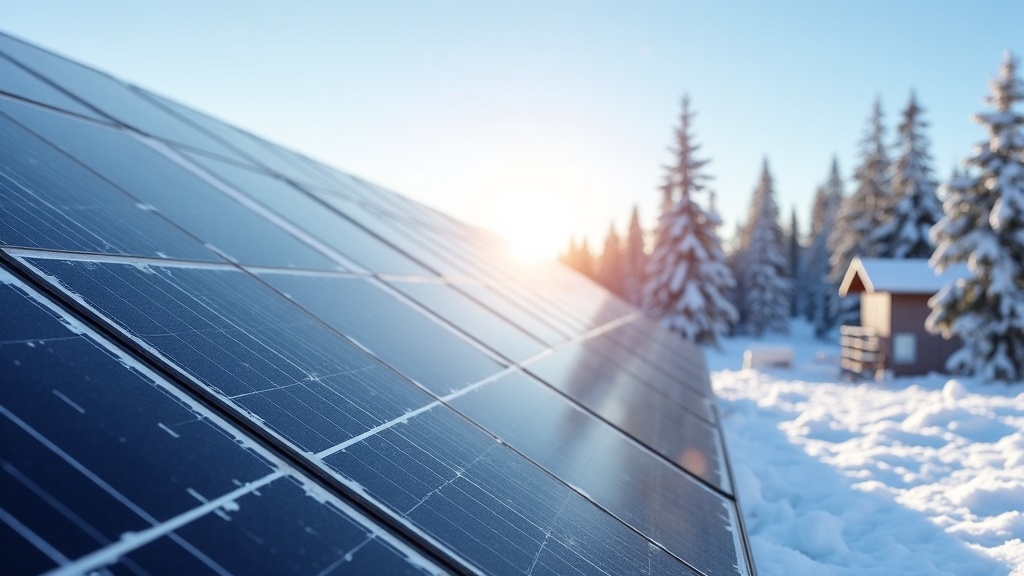
The biggest winterization myth is that you need to constantly clear snow. In most cases, dark panels generate enough heat to melt light snow within hours of sunrise. The problem is heavy, wet snow or ice dams that persist for days.
My approach:
- Install panels at steeper angles (if building new)—40-45° shed snow much better than the typical 30° summer-optimized tilt
- Never climb on snow-covered roofs—the risk far outweighs any production gains
- Use a roof rake with rubber edge—standard metal rakes scratch the panel surface
- Let nature do the work—unless you’re losing critical production for multiple days
I tested various commercial snow-removal tools and found the SnoBrum with foam head works best for accessible ground-mount arrays. For roof-mounted systems, I rely on natural melting rather than risk damage.
The Economics of Snow Removal
| Scenario | Daily Production Loss | Value Lost (@ $0.14/kWh) | Action Recommended |
|---|---|---|---|
| Light snow (1-2″) | Melts by 10am | $0.50-1.00 | No action needed |
| Moderate snow (3-6″) | 15-20 kWh | $2.10-2.80 | Clear if safe access |
| Heavy snow (8″+) | Full day (25-30 kWh) | $3.50-4.20 | Clear if multi-day coverage |
| Ice coating | Full day | $3.50-4.20 | Wait for natural melt |
Battery System Cold-Weather Protection
If you have battery storage, this is your most vulnerable component in winter. Lithium batteries lose 20-30% of their capacity below 32°F, and permanent damage can occur below 14°F.
My garage-mounted battery bank sits in an insulated enclosure I built using 2″ rigid foam board. I don’t heat it actively—the battery’s own charging/discharging cycle generates enough heat to maintain 40-50°F internal temperature when the external garage drops to 20°F.
For batteries in outdoor enclosures, consider a low-wattage heating pad with thermostat set to activate below 35°F. This draws minimal power (25-50W) but prevents the capacity loss and charge/discharge rate limitations that occur in freezing temperatures.
Battery Management Settings for Winter
Most modern battery management systems allow seasonal programming. I adjust mine in November:
- Charge voltage: Increase 0.3V per cell—cold batteries need higher voltage to reach full charge
- Discharge cutoff: Raise from 20% to 30%—deeper discharge in cold weather shortens lifespan
- Charge rate: Reduce to 0.3C maximum—slower charging prevents lithium plating on electrodes
- Temperature compensation: Enable if available—automatically adjusts parameters based on sensor readings
Inverter and Electrical System Winterization
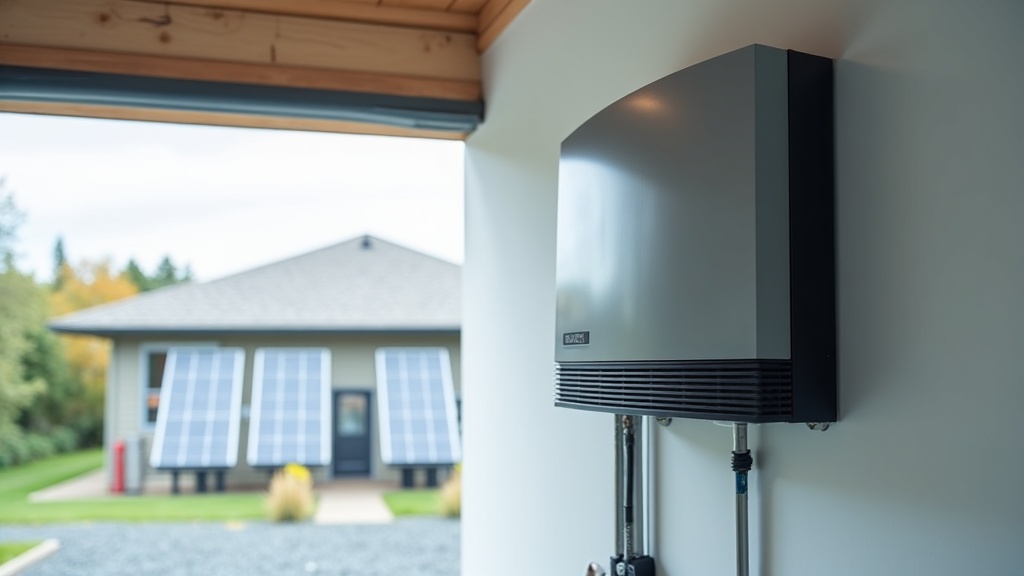
Inverters are generally cold-hardy, but condensation is the enemy. I check that my inverter’s ventilation fans are clear of debris and operating properly—good airflow prevents moisture accumulation from temperature cycling.
The real winter problem is voltage drop across cold copper conductors. Electrical resistance increases with temperature, but more critically, cold batteries have higher internal resistance. This creates a double-hit that can trigger low-voltage shutdowns.
I monitor my system voltage under load with a Bluetooth battery monitor that alerts me when voltage drops below 48V on my 48V nominal system. If you’re seeing frequent low-voltage cutoffs, you need either larger battery cables or a smaller inverter that draws less current.
Monitoring and Performance Expectations
Winter solar production in the Midwest averages 40-60% of summer output, but not for the reasons most people think. Yes, days are shorter—but the primary culprit is the low sun angle that increases atmospheric path length. Your panels are collecting light that’s traveled through twice as much air pollution, moisture, and particulate matter.
I track daily production using my inverter’s app and compare against NREL’s PVWatts predictions for my location. If I’m more than 20% below predicted output on clear days, I know something needs attention—usually dirt buildup or a shaded panel from nearby tree branch growth.
Winter Production Optimization Tips
- Trim deciduous trees in late fall—bare branches still create shade you can eliminate
- Adjust tilt if you have ground-mount—winter optimal is latitude + 15°
- Focus on morning production—afternoon winter sun is often hazier
- Consider reflective surfaces—snow on the ground reflects 20-30% additional light onto tilted panels
Emergency Preparedness for Extended Outages
The real value of winterized solar becomes apparent during ice storm power outages. My system kept the furnace, refrigerator, and well pump running through a 48-hour grid failure in January.
Key prep steps:
- Test your backup panel/critical loads circuit monthly—don’t discover configuration issues during an emergency
- Keep batteries charged above 80% during storm forecasts—you won’t get meaningful solar production during heavy overcast
- Have manual override capability—my system lets me bypass the BMS in extreme emergencies
- Store backup charging equipment—a small portable generator can charge batteries when solar is completely blocked for days
Common Winterization Mistakes to Avoid
After consulting with other solar owners in my area, I’ve seen these repeated errors:
Using hot water to melt ice—thermal shock can crack panels instantly. Use only cold or lukewarm water.
Ignoring small ice dams at panel bottoms—these grow upward under the panel frame and can lift it off mounting rails.
Forgetting to check grounding connections—winter moisture and freeze-thaw cycles loosen ground rods and connections.
Relying solely on app monitoring—my inverter’s WiFi module froze twice in extreme cold. Physical inspection catches problems apps miss.
Frequently Asked Questions
Do solar panels work in freezing temperatures?
Yes, solar panels actually produce more voltage in cold temperatures—up to 5% higher output at 32°F compared to 77°F. The silicon semiconductors operate more efficiently when cool. The production loss in winter comes from shorter days and lower sun angles, not from cold panels themselves.
Should I remove snow from my solar panels after every snowfall?
No, only remove snow if it persists for more than 2-3 days or if you’re losing critical production. Light snow (under 3 inches) typically melts within hours of sunrise as the dark panels absorb heat. The risk of damaging panels or injuring yourself usually outweighs the minimal production gains from clearing light snow.
Will ice damage my solar panels?
Ice itself won’t damage quality panels—they’re tested to withstand hail impacts up to 1 inch diameter at 50 mph. The danger is using metal scrapers or hot water to remove ice, which can crack the tempered glass through mechanical or thermal shock. Let ice melt naturally or use only soft plastic tools.
How do I protect my solar batteries from freezing?
Insulate battery enclosures with rigid foam board, and for batteries stored below 40°F, add a low-wattage heating pad with thermostat. Most importantly, keep batteries charged above 50%—the self-heating from charging/discharging helps maintain safe temperatures, and a charged battery has lower freezing risk than a depleted one.
What temperature is too cold for solar panels to work?
Solar panels continue working down to -40°F with no performance degradation from cold alone. However, at extreme temperatures below 0°F, battery systems may shut down, and inverter LCD displays can freeze. The panels themselves will keep generating power whenever sunlight is available, regardless of temperature.
Sources, uncertainty, safety, and affiliate disclosure
Check named sources for their publication date, geography, exact product, utility, and jurisdiction. Product specifications and programs change. Estimates are not guarantees. Electrical work, service upgrades, storage systems, transfer equipment, interconnection, and code compliance should be reviewed by the serving utility and a qualified electrician or installer as appropriate.
Some links may be affiliate links. SunBacked may earn a commission at no added cost to you; that does not determine editorial conclusions.