
Editorial quick answer
Best States for Solar in 2026: Incentives, Sun Hours and ROI Ranked
I’ve been installing solar systems across different states for 20 years, and the difference in return on investment from one state to another is staggering. California and Arizona might get all the attention, but they’re not always your best bet in 2026. The best states for solar in 2026 are Massachusetts, New Jersey, and Rhode […]
Who this is for
Homeowners using this topic to compare choices, identify tradeoffs, or prepare better questions.
What this cannot promise
A guaranteed bill reduction, output, runtime, incentive, code approval, interconnection result, or project-specific electrical design.
Assumptions, date, and local checks
Costs and performance depend on location, date, model, configuration, weather, tariffs, utility rules, program funding, installation details, and household loads. Incentive, net-metering, code, battery-sizing, and electrical statements require current jurisdiction and source checks. Confirm project-specific details with the serving utility, program administrator, manufacturer, and a qualified electrician or installer.
How evidence is labeled
Mike context
Limited to his 20 years as an electrician, going solar in 2019, and having no installer ties.
Manufacturer specification
Maker-published data for an identified model or version, not an independent measurement.
Public source
Utility, government, program, code, standards, or other dated public information.
Estimate
Math based on stated inputs and assumptions, not a quote or guarantee.
Editorial analysis
SunBacked’s synthesis of tradeoffs, separated from sourced facts.
I’ve been installing solar systems across different states for 20 years, and the difference in return on investment from one state to another is staggering. California and Arizona might get all the attention, but they’re not always your best bet in 2026.
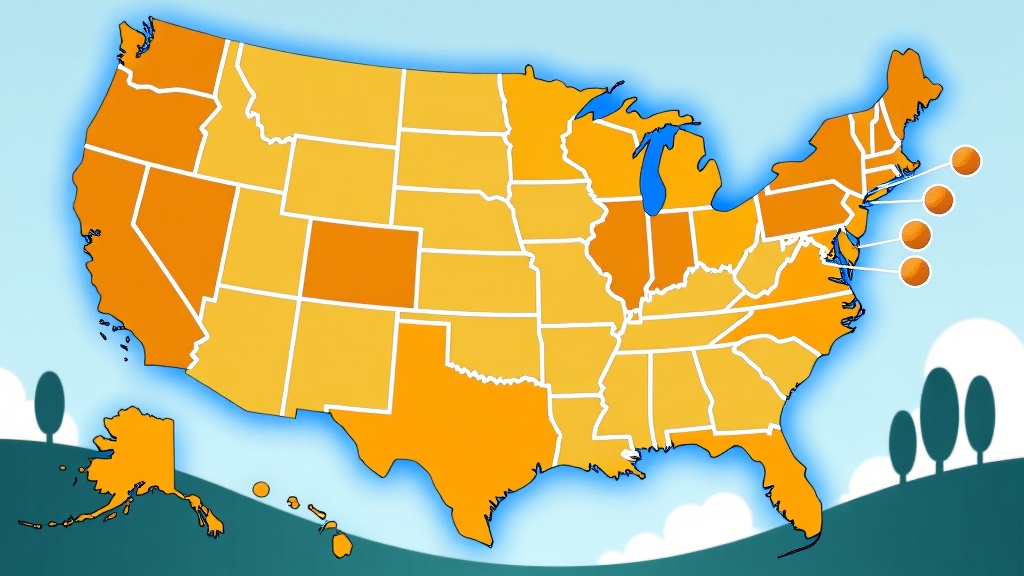
The best states for solar in 2026 are Massachusetts, New Jersey, and Rhode Island for ROI, followed by Arizona, California, and New York for a combination of sun hours and incentives. Surprising? The Northeast dominates because of aggressive state incentives and Solar Renewable Energy Credits (SRECs) that can pay you $3,000-$5,000 annually, completely offsetting lower sun exposure.
Top 10 States Ranked by True ROI
I’ve written practical guidance for homeowners go solar, and the biggest mistake I see is choosing solar based on sunshine alone. Let me break down what actually matters:
| Rank | State | Avg Payback Period | Peak Sun Hours/Day | Key Incentive | Annual SREC Value |
|---|---|---|---|---|---|
| 1 | Massachusetts | 5.8 years | 4.1 | SMART program + SRECs | $3,800 |
| 2 | New Jersey | 6.2 years | 4.3 | TRECs + property tax exemption | $4,200 |
| 3 | Rhode Island | 6.5 years | 4.2 | Renewable Energy Growth + RECs | $3,500 |
| 4 | Arizona | 6.8 years | 6.5 | Equipment sales tax exemption | N/A |
| 5 | New York | 7.1 years | 3.9 | NY-Sun + 25% state tax credit | $2,100 |
| 6 | California | 7.4 years | 5.8 | NEM 3.0 + battery incentives | N/A |
| 7 | Maryland | 7.7 years | 4.5 | SRECs + property tax exemption | $1,800 |
| 8 | Colorado | 8.2 years | 5.5 | Sales tax exemption + rebates | N/A |
| 9 | Connecticut | 8.5 years | 4.1 | Zero net energy incentive | $1,200 |
| 10 | Florida | 8.9 years | 5.3 | Property tax exemption | N/A |
What Makes a State Good for Solar?
Three factors drive your actual savings: electricity rates, available sun hours, and state incentives. Here’s what I tell every homeowner:
1. Electricity Rates Trump Sun Hours
Massachusetts gets less sun than Texas, but with electricity at $0.28/kWh versus $0.13/kWh, every kilowatt-hour you generate saves more than double. I installed a 7kW system for a client in Boston last year—his annual savings were $2,100 despite only 4.1 peak sun hours daily.
2. State Incentives Are the Game-Changer
The federal 30% tax credit is available everywhere, but state programs vary wildly. New Jersey’s TREC (Transition Renewable Energy Certificate) program pays homeowners based on production. My clients there earn $150-$350 per TREC, with systems generating 8-12 TRECs annually.
3. Net Metering Policies
This is where California fell behind in 2023. Their NEM 3.0 policy slashed the credit rate for excess solar by 75%. You now need battery storage to maximize savings, adding $10,000-$15,000 to system costs.
Northeast States: The Hidden Solar Champions
People are shocked when I recommend Massachusetts or New Jersey over sunny states, but the numbers don’t lie.
Massachusetts
The SMART program pays you a fixed rate per kWh produced for 10 years—currently $0.28-$0.35 depending on system size and location. Add SRECs worth $300-$400 each (systems generate 8-10 annually), plus the 30% federal credit, and you’re looking at payback in under 6 years.
I installed an 8kW system in Worcester last spring. Total cost after incentives: $12,400. Annual savings plus SREC income: $3,200. That’s a 5.2-year payback with 25+ years of production ahead.
New Jersey
TRECs replaced SRECs in 2021, and they’re even more valuable. The TREC market has been stable at $85-$95 per credit. A typical 8kW residential system generates 10-12 TRECs per year, adding $1,000-$1,100 to your annual returns on top of electricity savings.
New Jersey also exempts solar equipment from sales tax (saving 6.625%) and property tax (your home value increases but taxes don’t). These add up to $2,500-$4,000 in additional savings.
Southwestern States: High Sun, Lower Incentives
Arizona
With 6.5 peak sun hours daily, Arizona generates more power per panel than anywhere else. The state exempts solar equipment from sales tax and property tax. Some utilities like APS and SRP offer rebates up to $0.25/watt.
The catch? Arizona’s net metering credits are lower than retail rates. You’ll get $0.10-$0.12 per kWh for excess power versus paying $0.13-$0.14 to buy it back. Still worth it, but battery storage (like the EcoFlow Delta Pro) becomes more valuable.
California
California’s still a solid solar state, but NEM 3.0 changed the game in April 2023. Export rates dropped from $0.30/kWh to $0.08/kWh. Without storage, your payback period stretches from 6 years to 9-10 years.
The state does offer the SGIP (Self-Generation Incentive Program) for batteries, providing $150-$250 per kWh of storage capacity. For a typical 13.5kWh battery, that’s $2,000-$3,400 back.
Mid-Atlantic and Northeast: Best of Both Worlds
New York
The NY-Sun initiative combines a 25% state tax credit (capped at $5,000) with the federal 30% credit. You’re immediately recouping 55% of system costs. Megawatt Block incentives add $0.40-$1.00 per watt depending on your utility zone and income level.
Con Edison territory gets the highest incentives—I’ve seen total upfront incentives reach 65% of system cost for low-income homeowners.
Maryland
Maryland’s SREC market pays $65-$80 per certificate. Systems generate 1 SREC per megawatt-hour produced, so an 8kW system typically creates 10-12 SRECs annually. That’s $700-$960 in passive income for 20 years.
The state also exempts solar from property tax increases and sales tax. With electricity rates at $0.14/kWh and climbing, payback periods hover around 7-8 years.
States to Approach with Caution
Not every state makes financial sense for solar right now:
- Alabama – No state incentives, low electricity rates ($0.11/kWh), utilities hostile to net metering. Payback periods exceed 15 years.
- Tennessee – TVA’s Green Power Providers program ended in 2020. No net metering, no state incentives. You’re relying on federal credit alone.
- Oklahoma – Rock-bottom electricity rates ($0.09/kWh) mean minimal savings. 12+ year payback even with good sun.
- Louisiana – No net metering requirement. Some utilities buy excess power at wholesale rates ($0.03-$0.04/kWh). Hard to justify.
How to Calculate Your State’s Real ROI
Here’s my five-minute evaluation process I use with every client:
Step 1: Find Your Current Electricity Cost
Look at your last 12 months of bills. Divide total cost by total kWh used. This is your true rate including all fees and tier pricing.
Step 2: Estimate System Size Needed
Take your annual kWh usage and divide by your state’s average peak sun hours, then divide by 365 and by panel efficiency (0.80 for real-world conditions). Example: 10,000 kWh annual usage in New Jersey (4.3 sun hours) = 10,000 ÷ (4.3 × 365 × 0.80) = 8.0kW system.
Step 3: Calculate Gross System Cost
Multiply system size by $2.75-$3.25 per watt (current 2026 pricing). An 8kW system = $22,000-$26,000 before incentives.
Step 4: Apply All Available Incentives
- Federal tax credit: 30% of total cost
- State tax credits: varies by state
- Utility rebates: check DSIRE database
- Sales tax exemptions: varies by state
- Annual SREC/TREC income: varies by state
Step 5: Calculate Annual Savings
Multiply your estimated annual production by your electricity rate, then add any SREC/TREC income. Divide net system cost by annual savings to get payback period.
2026 Incentive Changes to Watch
Several states are adjusting programs this year:
- Illinois – Illinois Shines program increased incentive blocks in January 2026. Small residential systems now qualify for $0.80-$1.20/watt depending on location.
- Oregon – Resumed solar rebate program after two-year pause. $0.35/watt for systems under 10kW, first-come first-served.
- Minnesota – New Community Solar Garden incentives launched March 2026, allowing renters and condo owners to benefit from shared solar installations.
- Virginia – Increased SREC prices due to higher renewable portfolio standards. Market rate jumped from $35 to $72 per SREC between 2025 and 2026.
Battery Storage: Which States Need It Most?
As net metering policies weaken, battery storage becomes essential in certain states:
Must-have states: California (NEM 3.0), Hawaii (no net metering since 2021), Nevada (reduced credit rates)
Nice-to-have states: Arizona, Florida (backup during hurricanes), Texas (grid stability concerns)
Skip-for-now states: Massachusetts, New Jersey, New York (strong net metering + high incentives make batteries unnecessary for ROI)
Quality systems like the LiTime 48V lithium battery bank cost $8,000-$12,000 but can extend payback periods by 2-3 years in states without good export credits.
Utility Company Matters as Much as State
Even within solar-friendly states, your specific utility makes a huge difference. In California, PG&E customers see 8-9 year paybacks while LADWP customers often wait 11-12 years due to lower rates and different net metering terms.
Check your utility’s specific solar policies at DSIRE (Database of State Incentives for Renewables & Efficiency). I’ve seen neighboring towns with different utilities have 3-year differences in payback periods.
Frequently Asked Questions
What state has the best solar incentives in 2026?
Massachusetts offers the best combined incentives with the SMART program ($0.28-$0.35/kWh produced for 10 years) plus SRECs worth $3,000-$4,000 annually. New Jersey is a close second with TRECs and tax exemptions. Both states deliver 5-7 year payback periods despite receiving less sun than southwestern states.
Is solar worth it in states with low electricity rates?
Generally no. States like Louisiana, Oklahoma, and Alabama have rates below $0.11/kWh with minimal state incentives, pushing payback periods beyond 12-15 years. Solar becomes viable when electricity rates exceed $0.13/kWh or when states offer strong SREC programs that compensate for low rates.
Do I need battery storage to make solar worthwhile?
Only in states with poor net metering. California’s NEM 3.0 and Hawaii’s lack of net metering make batteries nearly essential. But in Massachusetts, New Jersey, and New York, strong net metering policies mean batteries are optional—you get full retail credit for excess power sent to the grid.
How much do solar panels cost per watt in 2026?
Average residential installation costs run $2.75-$3.25 per watt before incentives in 2026. An 8kW system costs $22,000-$26,000 gross, or $15,400-$18,200 after the 30% federal tax credit. Prices vary by installer, equipment quality, and roof complexity. Always get 3-5 quotes.
Will my state’s solar incentives expire?
State programs change frequently. The federal 30% tax credit is locked through 2032, but state SRECs, rebates, and tax credits can be modified or defunded. Massachusetts and New Jersey have been stable for 5+ years. Check DSIRE quarterly and lock in incentives quickly when programs have funding caps.
Sources, uncertainty, safety, and affiliate disclosure
Check named sources for their publication date, geography, exact product, utility, and jurisdiction. Product specifications and programs change. Estimates are not guarantees. Electrical work, service upgrades, storage systems, transfer equipment, interconnection, and code compliance should be reviewed by the serving utility and a qualified electrician or installer as appropriate.
Some links may be affiliate links. SunBacked may earn a commission at no added cost to you; that does not determine editorial conclusions.