
Editorial quick answer
Can a portable power station replace a UPS?
I size home battery backup around critical loads first, not marketing promises. A portable power station and a UPS both provide backup electricity, but they are built for different jobs. On paper they can look similar because both use batteries, both plug into wall power, and both can keep devices running when the grid goes […]
Who this is for
Homeowners using this topic to compare choices, identify tradeoffs, or prepare better questions.
What this cannot promise
A guaranteed bill reduction, output, runtime, incentive, code approval, interconnection result, or project-specific electrical design.
Assumptions, date, and local checks
Costs and performance depend on location, date, model, configuration, weather, tariffs, utility rules, program funding, installation details, and household loads. Incentive, net-metering, code, battery-sizing, and electrical statements require current jurisdiction and source checks. Confirm project-specific details with the serving utility, program administrator, manufacturer, and a qualified electrician or installer.
How evidence is labeled
Mike context
Limited to his 20 years as an electrician, going solar in 2019, and having no installer ties.
Manufacturer specification
Maker-published data for an identified model or version, not an independent measurement.
Public source
Utility, government, program, code, standards, or other dated public information.
Estimate
Math based on stated inputs and assumptions, not a quote or guarantee.
Editorial analysis
SunBacked’s synthesis of tradeoffs, separated from sourced facts.
I size home battery backup around critical loads first, not marketing promises. A portable power station and a UPS both provide backup electricity, but they are built for different jobs. On paper they can look similar because both use batteries, both plug into wall power, and both can keep devices running when the grid goes down.
In practice, a portable power station usually does not replace a true UPS for equipment that cannot tolerate even a brief interruption. It can, however, serve as a useful backup source for selected home devices if you understand the tradeoffs around transfer time, surge handling, and runtime.
The Short Answer
A UPS is designed for instant or near-instant switchover when utility power drops. That is what protects desktop computers, networking gear, security systems, and other electronics from shutting off during a blink, brownout, or outage.
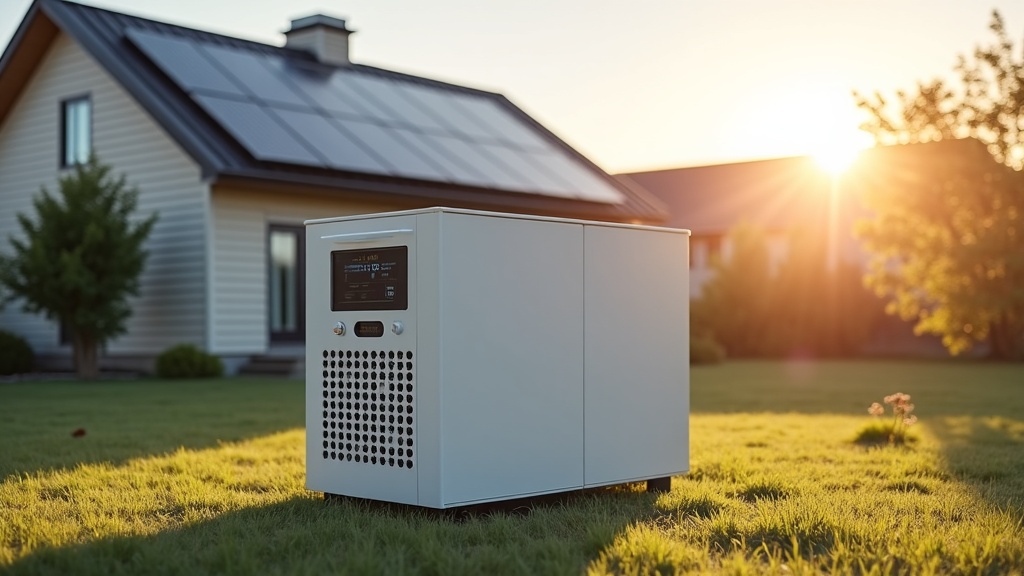
A portable power station is designed more like a large rechargeable battery with AC outlets, DC outputs, and sometimes solar charging. Some models offer UPS or EPS modes, but many still have a transfer delay that is acceptable for some appliances and not acceptable for sensitive electronics. So the honest answer is no, not universally. It can replace a UPS in a few cases, but not in the strict technical sense most homeowners mean.
What This Means for a Homeowner
If you are deciding between the two, the better question is not which one is stronger. The better question is what exactly needs to stay on, and how much interruption that equipment can tolerate.
- If you need seamless power for a desktop PC, modem, router, or NAS, a dedicated UPS is usually the safer choice.
- If you need longer runtime for lights, phones, laptops, or a CPAP, a portable power station is often more practical.
- If you want to back up a refrigerator, pellet stove, or small appliance, a power station may help if its inverter and surge capacity are high enough.
- If you want one device to do everything, read the transfer-time specs carefully because that is where many buyers get burned.
For most households, these products are complements, not perfect substitutes. A small UPS handles instant handoff for sensitive electronics, while a larger portable power station handles longer outages and heavier loads.
When Battery Backup Makes Sense
A portable power station makes a lot of sense when your main concern is runtime, flexibility, and portability. It is easier to move around the house, take on a trip, recharge from a wall outlet or solar panel, and use for several different purposes instead of just one protected electronics cluster.
That flexibility matters during real outages. You may care less about zero-millisecond switchover and more about keeping phones charged, running a lamp, powering your internet for a few hours, or supporting medical comfort devices overnight. In those situations, capacity in watt-hours matters more than traditional UPS behavior.
When It Does Not
A portable power station is the wrong tool when even a short interruption is unacceptable. Many modern devices will reboot if power drops for just a fraction of a second, and some battery stations simply are not fast enough to prevent that. Marketing language like “UPS function” does not always mean the same thing as a dedicated line-interactive or online UPS.
It can also be a poor fit when startup surges are unpredictable. Refrigerators, freezers, pumps, and some power tools may draw far more power at startup than their running wattage suggests. If the power station cannot handle that surge, it may shut down or refuse to start the load at all.
What I Would Prioritize First
I would start by listing the devices you actually care about during an outage and sorting them into two groups: sensitive electronics that need uninterrupted power, and practical loads that just need enough stored energy to keep working. That simple split usually makes the buying decision clearer.
Then I would check four specs before spending money: transfer time, continuous wattage, surge wattage, and battery capacity. If the manufacturer is vague about transfer time or does not clearly state what loads are supported in backup mode, I would treat that as a warning sign rather than assuming it will behave like a traditional UPS.
Bottom Line for Homeowners
A portable power station can replace a UPS only in limited situations where a short transfer delay is acceptable and the connected load stays well within the unit’s inverter limits. It is usually a better fit for flexible backup power than for mission-critical uninterrupted power.
If your priority is zero-drama protection for electronics, buy a real UPS. If your priority is longer-lasting emergency power for a mix of household devices, buy a portable power station. If you need both outcomes, the strongest setup is often a small UPS for sensitive gear plus a larger battery station for everything else.
What Usually Saves the Most Money
The money-saving move is usually not finding the most exciting hardware. It is sizing the system around real usage, choosing equipment that fits the job, and avoiding upgrades that solve a fantasy outage instead of the one you are actually preparing for.
I also think homeowners make better decisions when they separate resilience goals from bragging-rights goals. Once you know whether you are solving for essentials, comfort, or near-whole-home backup, the comparison gets much clearer and wasted spending usually drops fast.
That is the frame I trust most: define the loads, define the outage scenario, and then buy only the gear that materially improves the plan.
What I Would Compare Before Buying
If I were shopping this category for my own garage or outage kit, I would compare battery chemistry, warranty length, inverter size, and recharge speed before I paid much attention to app features or flashy marketing claims. Those practical specs decide whether the unit still feels useful after the novelty wears off.
I would also look closely at how the unit is actually going to live in the house. A battery that is too heavy to move, too small for the loads you care about, or too slow to recharge after a real outage can still be the wrong buy even if the chemistry itself is solid.
That is why I prefer turning chemistry into a decision filter instead of the whole decision. It matters a lot, but only inside a backup plan that already makes sense for your loads, your budget, and your outage pattern.
How I Would Size This for a Real Outage
When I sanity-check a backup plan, I start with the outage version that actually happens most often: fridge, router, a few lights, phone charging, and maybe one comfort item. That tells me a lot faster whether the unit is solving a real household problem or just sounding impressive on a product page.
I would then map runtime against recharge, because a battery that looks decent on paper can still become annoying if it takes too long to refill between outages or between heavy evening use and the next day. For homeowners, that recharge reality usually matters more than a flashy surge number.
If the goal is overnight essentials, I would rather buy a right-sized unit with honest expectations than stretch for something marketed like whole-home backup when it really is not. That is the difference between a practical resilience purchase and an expensive compromise that leaves you disappointed the first time the grid stays down longer than expected.
That is also why I keep coming back to load discipline. Once you know what truly has to stay on, it gets much easier to decide whether a portable station is enough, whether you need a larger home battery plan, or whether a generator still belongs somewhere in the mix.
Before you buy, I would also compare LiFePO4 portable power stations against lighter legacy lithium-ion options so you are making an honest tradeoff between weight, cycle life, and long-term value instead of just buying the first battery spec that sounds modern.
Recommended Tools and Products
If you are comparing real options instead of just reading spec sheets, I would start with LiFePO4 portable power stations, smart home energy monitors, and folding solar panels for power stations because those three categories usually tell you faster whether the backup plan is actually practical.
- LiFePO4 portable power stations are the cleanest starting point for most homeowners who want safer indoor backup and better long-term cycle life.
- Smart home energy monitors help you size the battery around real loads instead of guessing from labels or panic-shopping after an outage.
- Folding solar panels matter when you want a realistic way to extend runtime during multi-day outages without depending only on the wall.
Sources, uncertainty, safety, and affiliate disclosure
Check named sources for their publication date, geography, exact product, utility, and jurisdiction. Product specifications and programs change. Estimates are not guarantees. Electrical work, service upgrades, storage systems, transfer equipment, interconnection, and code compliance should be reviewed by the serving utility and a qualified electrician or installer as appropriate.
Some links may be affiliate links. SunBacked may earn a commission at no added cost to you; that does not determine editorial conclusions.