
Editorial quick answer
Can You Charge An Ev With Solar Panels
Can You Charge an EV With Solar Panels? I size home battery backup around critical loads first, not marketing promises. Yes, you can charge an electric vehicle with solar panels, and for a lot of homeowners it is one of the clearest reasons to go solar in the first place. Your EV charger is just […]
Who this is for
Homeowners using this topic to compare choices, identify tradeoffs, or prepare better questions.
What this cannot promise
A guaranteed bill reduction, output, runtime, incentive, code approval, interconnection result, or project-specific electrical design.
Assumptions, date, and local checks
Costs and performance depend on location, date, model, configuration, weather, tariffs, utility rules, program funding, installation details, and household loads. Incentive, net-metering, code, battery-sizing, and electrical statements require current jurisdiction and source checks. Confirm project-specific details with the serving utility, program administrator, manufacturer, and a qualified electrician or installer.
How evidence is labeled
Mike context
Limited to his 20 years as an electrician, going solar in 2019, and having no installer ties.
Manufacturer specification
Maker-published data for an identified model or version, not an independent measurement.
Public source
Utility, government, program, code, standards, or other dated public information.
Estimate
Math based on stated inputs and assumptions, not a quote or guarantee.
Editorial analysis
SunBacked’s synthesis of tradeoffs, separated from sourced facts.
Can You Charge an EV With Solar Panels?
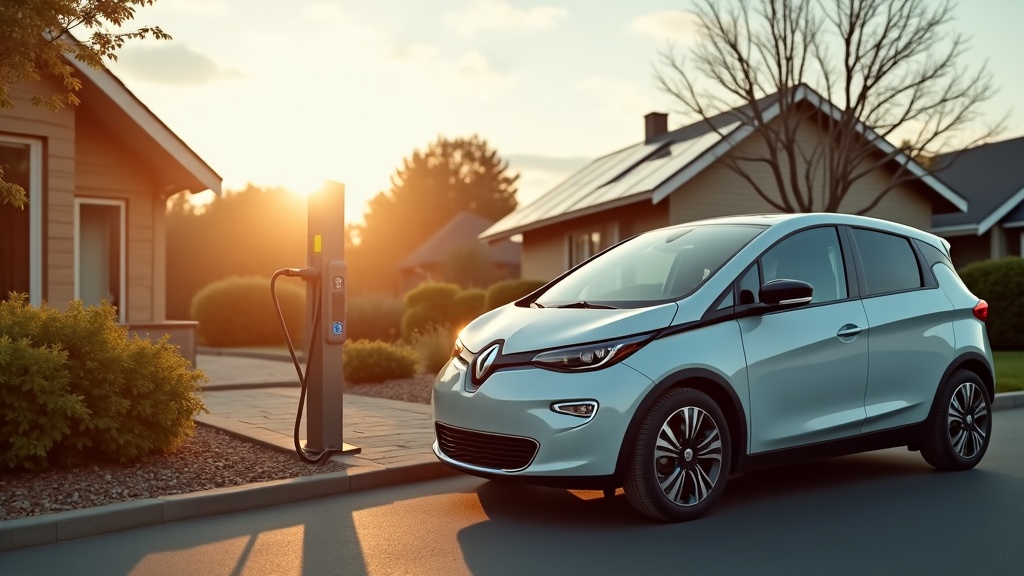
I size home battery backup around critical loads first, not marketing promises. Yes, you can charge an electric vehicle with solar panels, and for a lot of homeowners it is one of the clearest reasons to go solar in the first place. Your EV charger is just another electrical load in the house, so if your solar system is producing enough energy over time, it can offset some or all of the electricity your car uses.
The part people usually get hung up on is timing. Solar production peaks in the middle of the day, while many EVs are plugged in at night. That does not stop solar from covering your driving. It usually just means the grid is doing the balancing unless you charge during daylight hours or add a battery.
The Short Answer
If your question is simply whether solar panels can charge an EV, the answer is absolutely yes. In practical terms, a properly sized home solar system can offset the vehicle’s charging demand over the course of a month or a year, even if the car is not literally charging from the panels every second it is plugged in.
What matters more is whether your system size, driving miles, and utility rules line up well enough to make that pairing economical. Most homeowners do not need a separate solar setup just for the car. They need to treat the EV as part of the total household energy picture and size accordingly.
What This Means for a Homeowner
Once an EV enters the house, transportation becomes part of your electric bill. That is usually when solar planning gets more concrete, because instead of just offsetting lights, appliances, and air conditioning, you are now trying to replace gasoline with electricity generated at home.
- If you drive a lot, your EV may add enough annual usage to justify a larger solar array.
- If you work from home, daytime charging can let you use more of your own solar production directly.
- If your utility uses time-of-use rates, charging schedule matters almost as much as charging volume.
- If roof space is limited, you may need to choose between partial offset and full offset.
The mistake I would avoid is treating the EV like a totally separate project. In most homes, it is better to look at annual household kWh use and annual driving miles together. That gives you a much cleaner picture of whether you need a modest system expansion, a smarter charging schedule, or a bigger redesign.
How the Math Usually Works
The basic math is straightforward. Most EVs use roughly 3 to 4 miles per kWh, depending on the vehicle and driving conditions. If you drive 12,000 miles per year, that usually means around 3,000 to 4,000 kWh of annual charging demand.
| Annual Driving | Approximate EV Use | Solar Planning Takeaway |
|---|---|---|
| 8,000 miles | 2,000 to 2,700 kWh | Often manageable with a modest system increase |
| 12,000 miles | 3,000 to 4,000 kWh | Common target for homeowners sizing solar around an EV |
| 15,000 miles | 3,750 to 5,000 kWh | May require a noticeably larger array depending on home usage |
That is why I would always start with usage numbers before talking equipment. If your house already uses 11,000 kWh per year and the car adds another 3,500 kWh, you are not really evaluating solar for just the house anymore. You are evaluating solar for the house plus a major transportation load.
When Battery Backup Makes Sense
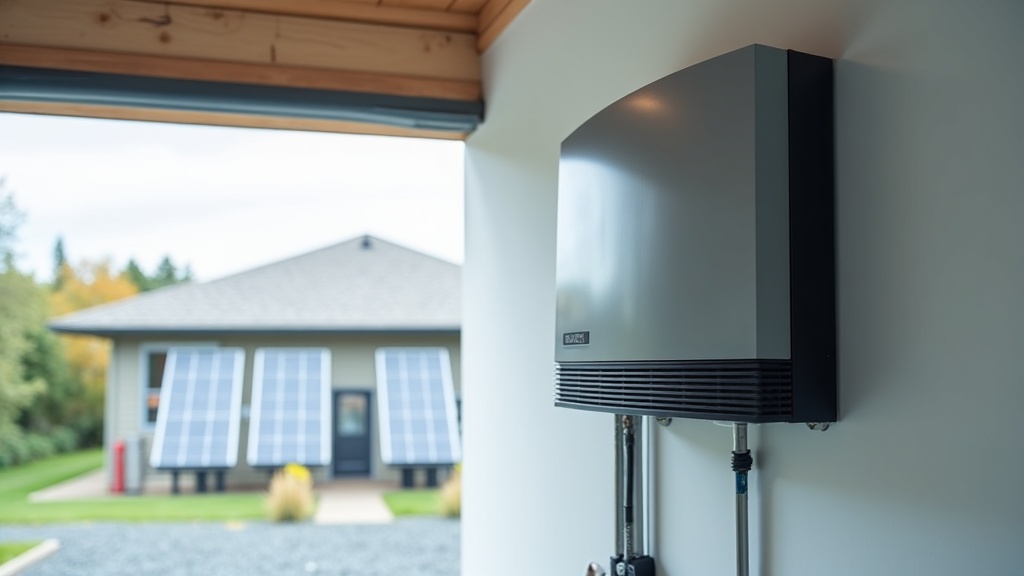
A home battery can make EV charging from solar feel more direct, especially if the vehicle is usually plugged in after sunset. Instead of exporting midday production to the grid and buying power back later, you can store some of that energy on-site and shift it into the evening.
I think batteries make more sense when your utility pays poorly for exported solar, when outages are common, or when evening rates are expensive enough to reward that kind of load shifting. They also make sense for homeowners who care a lot about backup power and want the EV to fit into a broader resilience plan.
When It Does Not
If your utility still offers favorable net metering or strong bill credits, the grid may already do enough balancing for you. In that case, adding a battery solely to say your EV is charging from stored solar often stretches the payback period more than people expect.
I also would not treat a battery as the default answer if your driving is modest or your current system is simply undersized. In a lot of homes, the better first move is more panel capacity or a smarter charger schedule rather than spending heavily on storage.
What I Would Prioritize First
First, I would gather four numbers: annual household kWh usage, annual driving miles, the EV’s average efficiency, and your utility rate structure. Those inputs tell you far more than generic solar marketing ever will.
Second, I would prioritize panel capacity before battery storage in most cases. Solar generation is the foundation. Once you know you are producing enough energy over the year, then you can decide whether a battery adds enough convenience, backup value, or rate arbitrage to justify the extra cost.
If you are trying to get more visibility before making that call, I would look at a home energy monitor or a smart EV charger. Better load data and better charging control usually improve the decision faster than jumping straight to battery quotes.
Bottom Line for Homeowners
Charging an EV with solar panels is not only possible, it is one of the strongest practical cases for going solar. You are replacing utility-bought electricity or gasoline-equivalent fuel cost with energy generated at home, which can lower long-term operating costs and reduce your exposure to rising rates.
The key is to think in terms of total energy use, not slogans. A well-sized solar system paired with realistic charging habits can offset a meaningful share of your driving or all of it. For most homeowners, that is the outcome that matters.
Recommended Tools and Products
If you want to turn the ideas in this article into something practical, these are the product categories I’d look at first.
- Solar Charge Controllers — Relevant for readers looking at how solar production gets managed safely and efficiently.
- Hybrid Solar Inverters — Helpful when researching equipment that coordinates solar generation, storage, and household loads.
- Solar Energy Monitoring Systems — Useful for homeowners who want better visibility into production, storage, and usage.
When I walk through a backup sizing decision with homeowners, I usually map out three outage modes: a short outage where you only want the fridge, lights, internet, and phones; an overnight outage where comfort starts to matter more; and a multi-day outage where recharge strategy becomes just as important as battery size. That exercise usually shows pretty quickly whether you are shopping for essential-circuit resilience or trying to preserve a near-normal routine.
I also think it helps to separate battery goals from generator goals. Batteries are excellent for silent automatic backup, better daily energy shifting, and tighter control over critical loads. Generators still make sense when you need long-duration runtime on large loads without paying for a very large battery bank. A lot of homeowners get the best outcome by deciding which loads truly need battery-grade continuity and which ones can stay outside the backup plan.
What Usually Saves the Most Money
The money-saving move is usually not finding the most exciting hardware. It is sizing the system around real usage, choosing equipment that fits the job, and avoiding upgrades that solve a fantasy outage instead of the one you are actually preparing for.
I also think homeowners make better decisions when they separate resilience goals from bragging-rights goals. Once you know whether you are solving for essentials, comfort, or near-whole-home backup, the comparison gets much clearer and wasted spending usually drops fast.
That is the frame I trust most: define the loads, define the outage scenario, and then buy only the gear that materially improves the plan.
What I Would Compare Before Buying
If I were shopping this category for my own garage or outage kit, I would compare battery chemistry, warranty length, inverter size, and recharge speed before I paid much attention to app features or flashy marketing claims. Those practical specs decide whether the unit still feels useful after the novelty wears off.
I would also look closely at how the unit is actually going to live in the house. A battery that is too heavy to move, too small for the loads you care about, or too slow to recharge after a real outage can still be the wrong buy even if the chemistry itself is solid.
That is why I prefer turning chemistry into a decision filter instead of the whole decision. It matters a lot, but only inside a backup plan that already makes sense for your loads, your budget, and your outage pattern.
Sources, uncertainty, safety, and affiliate disclosure
Check named sources for their publication date, geography, exact product, utility, and jurisdiction. Product specifications and programs change. Estimates are not guarantees. Electrical work, service upgrades, storage systems, transfer equipment, interconnection, and code compliance should be reviewed by the serving utility and a qualified electrician or installer as appropriate.
Some links may be affiliate links. SunBacked may earn a commission at no added cost to you; that does not determine editorial conclusions.