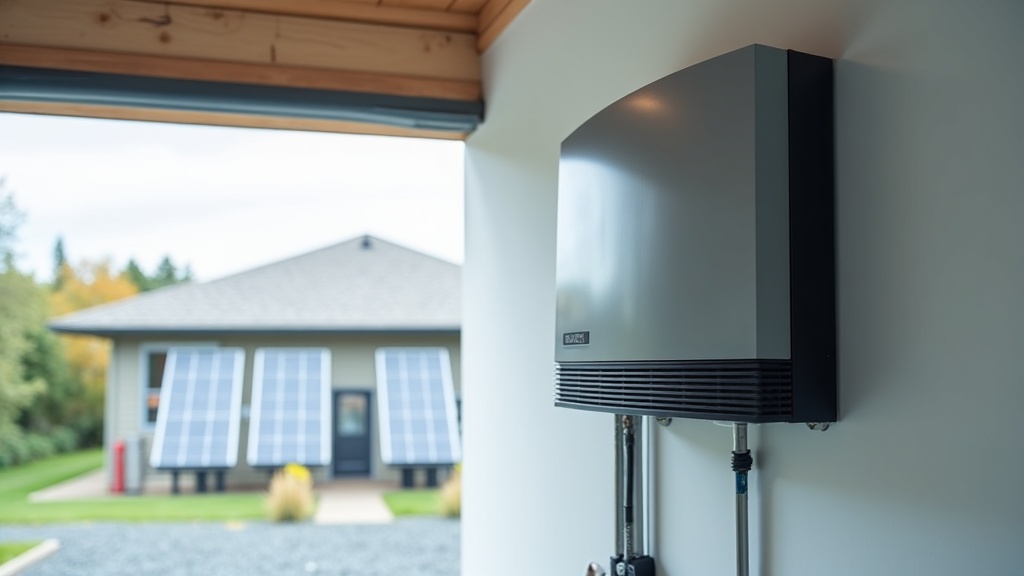


Editorial quick answer
Is solar really worth the money?
I look at solar the same way I look at any major electrical upgrade: the numbers have to work in the real house, not just in the sales deck. Yes, solar can absolutely be worth the money, but only when the roof gets enough sun, the installed price is disciplined, and the utility bill is […]
Who this is for
Homeowners using this topic to compare choices, identify tradeoffs, or prepare better questions.
What this cannot promise
A guaranteed bill reduction, output, runtime, incentive, code approval, interconnection result, or project-specific electrical design.
Assumptions, date, and local checks
Costs and performance depend on location, date, model, configuration, weather, tariffs, utility rules, program funding, installation details, and household loads. Incentive, net-metering, code, battery-sizing, and electrical statements require current jurisdiction and source checks. Confirm project-specific details with the serving utility, program administrator, manufacturer, and a qualified electrician or installer.
How evidence is labeled
Mike context
Limited to his 20 years as an electrician, going solar in 2019, and having no installer ties.
Manufacturer specification
Maker-published data for an identified model or version, not an independent measurement.
Public source
Utility, government, program, code, standards, or other dated public information.
Estimate
Math based on stated inputs and assumptions, not a quote or guarantee.
Editorial analysis
SunBacked’s synthesis of tradeoffs, separated from sourced facts.
I look at solar the same way I look at any major electrical upgrade: the numbers have to work in the real house, not just in the sales deck. Yes, solar can absolutely be worth the money, but only when the roof gets enough sun, the installed price is disciplined, and the utility bill is high enough for the savings to matter. If the roof is shaded, the quote is inflated, or the homeowner plans to move soon, the math can go sideways fast.
The question I trust is not “is solar worth it?” in the abstract. The better question is whether buying 20 to 25 years of future electricity up front will save you more than the system costs after you account for maintenance, financing, and policy risk. In 2026 there is less room for sloppy solar deals than there used to be, so quote quality matters more than ever.
What It Costs
For a normal residential rooftop system, most homeowners still land somewhere around $20,000 to $35,000 before local rebates or utility incentives. On a price-per-watt basis, a straightforward install often falls in the neighborhood of $2.50 to $3.25 per watt. Add a battery and the project can jump by another $10,000 to $18,000 depending on storage size, backup goals, and brand.
That sticker price only tells part of the story. A fair solar quote should also show expected annual production, estimated bill offset, warranty coverage, and a realistic payback timeline. I care much more about cost relative to expected savings than I do about a salesperson leading with a low monthly payment.
What Changes the Price
Two houses on the same street can end up with quotes that differ by thousands of dollars. Roof shape, service panel condition, local permitting friction, equipment choice, and financing structure all move the final number.
| Price driver | Why it matters | Typical effect |
|---|---|---|
| System size | Larger systems spread fixed labor and permitting costs across more watts. | Better price per watt, higher total cost |
| Roof complexity | Steep roofs, multiple faces, and poor access increase labor time. | Moderate to major increase |
| Electrical upgrades | Panel replacements, meter work, and code fixes may be required first. | Often adds $1,500 to $5,000+ |
| Equipment tier | Premium panels, microinverters, and batteries all increase spend. | Small to major increase |
| Financing fees | Many solar loans hide dealer fees inside the contract price. | Can quietly add thousands |
| Local incentive rules | Net metering and state rebates directly affect payback. | Can strengthen or weaken the deal fast |
I also pay close attention to policy changes. If the federal credit is gone or weaker than it used to be, that does not automatically kill solar, but it does mean bad quotes become easier to spot because there is less subsidy hiding the problem.
Cost Table or Pricing Tiers
When I pressure-test a quote, I ignore the monthly payment first and look at the effective cash-equivalent price per watt. That usually tells me faster whether I am looking at a disciplined install or a sales-heavy package.
| Pricing tier | Approx. price per watt | What it usually means |
|---|---|---|
| Aggressive | Under $2.50/W | Often a simple roof, a cash deal, or a very competitive market |
| Fair market | $2.50 to $3.25/W | Typical band for many clean residential installs |
| High but explainable | $3.25 to $4.00/W | Can be justified by roof difficulty, premium equipment, or electrical work |
| Red flag | Over $4.00/W | Usually needs a very strong explanation or a hard pass |
If I get a quote well above fair-market range, I want to know exactly why. If the explanation turns into vague talk about premium service, low payments, or future-proofing, I slow down and get more bids. That same mindset also helps when comparing home energy monitors, LiFePO4 portable power stations, or solar troubleshooting tools: ignore marketing first, compare function and value second.
Where I Would Spend More
I would spend more on installer quality before I spent more on panel-brand hype. Clean roof work, honest production modeling, solid electrical practices, and responsive post-install support are worth real money. A slightly higher bid from a competent installer often beats a cheap proposal that turns into change orders and headaches.
I would also spend more when the upgrade clearly improves the outcome. Microinverters can make sense on a shaded or chopped-up roof. A main panel upgrade can be worth it if it removes a real bottleneck. A battery can be worth it if your outage pattern is bad enough that backup power has real value. I do not spend more just because a package sounds premium.
What I Would Do with a Tight Budget
If I were working with a tight budget, I would keep the project simple. I would compare cash price against financed price line by line, skip add-ons that do not solve a real problem, and avoid a battery unless backup power is a genuine household need. I would also make sure the roof still has enough life left before I put solar on it.
I would also be willing to size the system around the best-value portion of the bill instead of trying to offset every last kilowatt-hour. In a lot of homes, a right-sized system with disciplined pricing is where solar becomes worth the money. The short version is this: solar is worth it when the design fits the house, the quote is fair, and the savings case still looks solid after you stop listening to the sales pitch.
Sources, uncertainty, safety, and affiliate disclosure
Check named sources for their publication date, geography, exact product, utility, and jurisdiction. Product specifications and programs change. Estimates are not guarantees. Electrical work, service upgrades, storage systems, transfer equipment, interconnection, and code compliance should be reviewed by the serving utility and a qualified electrician or installer as appropriate.
Some links may be affiliate links. SunBacked may earn a commission at no added cost to you; that does not determine editorial conclusions.