
Editorial quick answer
Solar Panel Cleaning: DIY vs Pro, Real Cost Breakdown
Disclosure: This post contains affiliate links. As an Amazon Associate I earn from qualifying purchases at no extra cost to you. Every week I get calls from homeowners asking whether they actually need to clean their solar panels — and if so, how often and whether to do it themselves or hire a professional. After […]
Who this is for
Homeowners using this topic to compare choices, identify tradeoffs, or prepare better questions.
What this cannot promise
A guaranteed bill reduction, output, runtime, incentive, code approval, interconnection result, or project-specific electrical design.
Assumptions, date, and local checks
Costs and performance depend on location, date, model, configuration, weather, tariffs, utility rules, program funding, installation details, and household loads. Incentive, net-metering, code, battery-sizing, and electrical statements require current jurisdiction and source checks. Confirm project-specific details with the serving utility, program administrator, manufacturer, and a qualified electrician or installer.
How evidence is labeled
Mike context
Limited to his 20 years as an electrician, going solar in 2019, and having no installer ties.
Manufacturer specification
Maker-published data for an identified model or version, not an independent measurement.
Public source
Utility, government, program, code, standards, or other dated public information.
Estimate
Math based on stated inputs and assumptions, not a quote or guarantee.
Editorial analysis
SunBacked’s synthesis of tradeoffs, separated from sourced facts.
Disclosure: This post contains affiliate links. As an Amazon Associate I earn from qualifying purchases at no extra cost to you.
Every week I get calls from homeowners asking whether they actually need to clean their solar panels — and if so, how often and whether to do it themselves or hire a professional. After more than 20 years as a electrician, I can give you a straight answer backed by real data, not marketing fluff.
Short version: most homeowners clean too often, spend too much, and use the wrong tools. Here’s everything you need to know about solar panel cleaning, with numbers to back it up.
How Often Should You Clean Solar Panels?
The honest answer: less often than most cleaning companies want you to think.
A landmark study out of UC San Diego found that cleaning solar panels is often not worth the cost — at least in coastal California. Engineers found that two months of dust accumulation reduced output by just about 7.4%, and that a single rainstorm restored most of that lost production. For a 5 kW system in San Diego, the electricity value of that lost output over two months was roughly $20. That’s less than the cost of a professional cleaning.
Here’s a practical cleaning frequency guide based on your situation:
- Rainy climates (Pacific Northwest, Southeast, Midwest): Natural rain handles most cleaning. One voluntary inspection per year is plenty. Clean only when you see visible buildup.
- Dry, dusty climates (Southwest, Central Valley CA, high plains): Clean every 3–6 months. Soiling accumulates faster and rain is infrequent, so the math shifts toward regular cleaning.
- High bird activity zones: Monitor weekly. Bird droppings are the big exception — they’re concentrated, opaque, and acidic. Droppings left in place can cause hotspot damage, where a blocked cell overheats and permanently degrades. Remove promptly.
- Near construction, agriculture, or heavy traffic: Inspect monthly during active periods. Concrete dust, pollen, and exhaust particulates are all worse than typical ambient dust.
Bottom line: two times per year is a reasonable default for most U.S. homeowners. Adjust based on your local conditions and what your monitoring system shows.
What Dirty Panels Are Actually Costing You
Let’s put real numbers on this so you can make an informed decision rather than guessing.
Efficiency loss from soiling is not linear — it depends heavily on the type and concentration of soiling:
- Light ambient dust (2–4 weeks): 1–5% efficiency loss. Barely worth cleaning.
- Moderate dust (1–3 months, no rain): 5–10% loss. Starting to add up.
- Heavy soiling, bird activity, or construction dust: 15–25% loss or more. Clean immediately.
- Complete shading from solid debris (leaves, heavy grime): A single fully-blocked panel can pull down an entire string by 50% or more in older string-inverter systems.
For a typical 8 kW residential system generating around 11,000 kWh/year at $0.14/kWh average rate, a 10% efficiency loss costs about $154/year in lost production. That makes annual professional cleaning at $150–$350 a borderline proposition — it may pay for itself, or it may not, depending on how dirty your panels actually get.
Where the math clearly works: microinverter or DC optimizer systems (like Enphase or SolarEdge). Because each panel operates independently, soiling on one panel only hurts that panel — not the whole string. You recover more value from cleaning individual dirty panels. If you’re shopping for a new system, get multiple quotes through EnergySage and ask installers specifically about microinverters vs. string inverters for your roof situation.
DIY Solar Panel Cleaning: Step-by-Step
If your panels are safely accessible — ground-mounted, low-slope roof with safe ladder access, or reachable from a second-story window — DIY cleaning is absolutely appropriate and straightforward.
What You Need
- Soft-bristle solar panel brush — look for brushes specifically rated for solar panels with non-abrasive bristles. Never use steel wool, abrasive pads, or stiff-bristle brushes that can scratch the anti-reflective coating.
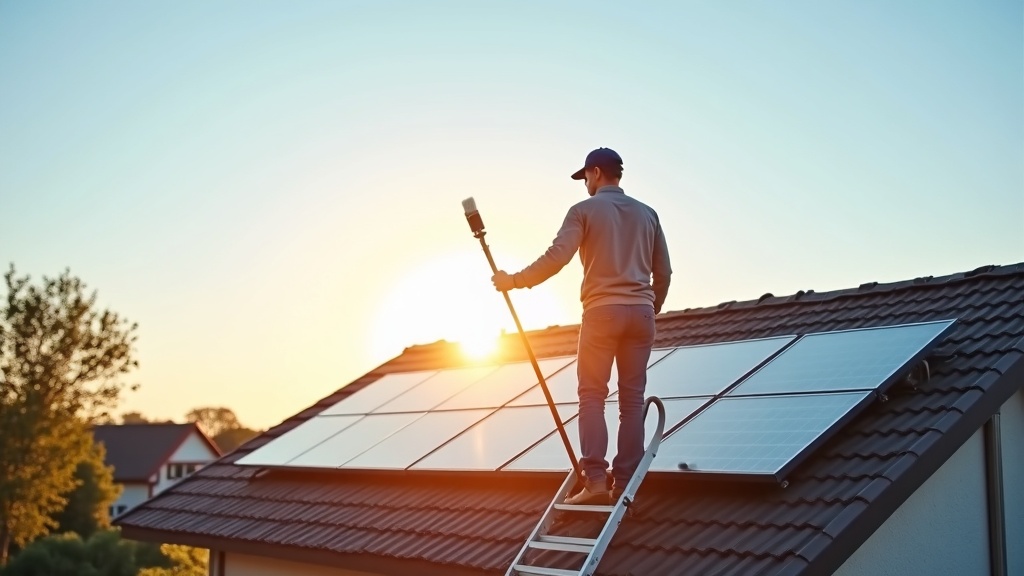
- Telescoping extension pole — a quality 8–16 foot pole lets you reach panels without getting on the roof. Far safer than a ladder for most situations.
- Distilled water — tap water contains minerals that leave spots and deposits as they dry. Distilled water is cheap and prevents spotting. For a full roof system, a few gallons is usually enough.
- Rubber squeegee — use after rinsing to pull water off cleanly and prevent mineral deposits even from distilled water.
- Garden hose with a gentle spray setting — for pre-rinse and final rinse. No pressure washer.
Step-by-Step Process
- Clean in the morning or evening. Cleaning hot panels (midday in summer) can cause thermal shock and smearing. Early morning with panels cool and possibly dew-dampened is ideal.
- Turn off your solar system. Follow your inverter’s shutdown procedure. Most Enphase, SolarEdge, and string inverter systems have a clearly labeled shutdown switch. Never clean live electrical equipment.
- Pre-rinse with a light hose spray to knock off loose debris before scrubbing. This prevents abrasive particles from scratching the glass during brushing.
- Scrub gently with distilled water and a soft brush using light circular motions. Work top to bottom so dirty water runs down off clean sections. Pay attention to panel edges where grime tends to accumulate.
- Address bird droppings separately. Don’t try to scrub dry droppings — soak them with wet cloth for 5–10 minutes first to soften, then wipe gently. Dried bird droppings can scratch glass if scraped dry.
- Final rinse with distilled water. Use the squeegee to pull water off cleanly.
- Allow to dry completely before restarting the system. In direct sun this usually takes 10–15 minutes.
What NOT to Do
- No pressure washers — high pressure can crack panel glass, damage frame seals, and force water into junction boxes.
- No dish soap or household cleaners — most contain surfactants or acids that degrade anti-reflective coatings over time. Plain distilled water handles 95% of soiling.
- No metal tools or abrasive scrubbers of any kind.
- Don’t walk on panels — they’re not designed to support human weight and can crack internally without visible damage.
- Don’t clean during rain — obvious, but also avoid cleaning if lightning is forecast.
Safety reminder: if your panels are on a steep roof or a height where a fall would be dangerous, don’t do it yourself. No amount of recovered electricity is worth a fall. Call a professional.
Professional Solar Panel Cleaning: When It’s Worth It
The global solar panel cleaning market was valued at USD 812.92 million in 2024 and is projected to reach USD 1,845.89 million by 2033, according to IMARC Group market research. That growth tells you the industry is real and professional services are increasingly standardized.
Professional cleaning makes sense in these scenarios:
- Steep or high roofs where DIY access creates fall risk. No argument needed here — hire a pro.
- Large systems (30+ panels). A 50-panel commercial-adjacent system takes a professional crew 2–3 hours. DIY on that scale is an all-day project with significant fatigue and safety risk.
- After construction projects nearby. Concrete dust, paint overspray, and similar heavy soiling may require commercial-grade cleaning solutions that pros have access to.
- Pre-sale home inspection. Clean, well-maintained panels show well to buyers and can be documented in disclosure.
- Annual inspection bundle. Many solar maintenance companies offer cleaning + visual inspection + inverter performance review for $200–$400/year. If your system is out of warranty, having a set of professional eyes on it annually has real value beyond just the cleaning.
Typical Professional Cleaning Costs
| System Size | Typical Cost |
|---|---|
| 10–20 panels (residential) | $150–$250 |
| 20–40 panels (large residential) | $250–$400 |
| 40–100 panels (small commercial) | $400–$900 |
| Annual maintenance contract | $200–$400/year |
When vetting cleaning companies, ask specifically: what cleaning solutions do they use (answer should be “deionized or distilled water, no harsh chemicals”), do they carry liability insurance for panel damage, and do they offer a basic performance inspection as part of the service.
Self-Cleaning Panels and Anti-Soiling Coatings
This is an area where the science is genuinely interesting and advancing fast.
Researchers at MIT developed an electrostatic waterless cleaning system that removes dust without water or physical contact — using an electric field to repel dust particles off the panel surface. The system is currently being commercialized for utility-scale solar in arid regions where water for cleaning is scarce and soiling losses are enormous. Residential applications are still a few years out, but the research demonstrates that self-cleaning technology is moving beyond novelty into practical deployment.
Current commercially available options include:
- Hydrophilic coatings: Applied to the panel glass, these cause water to sheet off rather than bead — carrying dust with it. Multiple peer-reviewed studies on PubMed document measurable soiling reduction (30–50% less accumulation compared to uncoated panels in comparable conditions). Look for coatings from companies like NanoProtect or SunClean, or ask your installer about panel models with factory-applied anti-soiling coatings.
- Hydrophobic (lotus-effect) coatings: Work on a different principle — water beads and rolls off, picking up dust particles. Effective but tend to degrade faster than hydrophilic coatings, typically requiring reapplication every 2–3 years.
- Factory-integrated self-cleaning glass: Some premium panel lines now include Pilkington Activ or similar photocatalytic glass as standard. The glass uses UV light to break down organic soiling and rain to rinse it away. Worth asking about when specifying a new system.
For most homeowners with standard panels already installed, a quality hydrophilic coating applied every 3–5 years ($200–$400 professionally applied) can meaningfully reduce cleaning frequency and is worth considering if you’re in a dusty environment.
Solar Panel Maintenance Beyond Cleaning
Cleaning gets most of the attention, but it’s only one piece of solar system maintenance. Here’s what else to stay on top of:
Monitor Your Production Data
This is the single most valuable maintenance habit. Your inverter’s monitoring app (Enphase Enlighten, SolarEdge mySolarEdge, Fronius Solar.web, etc.) shows you daily and hourly production. Get familiar with your system’s typical output on clear days and in various seasons. If production drops unexpectedly and persists after a cleaning, that’s your signal to investigate further — possibly a failed microinverter, panel degradation, or shading from tree growth.
Annual Visual Inspection
Once a year, walk around your array and look for:
- Cracked or delaminating panel glass
- Discoloration (yellowing, brown spots — signs of internal degradation)
- Loose or corroded wiring connections
- Damaged racking hardware or loose mounting points
- New shading sources — tree growth, new structures
Inverter Maintenance
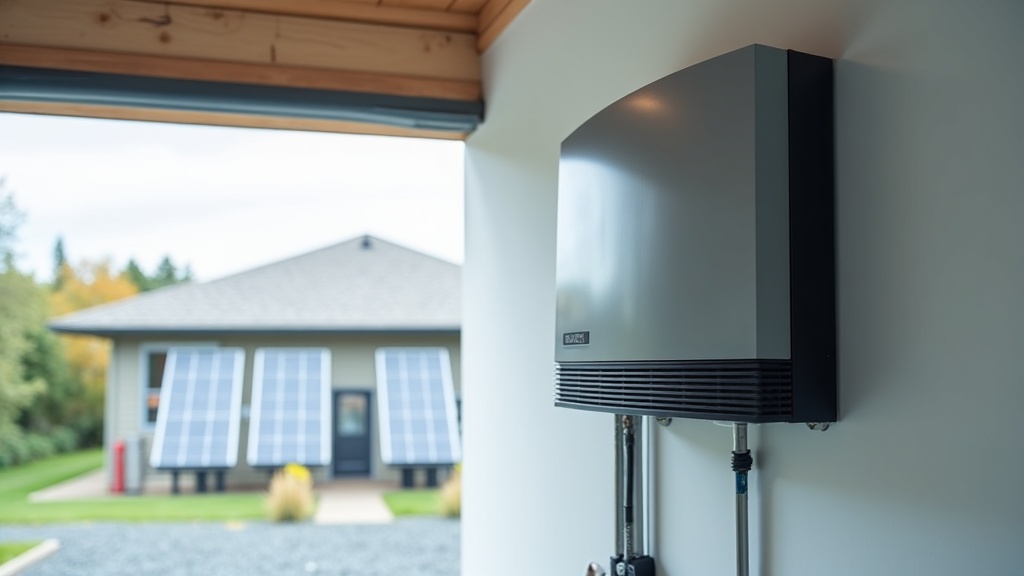
String inverters typically last 10–15 years (shorter lifespan than panels, which last 25–40 years). Microinverters are rated for 25 years and match panel lifespan better. Keep inverter air vents clear of debris, ensure the unit isn’t exposed to direct rain (it shouldn’t be — but check installation quality), and keep a record of any error codes that appear.
Check Your Utility Bills
Your utility bill is a backup check on system performance. If you’re seeing higher-than-expected bills without a change in household consumption, your system may be underperforming. Compare against your expected annual production estimate from the original installation proposal.
If you’re still in the planning phase and haven’t installed your system yet, I consistently recommend getting quotes through EnergySage — it’s the most transparent way to compare multiple installers side-by-side on price and equipment quality without high-pressure sales tactics.
Frequently Asked Questions: Solar Panel Cleaning
How often should I clean my solar panels?
Most homeowners: once or twice a year. Dusty/dry climates: every 3–4 months. Rainy climates: let rain do most of the work and clean only when visible soiling accumulates. Always clean promptly after bird activity.
What is the best way to clean solar panels?
Distilled water, a soft-bristle brush, a squeegee, and a telescoping pole. Clean in the morning when panels are cool. Rinse, scrub gently, rinse again, squeegee dry. No pressure washers, no harsh soaps, no abrasive materials.
Is it safe to clean solar panels myself?
Yes, if you can do it safely from the ground with a telescoping pole or from a stable ladder without significant fall risk. If your roof is steep or high, hire a professional — the economics don’t justify the injury risk.
Do rain and snow clean solar panels?
Rain does a reasonable job removing light dust. Heavy snow slides off most tilted panels and rain rinses remaining residue. The main soiling that rain doesn’t handle well: bird droppings, oil-based deposits (near highways), and thick pollen accumulations.
Will cleaning solar panels increase electricity production?
It depends on how dirty they are. Light dust: minimal recovery (1–5%). Heavy soiling: up to 15–25% recovery. The UC San Diego study found that in many California installations, the electricity value recovered from cleaning was less than the cleaning cost — making regular professional cleaning an economic wash unless soiling is severe.
and solar installer with over 15 years of experience designing and installing residential and commercial solar systems across the Pacific Northwest.
Sources, uncertainty, safety, and affiliate disclosure
Check named sources for their publication date, geography, exact product, utility, and jurisdiction. Product specifications and programs change. Estimates are not guarantees. Electrical work, service upgrades, storage systems, transfer equipment, interconnection, and code compliance should be reviewed by the serving utility and a qualified electrician or installer as appropriate.
Some links may be affiliate links. SunBacked may earn a commission at no added cost to you; that does not determine editorial conclusions.