

Editorial quick answer
How much backup power do I need for a 2,000 sq ft home?
I tell homeowners this all the time: a 2,000 sq ft house does not give me a battery size by itself, because I size backup power around what you need to keep alive when the grid quits, not around the number on your Zillow listing. If you are trying to decide what makes sense for […]
Who this is for
Homeowners using this topic to compare choices, identify tradeoffs, or prepare better questions.
What this cannot promise
A guaranteed bill reduction, output, runtime, incentive, code approval, interconnection result, or project-specific electrical design.
Assumptions, date, and local checks
Costs and performance depend on location, date, model, configuration, weather, tariffs, utility rules, program funding, installation details, and household loads. Incentive, net-metering, code, battery-sizing, and electrical statements require current jurisdiction and source checks. Confirm project-specific details with the serving utility, program administrator, manufacturer, and a qualified electrician or installer.
How evidence is labeled
Mike context
Limited to his 20 years as an electrician, going solar in 2019, and having no installer ties.
Manufacturer specification
Maker-published data for an identified model or version, not an independent measurement.
Public source
Utility, government, program, code, standards, or other dated public information.
Estimate
Math based on stated inputs and assumptions, not a quote or guarantee.
Editorial analysis
SunBacked’s synthesis of tradeoffs, separated from sourced facts.
I tell homeowners this all the time: a 2,000 sq ft house does not give me a battery size by itself, because I size backup power around what you need to keep alive when the grid quits, not around the number on your Zillow listing.
If you are trying to decide what makes sense for your house, your answer comes from your loads, your outage pattern, and your comfort expectations. You may only want the refrigerator, internet, lights, and garage door for one night, or you may want the place to feel mostly normal through a summer outage. Those are two very different jobs, even if the houses are the same size.
The Short Answer
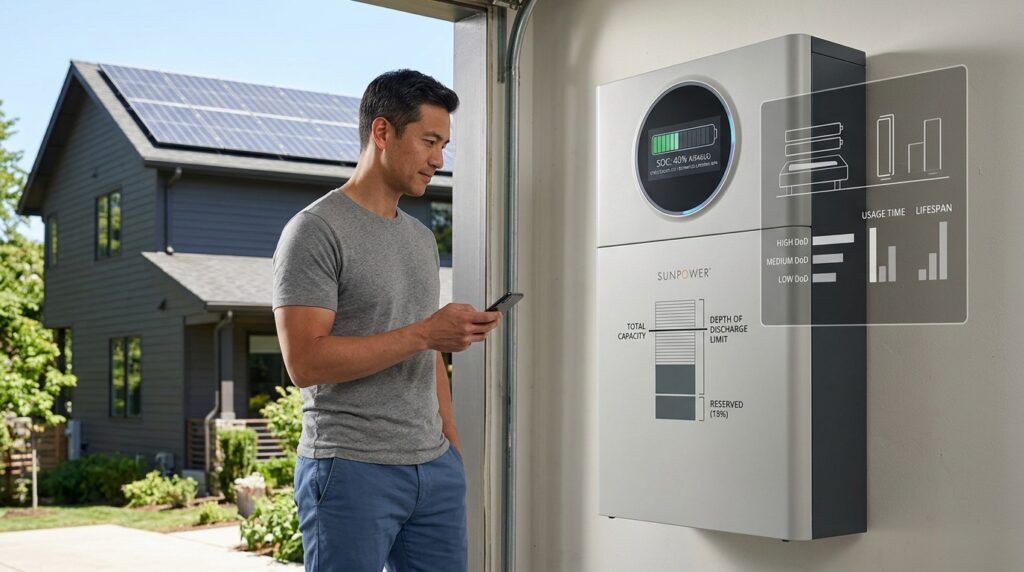
For most 2,000 sq ft homes, I would put the practical battery target in one of three buckets. Around 10 to 15 kWh is usually enough for smart essentials backup. Around 15 to 25 kWh is where comfort backup starts to feel useful. Around 25 to 30+ kWh is the range where you are trying to keep a lot of normal life going, and that is where cost climbs fast.
The part that confuses people is square footage sounds concrete, but it hides the real question. A 2,000 sq ft house with gas heat, gas water heating, LED lights, and disciplined loads may ride through outages on a fairly modest battery system. A 2,000 sq ft all-electric house with a large heat pump, electric range, electric dryer, and two refrigerators can eat through storage in a hurry. I care a lot more about your panel schedule and your big motor loads than your floor plan.
What This Means for a Homeowner
If you want a clean decision framework, start by asking what kind of outage experience you are buying. Most homeowners do better when they choose the experience first and the battery size second.
- Essentials-only backup: refrigerator, freezer, internet, lights in the main rooms, phone charging, garage door opener, and a few outlets. This is usually the best value.
- Comfort backup: essentials plus office gear, television, more lighting, microwave use, sump pump, well pump, and maybe a small room AC or space heater used selectively.
- Near whole-home backup: most normal circuits stay available, but you still need to manage major loads like central AC, oven, dryer, and water heating.
- True whole-home backup: you want the house to behave almost like the utility never went down. That can be done, but it is usually the most expensive answer and the easiest one to oversell.
That distinction matters because runtime disappears faster than homeowners expect. Refrigeration and lights are usually manageable. Pumps are manageable if they do not cycle constantly. HVAC is the budget-breaker. If you are serious about sizing accurately, a home energy monitor is one of the few products I recommend before you even start comparing battery packages, because real usage data beats guesswork every time.
A quick way to judge your house
I would look at your house in three passes. First, what absolutely must stay on. Second, what would be nice to keep on. Third, what is simply too expensive to support for long on battery alone. That third category is where central air, electric resistance heat, pool equipment, and EV charging usually land unless you have a very large system and a very healthy budget.
When Battery Backup Makes Sense
Battery backup makes the most sense when outages are common enough or costly enough that the convenience actually matters. If you work from home, rely on medical devices, have a basement pump, keep expensive food storage, or live somewhere the grid drops out several times a year, I think batteries become much easier to justify. They switch over quickly, they are quiet, and they do not ask you to drag out equipment in bad weather.
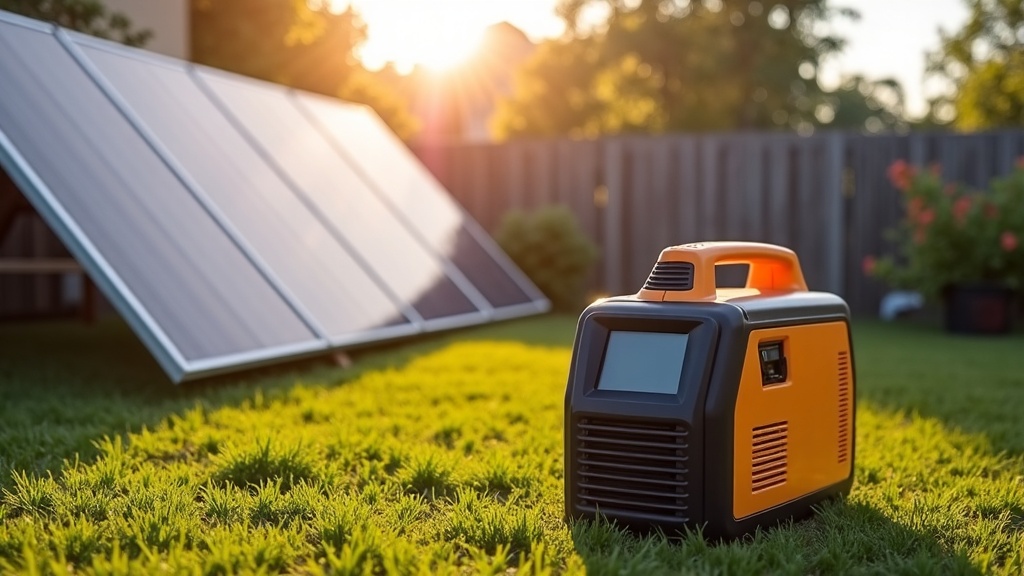
I also like batteries when the homeowner already thinks in terms of load discipline. If you can accept that an outage day is not the same as a normal grid day, a battery system can feel excellent. You keep the important parts of the house alive, the lights stay on, the Wi-Fi stays up, and you do not babysit fuel. For shorter outages, that is a much better experience than living by extension cord. Some homeowners first test the idea with a portable power station, which can be a sensible starter option for router-fridge-lights duty, but it is not a substitute for a real panel-connected backup plan.
Three sizing scenarios I see all the time
| Backup Goal | Typical Battery Range | What It Usually Covers | My Judgment |
|---|---|---|---|
| Basic essentials | 10-15 kWh | Fridge, freezer, lights, internet, chargers, garage door, a few outlets | The sweet spot for many families |
| Comfort backup | 15-25 kWh | Essentials plus pumps, office loads, more rooms, longer runtime, selective cooling | Worth it if outages are regular |
| Near whole-home | 25-30+ kWh | Many house circuits with load management and careful HVAC use | Only smart if your expectations and budget match |
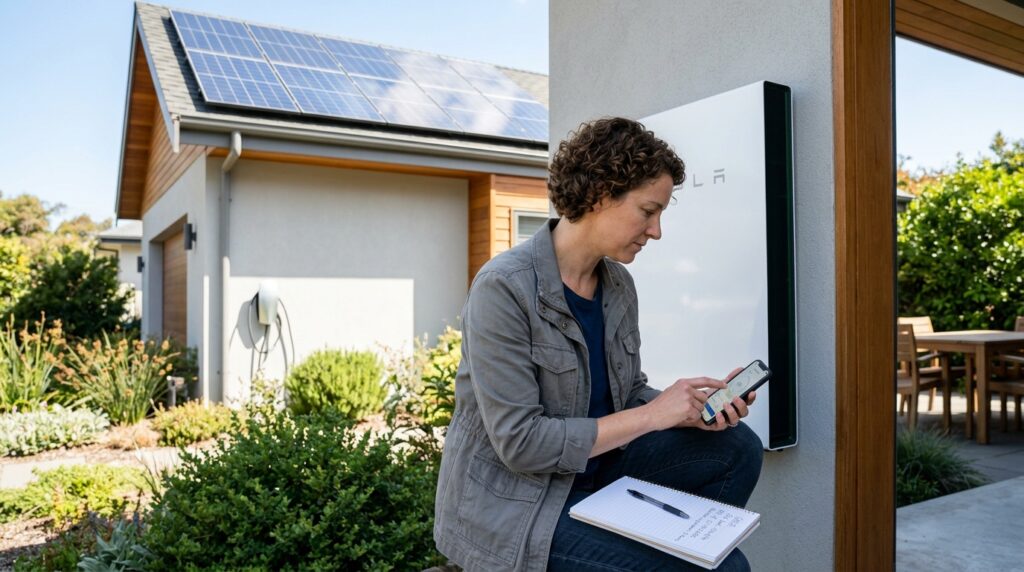
If you have solar and the system is designed to recharge batteries during an outage, the value improves a lot. Daytime recharging changes the conversation from “How many hours will this last?” to “How much can I recover each day?” That is a much better place to be. Just do not assume every solar setup automatically does that. I would verify the equipment and transfer setup before I counted on it.
When It Does Not
Battery backup does not make much sense when your outages are rare, brief, and mostly a mild annoyance. If the power blinks off twice a year for 30 minutes, I would struggle to justify a large installed battery unless there is another reason you want it. In a house like that, you may get more practical value from better surge protection, a small emergency setup, or simply improving efficiency so any future backup system can be smaller.
It also stops making sense when the homeowner expects battery backup to carry heavy electric living with no tradeoffs. If your real goal is to run central AC all afternoon, electric cooking at dinner, hot water recovery, laundry, and maybe charge the car too, then we are not talking about a modest resilience upgrade anymore. We are talking about a major electrical investment. That is where I see people buy the idea of whole-home backup but not the actual amount of storage required to deliver it.
Signs the upgrade is probably wrong for you right now
- You cannot name the circuits you actually care about during an outage.
- You are using square footage as your main sizing method.
- You want to back up central air or electric heat, but you have not checked the real running watts and startup surge.
- You are stretching the budget for battery storage before fixing obvious energy waste.
- You would be better served by occasional portable backup or a generator for rare long outages.
For some homes, especially in areas with multi-day outages, a dual-fuel inverter generator is simply the better tool for the job. It is not as elegant, and it is not automatic, but dollar for dollar it can carry bigger loads for longer. I am not anti-battery. I am anti-buying the wrong kind of backup because the cleaner option sounds nicer.
What I Would Prioritize First
If this were my own 2,000 sq ft house, I would prioritize four things before I spent serious money. First, I would decide which loads are mission-critical. Second, I would decide the runtime target: a few hours, overnight, or several days with solar recovery. Third, I would identify every motor or compressor that creates a startup surge problem. Fourth, I would cut waste so I was not paying to back up bad habits.
That last part is not glamorous, but it saves real money. An old garage freezer, resistance strip heat, a thirsty dehumidifier, or sloppy thermostat settings can push you into a much larger battery tier. I would rather see a homeowner tune the house first, then buy the smallest system that reliably handles the loads that matter. If you are still in the planning stage, useful outage-prep gear like a transfer switch kit or a Wi-Fi freezer temperature sensor can improve resilience now while you sort out the bigger battery decision.
The checklist I would use before saying yes
- List what must stay on during an outage, not what would be nice in a perfect world.
- Estimate daily energy use in kWh for those loads, not just nameplate wattage.
- Check startup surge for wells, pumps, refrigerators, and HVAC equipment.
- Decide whether you are buying essentials backup, comfort backup, or a near whole-home experience.
- Match that goal to your actual outage pattern in your area.
- Compare the battery quote against a generator, a staged install, or efficiency upgrades first.
If a homeowner can make it through that checklist honestly, the answer usually becomes obvious. Either the battery is clearly worth it because the loads are reasonable and the outages are meaningful, or it becomes clear they are trying to force a high-end answer onto a problem that does not require it.
Bottom Line for Homeowners
For a typical 2,000 sq ft home, my recommendation is usually to start by planning for essentials backup, not whole-home fantasy backup. In plain numbers, that means many houses are well served by 10 to 15 kWh if the goal is refrigeration, lighting, connectivity, and a few key circuits. Once you start asking the battery to support bigger comfort loads or partial HVAC, you move quickly into the 15 to 30+ kWh range and the project changes from sensible to expensive.
If you want the cleanest decision rule, here it is: buy battery backup when outages are regular enough, your critical loads are clear enough, and your expectations are realistic enough that the system will genuinely improve how you live. Wait or choose a different backup strategy when you rarely lose power, have not measured your loads, or are really chasing whole-home normalcy on a partial-home budget. That is the judgment call I would make in my own house, and it is the one I would give you across the kitchen table too.
Sources, uncertainty, safety, and affiliate disclosure
Check named sources for their publication date, geography, exact product, utility, and jurisdiction. Product specifications and programs change. Estimates are not guarantees. Electrical work, service upgrades, storage systems, transfer equipment, interconnection, and code compliance should be reviewed by the serving utility and a qualified electrician or installer as appropriate.
Some links may be affiliate links. SunBacked may earn a commission at no added cost to you; that does not determine editorial conclusions.