
Editorial quick answer
How To Home Solar Systems
How To Home Solar Systems Installing a home solar system isn’t rocket science, but after helping over 200 homeowners make the switch, I can tell you the difference between a system that pays for itself and one that becomes an expensive regret comes down to getting the fundamentals right. In my 20 years as a […]
Who this is for
Homeowners using this topic to compare choices, identify tradeoffs, or prepare better questions.
What this cannot promise
A guaranteed bill reduction, output, runtime, incentive, code approval, interconnection result, or project-specific electrical design.
Assumptions, date, and local checks
Costs and performance depend on location, date, model, configuration, weather, tariffs, utility rules, program funding, installation details, and household loads. Incentive, net-metering, code, battery-sizing, and electrical statements require current jurisdiction and source checks. Confirm project-specific details with the serving utility, program administrator, manufacturer, and a qualified electrician or installer.
How evidence is labeled
Mike context
Limited to his 20 years as an electrician, going solar in 2019, and having no installer ties.
Manufacturer specification
Maker-published data for an identified model or version, not an independent measurement.
Public source
Utility, government, program, code, standards, or other dated public information.
Estimate
Math based on stated inputs and assumptions, not a quote or guarantee.
Editorial analysis
SunBacked’s synthesis of tradeoffs, separated from sourced facts.
How To Home Solar Systems
Installing a home solar system isn’t rocket science, but after helping over 200 homeowners make the switch, I can tell you the difference between a system that pays for itself and one that becomes an expensive regret comes down to getting the fundamentals right. In my 20 years as a electrician before going solar myself in 2019, I learned that most DIY disasters happen because people skip the planning phase and jump straight to mounting panels—don’t be that person.
Here’s the reality: a properly installed home solar system can slash your electric bill by 70-100% and pay for itself in 6-12 years depending on your location. But the process involves more than just slapping panels on your roof. You need to size your system correctly, choose compatible components, navigate permitting, handle the electrical work safely, and get your utility company to approve grid connection. I’ve made every mistake in the book, so let me walk you through how to do this right.
Step 1: Calculate Your System Size
Before you buy a single panel, pull out 12 months of electric bills. Your average monthly kilowatt-hour (kWh) consumption is the foundation of everything. I see folks constantly over-sizing their systems because a salesperson scared them about future needs, or under-sizing because they only looked at summer bills.
Here’s my formula: Take your average daily kWh usage and divide by your area’s peak sun hours (4-6 hours for most of the US). That gives you the system size in kilowatts. For example, if you use 30 kWh per day and get 5 peak sun hours, you need a 6 kW system (30 ÷ 5 = 6). Add 25% to account for system losses from heat, wiring, and inverter inefficiency, so you’d actually want a 7.5 kW system.
Most residential systems range from 5 kW to 10 kW. Don’t trust online calculators that don’t ask about your roof orientation, shading, or local weather patterns—they’re guessing.
Choose Your System Components
A solar system has four main parts: panels, inverter, racking, and batteries (optional). Each decision affects the others, so don’t buy piecemeal.
Solar Panels
You’ll choose between monocrystalline and polycrystalline panels. After installing both types, I only recommend monocrystalline now—they’re 15-20% more efficient, perform better in low light, and last longer. Expect to pay $0.50-$0.70 per watt for quality panels.
Look for panels with:
- Efficiency rating above 19%
- Temperature coefficient below -0.40%/°C
- 25-year performance warranty (not just materials)
- Tier 1 manufacturer certification
For a 7.5 kW system with 350-watt panels, you’ll need about 21-22 panels. Quality monocrystalline solar panels are worth the investment—cheap panels degrade faster and you’ll lose production within 5 years.
Inverters: String vs. Microinverters
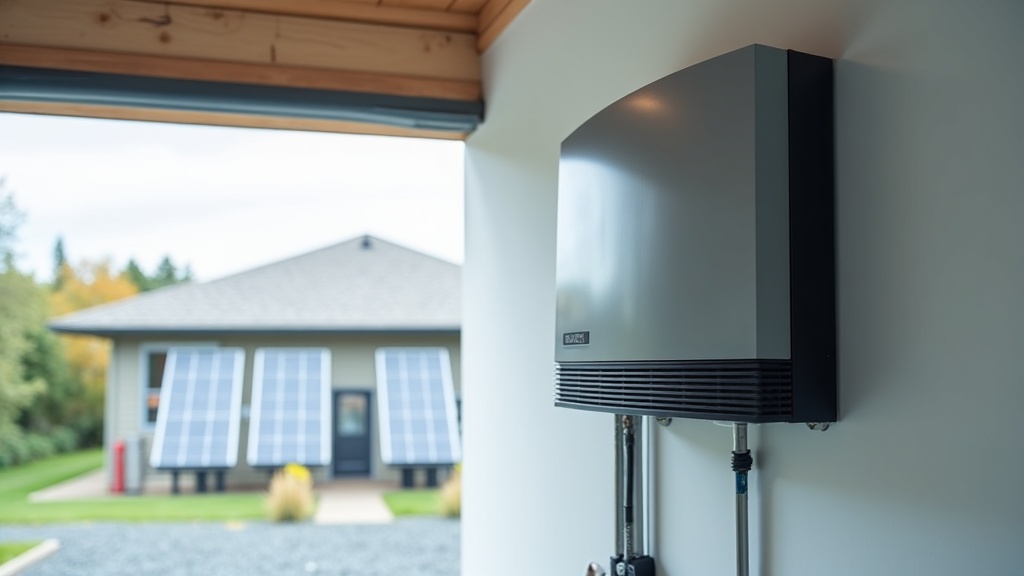
This is where most DIYers make expensive mistakes. Your inverter converts DC power from panels to AC power for your home. You have two main options:
| Feature | String Inverter | Microinverters |
|---|---|---|
| Cost | $1,000-$2,000 | $2,500-$4,000 |
| Best For | Unshaded roofs, simple layouts | Partial shade, complex roofs |
| Efficiency Loss | Whole string affected by one shaded panel | Only affected panel loses production |
| Monitoring | System-level only | Panel-level detail |
| Lifespan | 10-15 years | 20-25 years |
I used a string inverter on my 2019 install because my roof has zero shade. Saved $1,800 upfront and it’s performed flawlessly. But if you have trees, chimneys, or vents casting shadows, microinverters will give you 15-25% more production. Do the math on your specific situation.
Quality solar inverters from established brands are critical—this is not the place to save $200.
Racking and Mounting
Your mounting system needs to last 25+ years through wind, snow, and thermal cycling. I exclusively use aluminum rail systems now after seeing cheap steel racks rust out in 8 years.
For composition shingle roofs, you’ll need flashed mounts that seal around roof penetrations. For metal roofs, use standing seam clamps that don’t penetrate the roof at all—way better for long-term weatherproofing. Budget $0.20-$0.35 per watt for quality solar panel mounting systems.
Battery Storage (Optional But Recommended)
Grid-tied systems without batteries shut down during power outages—even if the sun is shining—because of anti-islanding protection. I learned this the hard way during a 3-day outage in 2020 when my panels were useless.
If you want backup power or time-of-use optimization, add a battery. Lithium iron phosphate (LiFePO4) batteries are the current standard with 4,000-6,000 cycle lifespans. For a typical home, a 10-15 kWh battery provides 1-2 days of backup for essential loads.
Expect to add $8,000-$12,000 for a quality battery system. It’s expensive, but if you lose power more than twice a year, it pays for itself in avoided food loss, generator fuel, and peace of mind. Quality LiFePO4 solar batteries have come way down in price since 2019.
Permitting and Inspections
This is where most DIYers give up, but it’s not that complicated. You need three approvals:
1. Building Permit
Submit your system design to your local building department. They want to see:
- Roof structural calculations (will it hold 3-4 lbs per square foot?)
- Electrical single-line diagram
- Equipment specifications and certifications
- Site plan showing panel layout
Most jurisdictions use online portals now. Expect 2-6 weeks for approval and $200-$800 in fees. Don’t skip this—I’ve seen homeowners forced to remove entire systems for unpermitted work.
2. Utility Interconnection Agreement
Your utility needs to approve your system for grid connection. This process takes 4-12 weeks and includes a review of your system size, inverter specs, and metering requirements. They’ll likely require a net metering agreement and may swap your meter for a bidirectional model.
Pro tip: Don’t energize your system until you get Permission to Operate (PTO) from the utility. I’ve seen people lose their interconnection approval for jumping the gun.
3. Electrical Inspection
After installation, a local inspector verifies your work meets National Electrical Code (NEC) requirements. They’ll check wire sizing, grounding, disconnect placement, conduit work, and labeling. Schedule this before calling for utility PTO.
Installation Process
If you’re doing this yourself, work methodically and don’t rush. Here’s the sequence I follow:
Day 1: Roof Work
Install all flashed mounts and rails. Use a chalk line for straight rows and double-check spacing before drilling. Every roof penetration gets sealed with roofing sealant—don’t trust just the flashing. For composition shingles, slip flashings under the shingle above and over the shingle below.
Day 2: Panel Installation
Mount panels to rails using mid and end clamps. Work with a partner—panels are awkward and catching one sliding off a roof is impossible. Wire panels in series strings according to your inverter’s voltage window. Use proper MC4 solar connectors and don’t cheap out with twist-on wire nuts—they fail.
Day 3: Electrical Connections
This is where your electrician license (or licensed helper) becomes essential. You’ll run conduit from the roof to your main service panel, install the inverter, wire the AC disconnect, and integrate with your panel. All wire sizing must follow NEC Article 690.
Key requirements:
- Rapid shutdown system within 10 feet of array (NEC 690.12)
- DC disconnect accessible from ground level
- AC disconnect within sight of main panel
- Proper grounding and bonding
- All components labeled for identification
Use quality solar PV wire rated for outdoor UV exposure and temperature extremes.
Day 4: Testing and Commissioning
Before calling for inspection, verify:
- Open circuit voltage matches calculations
- Polarity is correct (don’t reverse DC connections!)
- Ground resistance is below 25 ohms
- No shorts or ground faults
- Monitoring system communicates
A quality digital multimeter is essential for testing.
Grid Connection and Activation
After passing inspection, submit your approval to the utility. They’ll schedule a final meter inspection (usually 1-4 weeks out), install or reprogram your meter, and issue Permission to Operate. Only then can you flip the switch.
First-day production is exciting, but watch your system for a week before celebrating. Make sure your net metering is working correctly and production matches your expectations based on weather and time of year.
Maintenance and Monitoring
Solar systems are low-maintenance but not no-maintenance. Here’s my routine:
- Monthly: Check monitoring app for production drops
- Quarterly: Visual inspection for shading changes, damage, or debris
- Annually: Clean panels if production drops (rain handles this in most climates)
- Every 3 years: Torque-check all electrical connections
Most production loss comes from new shade sources (tree growth), soiling in dusty areas, or inverter failures. Catch these early and fixes are simple.
Cost Breakdown
For a typical 7.5 kW DIY system, expect these costs:
| Component | Cost Range |
|---|---|
| Solar Panels (22 x 350W) | $3,850-$5,390 |
| Inverter | $1,200-$3,800 |
| Racking & Mounting | $1,500-$2,625 |
| Electrical (wire, conduit, disconnects) | $800-$1,200 |
| Permits & Fees | $400-$1,000 |
| Tools & Miscellaneous | $300-$600 |
| Total DIY Cost | $8,050-$14,615 |
| Professional Install (same system) | $18,750-$26,250 |
DIY saves $10,000-$12,000 on average, but you sacrifice installer warranties and take on all liability. The federal tax credit (currently 30%) applies to both DIY and professional installs, so a $12,000 DIY system nets out to $8,400 after the credit.
Common Mistakes to Avoid
After helping 200+ homeowners, these errors come up constantly:
- Under-sizing wire: DC wire sizing must account for temperature correction and conduit fill—use NEC tables, not guesses
- Poor roof sealing: Every leak I’ve seen came from rushed flashing work—take your time here
- Ignoring shade: Even 10% shading can cost you 30%+ production with string inverters
- Mixing panel types: Don’t combine different wattages or brands in the same string—electrical mismatch kills efficiency
- Forgetting rapid shutdown: 2017 NEC and newer requires this—inspectors will fail you
- Skipping permits: This voids insurance, prevents selling your home, and can force system removal
Frequently Asked Questions
Can I really install solar panels myself, or do I need to be an electrician?
You can legally install your own solar system in most jurisdictions, but the electrical connections to your main panel require either a electrician or direct homeowner work that passes inspection. The mechanical work (mounting panels and racks) is straightforward for any DIYer comfortable on a roof. The electrical work requires understanding of voltage, current, wire sizing, and NEC code—hire an electrician for this portion if you’re not qualified. I’ve seen too many dangerous DIY electrical jobs that created fire hazards.
How long does a DIY solar installation take?
For a typical 5-8 kW residential system, expect 3-5 days of actual installation work spread across 3-6 months total timeline. The physical install takes one long weekend if you have help, but permitting (2-6 weeks), utility interconnection (4-12 weeks), and final inspections add months to the process. Don’t start this project if you need it done in 30 days—it won’t happen.
Will my homeowner’s insurance cover a DIY solar installation?
Most insurance policies cover permitted, code-compliant solar installations regardless of who installed them. However, you must notify your insurance company and many will require proof of permitting and inspection. Unpermitted systems can void your entire homeowner’s policy—not just solar coverage, but your whole house. Get it inspected and approved. Some insurers add a small premium ($50-150/year) for solar systems.
What happens to my solar panels during a power outage?
Standard grid-tied systems without batteries automatically shut down during outages due to anti-islanding protection—this prevents your panels from back-feeding the grid and electrocuting utility workers. Your panels won’t produce power even in full sun until grid power returns. To keep power during outages, you need a battery backup system or a special grid-interactive inverter with backup capability. This was my biggest surprise after going solar—I had no power during a 3-day outage even with panels on my roof.
How do I know if my roof can support solar panels?
Solar panels add 3-4 pounds per square foot to your roof load. Most residential roofs are engineered for 20 pounds per square foot live load minimum, so structural capacity is rarely an issue unless your roof is already sagging or damaged. The bigger concern is roof age—if your shingles have less than 10 years of life remaining, replace the roof first. Removing and reinstalling panels costs $2,000-4,000, so you don’t want to do it twice. A structural engineer can evaluate your roof for $300-500 if you’re uncertain.
Sources, uncertainty, safety, and affiliate disclosure
Check named sources for their publication date, geography, exact product, utility, and jurisdiction. Product specifications and programs change. Estimates are not guarantees. Electrical work, service upgrades, storage systems, transfer equipment, interconnection, and code compliance should be reviewed by the serving utility and a qualified electrician or installer as appropriate.
Some links may be affiliate links. SunBacked may earn a commission at no added cost to you; that does not determine editorial conclusions.