

Editorial quick answer
What’s the best portable power option for apartment living?
I size home battery backup around critical loads first, not marketing promises. If you live in an apartment and want backup power, the best portable option for most people is a battery power station. It is quiet, safe to use indoors, easy to recharge, and far more realistic for apartment life than a gas generator […]
Who this is for
Homeowners using this topic to compare choices, identify tradeoffs, or prepare better questions.
What this cannot promise
A guaranteed bill reduction, output, runtime, incentive, code approval, interconnection result, or project-specific electrical design.
Assumptions, date, and local checks
Costs and performance depend on location, date, model, configuration, weather, tariffs, utility rules, program funding, installation details, and household loads. Incentive, net-metering, code, battery-sizing, and electrical statements require current jurisdiction and source checks. Confirm project-specific details with the serving utility, program administrator, manufacturer, and a qualified electrician or installer.
How evidence is labeled
Mike context
Limited to his 20 years as an electrician, going solar in 2019, and having no installer ties.
Manufacturer specification
Maker-published data for an identified model or version, not an independent measurement.
Public source
Utility, government, program, code, standards, or other dated public information.
Estimate
Math based on stated inputs and assumptions, not a quote or guarantee.
Editorial analysis
SunBacked’s synthesis of tradeoffs, separated from sourced facts.
I size home battery backup around critical loads first, not marketing promises. If you live in an apartment and want backup power, the best portable option for most people is a battery power station. It is quiet, safe to use indoors, easy to recharge, and far more realistic for apartment life than a gas generator or a permanently installed battery system.
The right unit depends less on marketing terms and more on what you actually need to keep running. In apartments, the smartest goal is usually covering essentials like phones, laptops, Wi-Fi, lights, medical devices, and maybe a small fan or compact fridge for limited periods, not trying to power the entire home like a suburban whole-house backup setup.
| Option | Best For | Main Limitation |
|---|---|---|
| USB power bank | Phones, tablets, and basic communication backup | No meaningful AC appliance support |
| Compact power station | Router, laptop, lights, and short outages | Limited runtime for heavier loads |
| Mid-size power station | Best overall apartment backup for most renters | Heavier and pricier than light-duty options |
| Solar-ready power station | Longer outages with usable outdoor panel space | Apartment solar setup is often awkward or restricted |
What Matters Most
Apartment living changes the backup power equation. You need something that can be stored in a closet, carried without too much trouble, recharged from a standard wall outlet, and operated safely without fumes, fuel, or noise complaints. That rules out most combustion-based options immediately.
The biggest buying factors are usable battery capacity, continuous wattage, weight, recharge speed, and outlet mix. Capacity tells you how long devices will run. Wattage tells you what the unit can start and sustain. In practice, a well-balanced mid-size power station usually beats buying the biggest model you can afford, because oversized units can be harder to store, harder to move, and overkill for typical apartment outages.
My Top Picks or Categories
Rather than thinking in terms of one universal winner, I would break portable apartment power into four useful categories:
- A small power bank for phones, tablets, and USB gadgets when you only want light emergency coverage.
- A compact power station for Wi-Fi, laptops, lights, and overnight charging with minimal storage footprint.
- A mid-size power station as the best all-around choice for most apartment residents who want meaningful backup without excessive bulk.
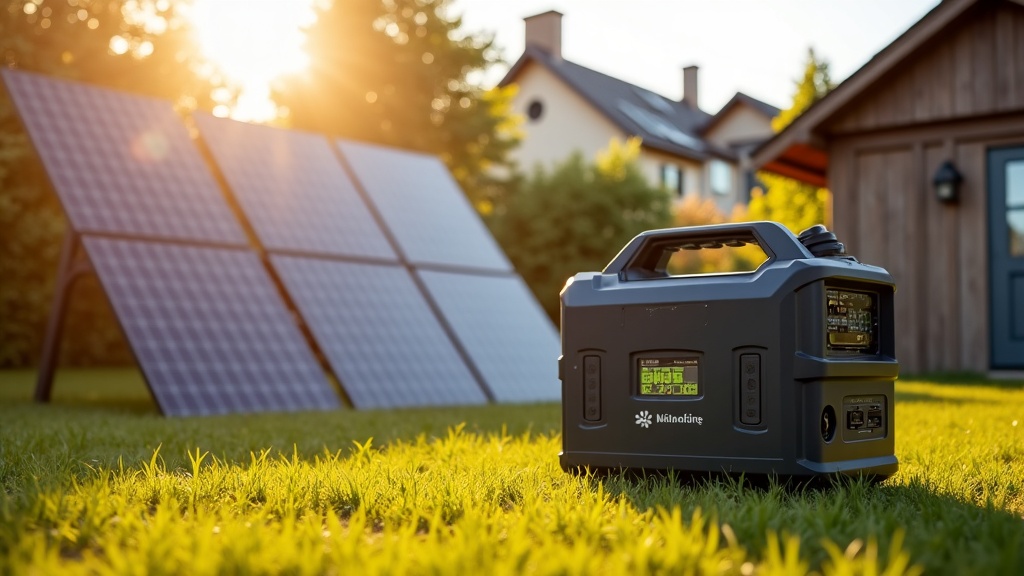
- A solar-compatible power station for people who also want off-grid charging flexibility, as long as they have a realistic place to use portable panels.
If I had to name the best overall apartment option, it would be the mid-size battery power station. That category gives you enough capacity to matter during an outage, enough power for more than just USB devices, and a size that still makes sense in elevators, closets, and small living rooms.
In practical terms, that usually means a unit you can carry in one trip, plug into a normal outlet, and use without rearranging the apartment around it. Once a backup unit starts needing a dedicated cart, permanent floor space, or unrealistic expectations about what it can run, it stops being a clean fit for apartment life.
Who Each Option Fits Best
A USB power bank works for renters who mainly care about keeping communication devices alive. It is cheap, simple, and easy to justify, but it will not help with AC-powered essentials. A compact power station is better for people who work from home and want to keep a modem, laptop, and lamp running during short outages.
A mid-size station fits households that want broader backup coverage, especially couples, pet owners, or anyone concerned about extended outages. If you need to support a CPAP, a mini fridge, or several devices at once, this is usually the sweet spot. Solar-ready models make the most sense for people with a balcony, patio, or access to outdoor space where panels can actually be set up safely and legally.
If you are torn between compact and mid-size, I would usually break the tie by asking one question: do you need AC-powered essentials to last just part of an evening, or do you want enough reserve to get through the night without micromanaging every watt? That answer normally points to the right category faster than any spec sheet does.
How I Would Choose One
I would start by making a short list of must-run devices and their approximate wattage. Add up what needs to run at the same time, then estimate how many hours you want coverage. That gives you a much better target than shopping by vague labels like “emergency ready” or “high capacity.”
For most apartment residents, I would favor a lithium iron phosphate unit with enough output for daily-use electronics and enough storage to get through an evening or overnight disruption. I would also put real value on practical details: clear display, pass-through charging, multiple AC and USB ports, and a recharge time fast enough that you can top it off quickly when the grid returns.
I would also check the apartment-specific friction points before buying: where it will be stored, whether you can lift it comfortably, whether it can charge quietly in a bedroom or office, and whether the handle design actually makes it easy to move during a real outage. Those are not glamorous buying criteria, but they decide whether the battery becomes part of your plan or just another heavy box.
Common Mistakes I See
The first mistake is buying for fantasy scenarios. Many people picture running air conditioners, ovens, or full-size kitchen appliances from a portable backup unit, then get disappointed when the numbers do not work. In an apartment, backup power is usually about resilience for essentials, not normal life with no compromises.
The second mistake is ignoring logistics. A unit that is too heavy to move, too loud to live with, or too large to store conveniently often ends up unused. I also see people overestimate the usefulness of solar panels in dense apartment settings where shade, limited outdoor space, and building rules can get in the way. A practical battery power station that you will actually keep charged and ready is usually the best portable power option for apartment living.
The third mistake is skipping a test run. If you have never plugged your router, lamp, chargers, or medical device into the unit before the outage starts, you do not really know whether your plan works. Apartment backup should be boring and predictable, not a live experiment in the dark.
What Usually Saves the Most Money
The money-saving move is usually not finding the most exciting hardware. It is sizing the system around real usage, choosing equipment that fits the job, and avoiding upgrades that solve a fantasy outage instead of the one you are actually preparing for.
I also think apartment residents make better decisions when they separate resilience goals from comfort goals. Once you know whether you are solving for essentials, convenience, or a longer outage window, the comparison gets much clearer and wasted spending usually drops fast.
That is the frame I trust most: define the loads, define the outage scenario, and then buy only the gear that materially improves the plan.
What I Would Compare Before Buying
If I were shopping this category for my own emergency kit, I would compare battery chemistry, warranty length, inverter size, and recharge speed before I paid much attention to app features or flashy marketing claims. Those practical specs decide whether the unit still feels useful after the novelty wears off.
I would also look closely at how the unit is actually going to live in the apartment. A battery that is too heavy to move, too small for the loads you care about, or too slow to recharge after a real outage can still be the wrong buy even if the chemistry itself is solid.
That is why I prefer turning chemistry into a decision filter instead of the whole decision. It matters a lot, but only inside a backup plan that already makes sense for your loads, your budget, and your outage pattern.
How I Would Size This for a Real Outage
When I sanity-check a backup plan, I start with the outage version that actually happens most often in an apartment: router, a few lights, phone charging, laptop power, and maybe one comfort or medical item. That tells me a lot faster whether the unit is solving a real household problem or just sounding impressive on a product page.
I would then map runtime against recharge, because a battery that looks decent on paper can still become annoying if it takes too long to refill between outages or between heavy evening use and the next day. For renters, that recharge reality usually matters more than a flashy surge number.
If the goal is overnight essentials, I would rather buy a right-sized unit with honest expectations than stretch for something marketed like whole-home backup when it really is not. That is the difference between a practical resilience purchase and an expensive compromise that leaves you disappointed the first time the power stays out longer than expected.
That is also why I keep coming back to load discipline. Once you know what truly has to stay on, it gets much easier to decide whether a portable station is enough, whether you need a larger home battery plan, or whether simpler backup options cover the real need.
A simple apartment sizing exercise is often enough: list the essentials, assume they will not all run nonstop, and build in a little margin for inverter losses and real-world inefficiency. That approach is not as exciting as shopping by headline capacity, but it produces much better buying decisions.
Before you buy, I would also compare LiFePO4 portable power stations against lighter legacy lithium-ion options so you are making an honest tradeoff between weight, cycle life, and long-term value instead of just buying the first battery spec that sounds modern.
Recommended Tools and Products
If you are comparing real options instead of just reading spec sheets, I would start with LiFePO4 portable power stations, smart plug energy monitors, and folding solar panels for power stations because those three categories usually tell you faster whether the backup plan is actually practical.
- LiFePO4 portable power stations are the cleanest starting point for most apartment residents who want safer indoor backup and better long-term cycle life.
- Smart plug energy monitors help you size the battery around real loads instead of guessing from labels or panic-shopping after an outage.
- Folding solar panels matter when you want a realistic way to extend runtime during multi-day outages and you have a legal, usable place to deploy them.
Sources, uncertainty, safety, and affiliate disclosure
Check named sources for their publication date, geography, exact product, utility, and jurisdiction. Product specifications and programs change. Estimates are not guarantees. Electrical work, service upgrades, storage systems, transfer equipment, interconnection, and code compliance should be reviewed by the serving utility and a qualified electrician or installer as appropriate.
Some links may be affiliate links. SunBacked may earn a commission at no added cost to you; that does not determine editorial conclusions.